
My Cat Stopped Using Her Litter Box — Here's What Actually Fixed It
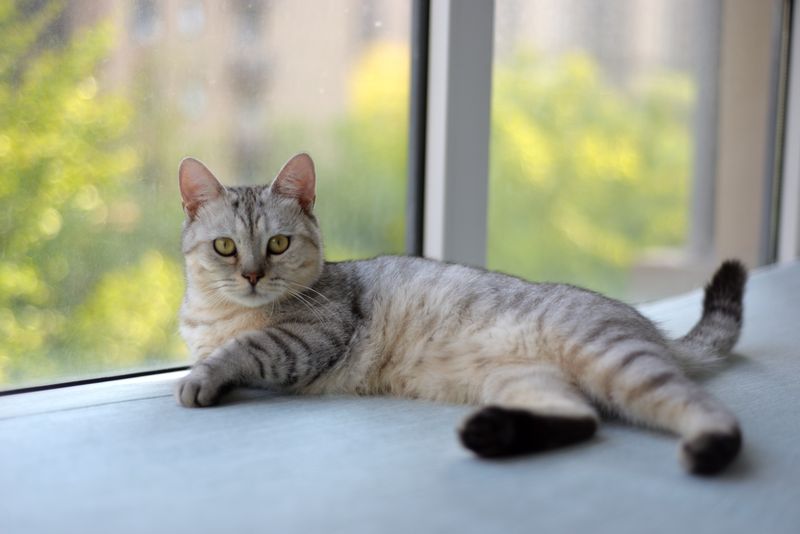
I knew something was wrong the morning I stepped out of the shower and found a warm puddle on the bath mat, roughly three feet from a litter box that was, as far as I could tell, spotless. My seven-year-old tabby, Miso, watched me mop it up from the edge of the tub. She had never once gone outside the box in the six years I'd had her. And now it was happening every other day.
Over the next three weeks it got worse instead of better. First the bath mat. Then the hallway runner. Then the corner of the guest-room carpet that I only noticed because the whole room began to smell like a gas-station bathroom. I bought a new box, dumped the old litter, scrubbed the floor with an enzyme cleaner, and moved the box to a "quieter" spot, and she answered by peeing directly on the bare tile beside it, as if filing a formal complaint. By then I'd convinced myself it was behavioral and permanent.
Why This Happens
The most useful thing I learned through all of this is that litter box avoidance is a symptom, not a personality defect. Cats don't stop using the box out of spite or laziness. When a cat who has always been reliable suddenly pees outside the box, the first thing a vet will typically want to rule out is a urinary tract infection, crystals, or kidney trouble, because urinary pain is one of the most common medical triggers for exactly this behavior.
My exam, urinalysis, and bloodwork all came back clean, which pushed the question into the environment. Once medical causes are off the table, you're usually staring at one of three things: the box is unpleasant, the location is unpleasant, or the cat has built a negative association with the box itself. That last category is the sneaky one. If a cat ever felt pain or discomfort while using the box, even once, she can decide the box is the problem and simply stop trusting it.
The "unpleasant box" list covers more ground than most people expect: scented litter, a covered box that traps odor, a box too small to turn around in, a box scooped once a week instead of daily, a box parked in a loud high-traffic hallway. And then there's the floor around the box, which almost nobody thinks about. If a cat has to cross scattered litter, a damp patch, or a gritty surface that shifts under her paws just to reach the box, she may decide the whole area is a bad place to be and find somewhere cleaner.
What I Tried First — and Why It Didn't Work
My first move was litter. I'd been using a scented clumping litter because I liked the way it smelled, and I assumed a fresh brand would fix whatever was off. I ran through two scented litters and then a "crystal" litter that looked like aquarium gravel. Miso ignored the box entirely for the crystals and seemed openly annoyed by the scented versions.
Next I bought a covered box, reasoning that she wanted privacy. It made things worse. Covered boxes hold in odor, and a dark plastic cave full of stale air is the opposite of inviting to a cat who is already hesitant. I also caught myself doing the thing almost everybody does at least once: scooping her up and setting her into the box whenever I caught her crouching to go. All that taught her was that the box itself was the problem, the opposite of what I wanted.
My third attempt was relocation. I wedged the box into a cramped corner behind the bathroom door to get it "out of the way." That spot was tight, oddly hidden, and gave her no sightline into the room. She started going right in front of the new box.
What Actually Worked
What finally turned things around was treating the box and its entire footprint as a system rather than a single product. I started with the box itself: uncovered, big enough that she could stand up and turn around with room to spare, filled with unscented clumping litter to a depth of about two inches. I scooped twice a day, every morning and every evening, and I washed the box with unscented soap and swapped all the litter out once a week. A clean box is non-negotiable. You cannot out-decorate a dirty box.
Then I dealt with the floor, and this is the part I'd underestimated for weeks. Miso kicked litter out of the box every single time she covered her business, and the bathroom had a permanent scatter of granules I kept half-heartedly brushing aside. That meant the area around the box was always slightly grimy, and one corner held a faint urine smell that had soaked into the grout in a spot I thought I'd cleaned. A cat approaching a messy, faintly sour floor is being told over and over, "don't go here."
So I laid a Cat Litter Mat, the double-layer honeycomb kind, right at the box's exit. The honeycomb top layer lets granules fall through into a second layer beneath it, so the litter stays trapped instead of tracking across the room, and you clean it by pulling the two layers apart and tipping the litter back into the box or the trash. The floor stayed clean for the first time in weeks, and upkeep took about ten seconds a day.
Under and around that, I put down a Cat Litter Mat, the 47" x 33" XL urine-proof one. This was the piece that killed the smell, and smell was half the battle. Because it's waterproof, the occasional miss never reached the grout again; I could rinse the whole mat in the tub, let it dry, and set it back down. The extra width covered the full landing zone around the box, not just the strip right at the entrance.
I added a second box on the opposite side of the apartment, one box per cat plus one (and I stopped punishing accidents, cleaning them with an enzyme cleaner instead so no residual scent lingered to announce "this spot is also a bathroom." Her baseline stress dropped, and the area around the box became clean, dry, and predictable.)
What I'd Tell Someone Starting Today
Call the vet before you call a behaviorist. Get the urinalysis and the bloodwork, because if there's a medical cause, no new litter or fatter mat will touch it. And if your cat is straining, passing only tiny amounts frequently, or you see blood, treat that as urgent, a cat who cannot urinate at all is an emergency, not a weekend project.
Once medical is ruled out, rebuild the box from the ground up: number of cats plus one box, unscented litter, scooped twice a day, washed weekly, uncovered, and large enough to turn around in. Keep the floor around it dry and genuinely clean, because to your cat it does matter. Then give it two weeks of boring consistency before you decide anything is truly broken. Miso was back to using her box within about ten days and hasn't had an accident in four months. The fix was never a trick, it was making the box and everything around it a place she wanted to walk toward.
This post may contain affiliate links. If you buy through one of them, we earn a small commission at no extra cost to you.