
My Cat Got Old in a Weekend — Now She Won't Jump, and She Hisses at Me
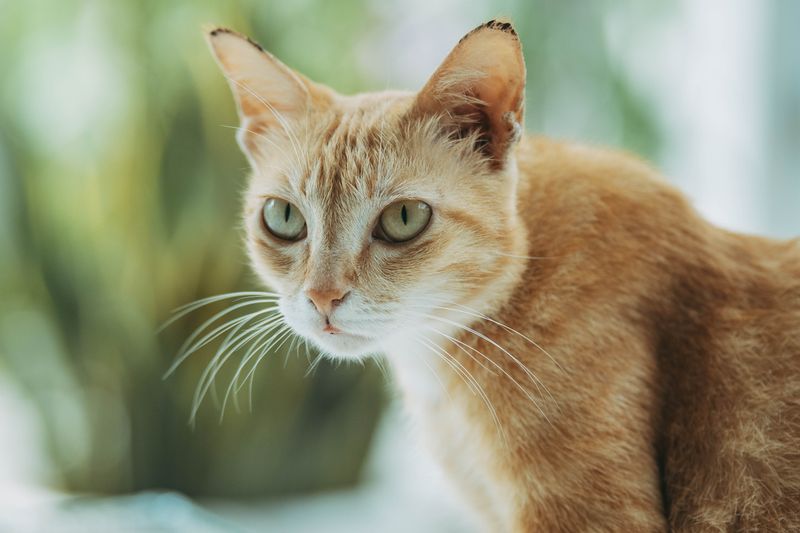
For nine years my cat Muffin met me at the top of the stairs every night. Then one Tuesday I found her on the landing, staring up at the couch like it had grown a foot taller. She tried the jump twice, thought better of it, and sat back down. Later that evening I scooped her up the way I'd done a thousand times, and she hissed at me (a flat, mean hiss I had never heard from her in her entire life.)
It got worse over the next month, in ways it took me far too long to connect. She stopped sleeping on the bed because she couldn't make the climb. She started missing the litter box, and I assumed she was angry at me until I finally just watched her: she'd stand at the edge of the tall-sided box, lift one paw, hesitate, and give up. The hissing and the accidents made me think I had broken something between us. What I actually had was a cat in pain.
Why This Happens
Cats are professional pain-hiders. In the wild, an animal that shows weakness becomes a target, so a cat with a sore joint doesn't limp the way a dog does, she simply stops doing the things that hurt. She stops jumping, stops using the top of the cat tree, stops climbing into your lap. Owners describe this as "she got old overnight," when really the cat had been quietly editing her life, item by item, for months before anyone noticed.
The most common cause in older cats is osteoarthritis, especially in the hips, elbows, and lower spine. It's extremely common and still under-treated, largely because we've all been trained to think of stiff old cats as normal. Hissing and irritability are often pain signals rather than personality changes. If a cat hisses when you pick her up or when you touch one specific spot, the message may simply be "that hurts."
Weight makes everything worse in both directions. Extra pounds load already-sore joints, and a sore cat moves less, which adds more pounds. And there are other conditions that produce this exact picture, dental disease, kidney trouble, thyroid problems, which is exactly why the first stop is a veterinarian and not a supplement shelf.
What I Tried First — and Why It Didn't Work
For two solid months I did nothing and blamed age. "She's just old," I told myself, and I let a cat live in pain for sixty days because I didn't know that this wasn't just what getting old looks like. That was the single biggest mistake in this whole story.
Then I bought a cheap foldable step stool so she could climb onto the couch. It was wobbly, and when she finally put her weight on it, the whole thing tipped and clattered. She bolted and never touched it again. I had tried to help and accidentally taught her that the furniture was dangerous.
My third idea was to move her food and water up onto a chair, on the theory that she'd have to move more and stay limber. She simply stopped eating up there. Encouraging a cat with painful joints to move more is asking her to hurt herself, and she was smarter about that than I was.
What Actually Worked
Everything changed with one vet visit. X-rays showed clear arthritis in both hips, and bloodwork ruled out the kidney and thyroid problems that can look just like this. That gave us the one thing I couldn't get from a product page: an actual diagnosis and prescription pain management. If you take nothing else from this, take that, a diagnosis is the foundation, and everything else is support.
The next layer was rebuilding my apartment around her instead of expecting her to manage it. I swapped her tall litter box for a shallow, low-sided one she could step into without climbing. I replaced the wobbly stool with sturdy, carpeted steps that don't budge. I moved her bed, food, and water onto one level so she never has to make a jump she can't make, and I put an orthopedic bed in her favorite sunny spot. Almost overnight, the litter box accidents stopped, they were never behavioral, just a cat who couldn't get in.
For the joints themselves, my vet had me add a daily supplement and adjusted the amount for a cat's weight. The one I ended up using is Veterinary Naturals Hemp & Hips Joint Supplement for Dogs, which is labeled for dogs, so please check with your own vet before copying that, mine cleared it and gave me the dose, and the improvement in how freely Muffin moved over the following weeks was worth the phone call. We also added a daily probiotic, the Probiotics for Dogs formula I'd seen a friend use, to settle her digestion after the food change and the new medication. Same caveat: it's a dog-labeled product, the dose is not the same for a cat, and my vet set it. What I noticed was that her coat and her appetite steadied along with her gut.
The last piece was patience and weight. Over about four months, she came down roughly a pound, and that single objective change did more for her mobility than anything else. A lighter cat is a cat whose hips hurt less, and a cat whose hips hurt less moves more, and a cat who moves more stays lighter. That loop finally started working in our favor.
What I'd Tell Someone Starting Today
If your older cat suddenly stops jumping, hisses when handled, or starts going outside the box, don't reach for the word "behavioral" until a vet has actually looked at her. Arthritis is treatable. There is no reason your cat should have to hurt, and the signs are easy to miss because cats hide them so well.
Then lower everything. The litter box, the bed, the couch she likes, give her a solid, non-slip path to every place she wants to be, and stop asking her to make jumps she's clearly avoiding. Keep her lean. And be kind about the hissing; it was never a grudge. Muffin is back on the couch now, via the steps, and she leans into my hand again when I pet her. She wasn't getting mean. She was telling me where it hurt, and I just had to learn the language.
This post may contain affiliate links. If you buy through one of them, we earn a small commission at no extra cost to you.