
My Cat Is Boring to Me — and to Herself. Here's How I Got Her to Actually Play
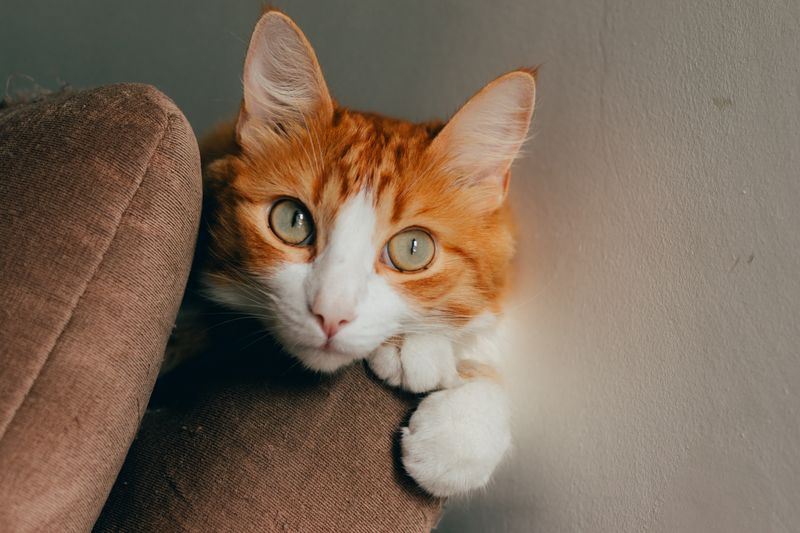
I knew something had changed the day I dragged the wand toy across the floor. The feather skittering the way it used to send Clementine into a full sprint, and she just watched it. Ears flat, tail still. Then she stood up, walked to the window, and went back to sleep. This was the same cat who once knocked a full glass off the counter just to get at a moth.
Over a few months she had quietly turned into furniture. Eighteen hours of sleep a day, a little weight around the middle, and an afternoon routine that was basically curl up by the window, watch birds, nap, repeat. I told myself she was content. What she actually was, I finally realized, was bored, and I was the one who'd stopped playing with her. I had been feeding her and scooping her box and leaving her to entertain herself, and a cat with nothing to hunt is a cat with nothing to do.
Why This Happens
Indoor cats are predators whose prey never shows up. A cat is wired for a hunting sequence. Stalk, chase, pounce, catch, kill, eat, and when you pour food into a bowl, you've deleted every step except the last one. That missing ninety percent is where boredom lives. Your cat isn't lazy or ungrateful; she's an athlete whose sport got canceled.
Cats are also crepuscular, meaning they're built to hunt at dawn and dusk, and they're sprinters, not marathoners. Short, intense bursts scratch the itch far better than a long meandering play session. That's why a cat will go completely wild for four minutes and then walk off mid-chase. Nothing is wrong; the battery is simply designed to run in short cycles.
Left unaddressed, boredom shows up as overgrooming that thins the fur, weight gain, 3 a.m. Yowling, or a cat that seems to have lost her personality. Novelty matters too, even a good toy can go stale in a few days if it never moves like real prey. The fix isn't more toys. It's a better game.
What I Tried First — and Why It Didn't Work
I bought a pile of toys. A basketful of mice, crinkle balls, springs, a battery-powered thing that waved a tail under a blanket. She'd bat at each one once, then ignore it forever. What I hadn't grasped is that a toy lying still is not prey. Prey runs, hides, and gets caught. A dead toy is just clutter, and Clementine knew the difference.
Then I tried long play sessions, trying to wear her out for forty straight minutes. She'd disengage in about three. Cats need burst play with a beginning, a middle, and a satisfying end, not an endurance test. I was tiring myself out and teaching her that play was a chore.
My third attempt was the laser pointer, and honestly it's the one I feel worst about. Five minutes of frantic chasing, sure, but then she'd sit and stare at the wall for ten minutes, waiting for a bug that did not exist. A laser lets a cat chase but never catch, and a predator that never completes the hunt can end up more frustrated, not less. It's fine as an occasional garnish; it's a terrible main course.
What Actually Worked
Everything turned around when I stopped trying to entertain her and started imitating a hunt. Two short sessions a day, one in the morning, one at dusk, about eight to ten minutes each. I move the wand like a real animal: drag it, pause it, hide it behind a chair leg, let her stalk it, and then let her catch it. That "catch" is the whole point, and I end every session by letting her actually grab the toy and then feeding her a small meal or a few treats, so the sequence closes the way it's supposed to: hunt, catch, eat. She started initiating play herself within about a week.
I also gave her something to do when I'm not home. A puzzle feeder turns a meal into a project, and a couple of window perches facing the street mean the birds do the entertaining while I'm at work. Between the structured sessions and the window, her days stopped being one long nap.
And here's the part that surprised me: the biggest obstacle to her play was my dog. Any time I got down on the floor with the wand toy, Finn would barrel in, grab the feathers, and shred the whole thing, and I'd stop the session to rescue it. Clementine learned that playtime got interrupted, so she stopped getting excited for it. Once I gave the dog toys that could actually survive him, the Frienhund tough dog toys for aggressive chewers three-pack, and the WinTour tough dog toys for aggressive chewers, he had something of his own to destroy, and he stopped hijacking the cat's sessions. Because those toys held up, I stopped interrupting, and Clementine finally got the thing she'd needed all along: consistent, undistracted play. That fix sounds like it's about the dog, but it was the key that unlocked the cat.
Last, I rotate the wand attachments and a handful of toys every week, so nothing goes stale, and the rotation alone keeps her interested in old favorites that had stopped working.
What I'd Tell Someone Starting Today
Schedule it. Two short sessions, same times every day, and keep them short and intense rather than long and lazy. Always finish with a catch and a snack, because the kill-and-eat ending is what tells your cat the hunt is complete. Don't lean on a laser by itself, and don't buy another basket of toys hoping one of them does the work, a moving toy in your hand beats a shelf of dead ones.
And watch for the quiet version of the problem. If your cat has gone from curious to furniture, that's not old age and it's not contentment. It's a predator with nowhere to point her instinct. Give her fifteen minutes and a good game twice a day, and the moth-chasing maniac you remember comes right back. Clementine pounces now. I'd honestly forgotten how loud she could be, and I'm glad to have the noise.
This post may contain affiliate links. If you buy through one of them, we earn a small commission at no extra cost to you.