
I Nearly Killed My Succulent With the "Humidity Fix" Everyone Recommends
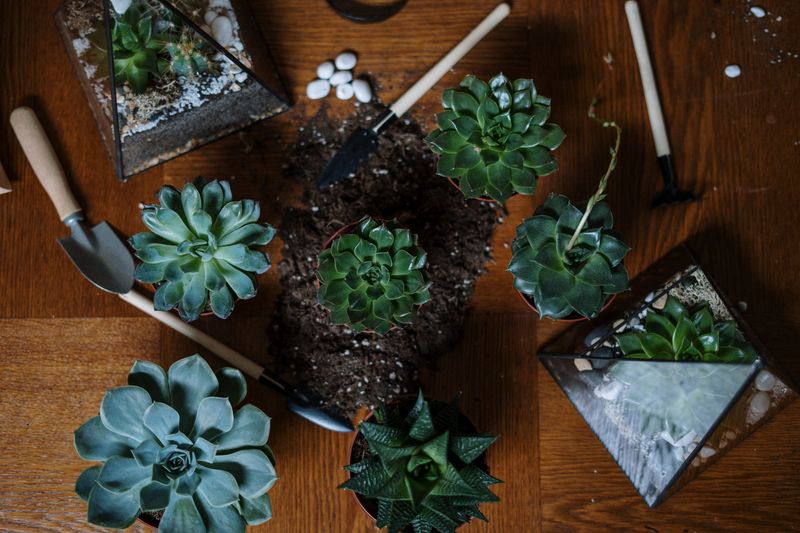
I bought a six-dollar echeveria on a whim and put it on my windowsill, where it did beautifully for two months, tight rosette, dusty blue-green leaves, not a blemish. Then I read somewhere that succulents "thrive in humidity," so I ordered a little glass mini-greenhouse dome and clicked it over the top. I thought I was giving my plant a spa day. Three weeks later the center of the rosette had gone translucent and brown, and the whole thing slid sideways when I touched it.
What killed it was the exact thing I'd added to help. The dome trapped every drop of moisture that evaporated off the soil, the air inside stayed warm and still, and the plant rotted from the crown down. It was a slow, invisible drowning, and the saddest part is that I doubled down on it: convinced the plant was thirsty, I watered more, kept the dome on, and essentially sealed its fate.
Why This Happens
Succulents are built for the opposite of humidity. They're CAM plants, they open their pores at night, store water in their fat leaves, and survive by conserving every drop in dry, bright, airy places. A humid, still environment attacks them from every direction at once: water can't evaporate off the leaves, the soil stays permanently wet, and the roots lose access to the oxygen they need. Rot is the predictable result, and it moves fast because the conditions feed it.
The mini-greenhouse dome is a particular trap because it sounds scientific and kind. In reality a sealed cover turns a pot into a miniature swamp. Moisture evaporates from the soil, condenses on the inside of the glass, and drips back down in an endless loop, so the substrate never dries out between waterings. For a fern or a tropical cutting that's perfect. For a succulent it's a death sentence, and the damage usually happens below the soil line before you see a single symptom on the leaves.
There's a lighting angle too, and it's the part most people miss. A succulent that's kept too dark and too humid is fragile on two counts, because weak light means weak, stretched growth that can't regulate its own water use. When I finally fixed my problem, half the battle wasn't about moisture at all (it was getting enough light intensity onto the plant so it could grow compact and actually use the water it was given.)
What I Tried First — and Why It Didn't Work
My first instinct was more water, because the leaves looked shriveled and that's the universal signal for "thirsty." But shriveled leaves on a rotted succulent and shriveled leaves on a dry one are nearly identical to the eye. I was watering a problem that water had caused, and each pour compacted the soggy soil a little more and pushed the rot further up the stem.
Next I tried to "correct" the humidity by misting less often but keeping the dome on, as if the issue were a matter of dosage. Removing the dome is the whole fix, not reducing the mist, and I didn't understand that yet. The plant kept declining because the sealed air was still trapping whatever moisture was already there.
Then I went the other way and moved the pot to the brightest, sunniest spot in the house to dry it out. It scorched. A sealed, overwatered succulent under direct midday glass cooks its own leaves, and the remaining rosettes turned to mush against the window. Wrong tool for the job, my problem was air and water, not light.
Finally I repotted into "better" soil, but I reused the same dense, peat-heavy mix I already had, so nothing actually changed. The roots needed air and grit, and I gave them the same waterlogged, suffocating medium in a slightly nicer pot.
What Actually Worked
The turnaround started with a hard reset of the environment. I threw out the greenhouse dome entirely and moved the surviving pieces into an open, ventilated enclosure instead. A Cycodo Mini Jumping Spider Enclosure, which is a warp-proof acrylic box with a magnetic lid and cross ventilation built into the panels. Air moves through it instead of stewing inside, and I keep the vents open so humidity can escape. I happen to keep a jumping spider in one, and since spiders also want airflow and drier conditions, the enclosure and its plants finally agreed with each other instead of fighting.
The second half was light. I added a compact fluorescent terrarium lamp over the shelf, I used the UVB Reptile Light Bulb 10.0, a 23W spiral that throws strong visible light as well as its UVB output, and ran it on a ten-to-twelve-hour timer. Compact and bright was what my stretched, pale rosettes had been missing, and within a few weeks the new growth came in tight and colored up instead of reaching for the sky.
Then I fixed the soil, because the enclosure and the light only work if the roots get air. I repotted into a gritty, fast-draining cactus mix cut with extra perlite and coarse sand, and I swapped the plastic pot for one with a real drainage hole. No more dense peat holding water against the roots. The substrate now dries all the way through in a few days instead of staying damp for weeks.
Finally, I changed how I water. No schedule; I wait until the soil is bone dry, then soak the pot until it runs out the bottom and let it drain completely. In summer that's roughly every ten to fourteen days, in winter closer to three weeks, and I never leave a saucer of standing water. Between the airflow, the strong light, and the gritty mix, half the plants I'd written off started pushing out new leaves from the base.
What I'd Tell Someone Starting Today
If you bought a mini greenhouse dome thinking your succulent needed humidity, take it off today. Succulents want the opposite of what that dome does: moving air, gritty fast-draining soil, strong light, and a genuine dry cycle between waterings. Humidity doesn't help them, it rots them from the crown down while the top of the plant still looks fine. And when the leaves look shriveled, resist the watering-can reflex until you've checked the soil and the base for mushy rot, because shriveled can mean drowning just as easily as it can mean thirst.
The plants I brought back from near-death are the ones I stopped fussing over. Open enclosure, honest light, gritty soil, water only when dry, that's the entire program. My $6 echeveria is long gone, but the pups I saved from it are, two years on, the healthiest succulents I own, and they've never once seen the inside of a humid dome.
This post may contain affiliate links. If you buy through one of them, we earn a small commission at no extra cost to you.