
My Terrarium Fogged Up Like a Bathroom Mirror — How I Fixed the Condensation for Good
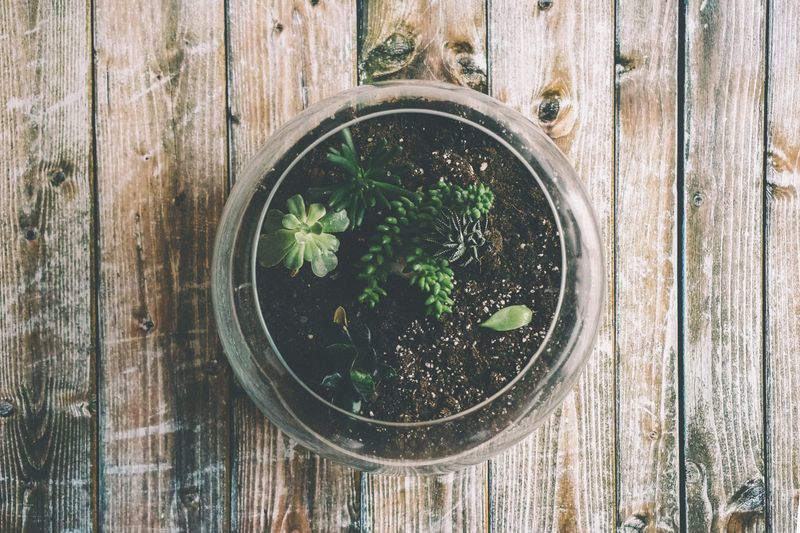
For about two weeks my terrarium looked fantastic. Then one morning the glass had a haze on the inside that I couldn't wipe away without taking the whole lid off. By the end of that week I couldn't see my plants at all, just green smears behind a fogged pane, like a shower door someone forgot to squeegee. The condensation kept getting worse, water pooled on the substrate, and eventually the mold that had been hiding behind the fog came out into the open.
I did what most people do with a foggy terrarium: I wiped the glass every morning. That worked for about an hour each day and then the fog rolled right back in, because I was cleaning the symptom and never touching the cause. It took me a while to understand that condensation isn't a cleaning problem, it's a signal that the inside of the box is out of balance, and no amount of wiping fixes a balance problem.
Why This Happens
Condensation forms whenever warm, moisture-heavy air meets a cool surface. Inside a sealed terrarium, water evaporates off the soil in the warmth of the day, saturates the air, and then condenses on the glass, especially when the glass is cooler than the air inside, which happens near a window or in a cool room. In a sealed container that water has nowhere to go, so it drips back into the soil and the cycle repeats forever. The glass fogging is just the visible part of a loop that never drains.
The real driver is the mismatch between moisture and airflow. If the air is saturated and there's no vent to let it escape, condensation is inevitable no matter how carefully you water. A sealed jar under a bright window is the worst case, because the sun warms the interior air while the glass itself stays cooler, and that temperature gap is exactly what squeezes the water out of the air and onto the pane.
There's also a plain measurement problem underneath it: most of us have no idea what the actual humidity inside our terrarium is. We guess. We water by feel. Without a real reading, you're adjusting blind, which is why so many people keep adding water when the issue is that the box can't breathe. Knowing the number changes everything, because then you're managing humidity instead of reacting to fog.
What I Tried First — and Why It Didn't Work
First, obviously, I wiped the glass. Every morning, a clean microfiber cloth, a sparkling pane. The fog returned within the hour because I hadn't changed the moisture balance at all, I'd just cleared the water off one surface so it could re-condense there again.
Then I tried to water less, which is directionally right but nowhere near enough on its own. Cutting back helped a little, but the soil I'd used held water like a sponge and the box was still sealed, so even a light watering kept the air saturated. Less water in a sealed container still becomes fog.
Next I cracked the lid to let some air in, feeling very clever. The problem was that the lid on my jar had no real venting, cracking it just let a little moisture escape around the rim while letting heat build up every bit as fast. I'd created a slightly leaky oven instead of a breathable enclosure, and the fog came back worse after each sunny afternoon.
Finally I moved the whole thing out of the window, assuming the light was the villain. That fixed the fog by killing the light, and my plants immediately started stretching and paleing out. Trading healthy plants for clear glass is not a fix; I'd simply moved the problem somewhere I couldn't see it.
What Actually Worked
The change that mattered most was switching to an enclosure designed to breathe. I moved the setup into a Reptile PC Terrarium Set, the 20" x 10" x 8" tank, whose mesh-style top lets humidity rise and escape instead of sealing it against the glass. With a real vent, the air inside stopped saturating, the temperature gap across the pane shrank, and the fog that had plagued me for weeks simply stopped forming. The tank also gave the plants more room to spread, which the old jar had never allowed.
The second piece was getting actual numbers instead of guessing. I added a Reptile Growth humidity and temperature controller so I could read the conditions inside the tank at a glance and adjust from data rather than instinct. That readout taught me something I'd never have believed: my "barely misted" box was sitting at near-total saturation. Being able to watch the humidity climb and fall after each watering is what finally made the whole system make sense to me.
Third, I fixed the substrate so it could drain instead of ponding. I rebuilt the base in layers, a drainage layer of coarse gravel, a barrier, then a fast-draining soil mix cut with perlite, so excess water had somewhere to go and the top layer could dry between waterings. When the soil drains properly and the top dries out, there's simply less water in the air to condense on the glass.
Finally, I stopped fighting the light and made it work for me. With a ventilated top and a plant-rated lamp on a ten-hour timer, the terrarium gets bright, consistent light without the heat trap of a sealed jar. Bright and open is the pair that keeps fog away, it's the sealed-and-humid combination that creates it. Put all four changes together and the pane has stayed clear for months.
What I'd Tell Someone Starting Today
Stop wiping the glass and go find the imbalance instead. Condensation is a humidity-and-airflow problem, not a cleanliness one, and it will keep coming back until you give the moisture somewhere to go. If your enclosure is sealed, open it up; if it's open and still fogged, measure the humidity before you touch the water bottle, because most of us are far wetter than we think. And don't banish the light to clear the glass, you'll just get a clear box full of stretched, dying plants.
The version of this that finally worked for me is boring and reliable: a vented tank, a real humidity reading, drainage at the base, and steady bright light. No more morning squeegee routine, no more mystery fog, and, best of all, no more mold blooming quietly behind a pane I couldn't see through.
This post may contain affiliate links. If you buy through one of them, we earn a small commission at no extra cost to you.