
My Desk Terrarium Kept Dying Until I Stopped Over-Managing It
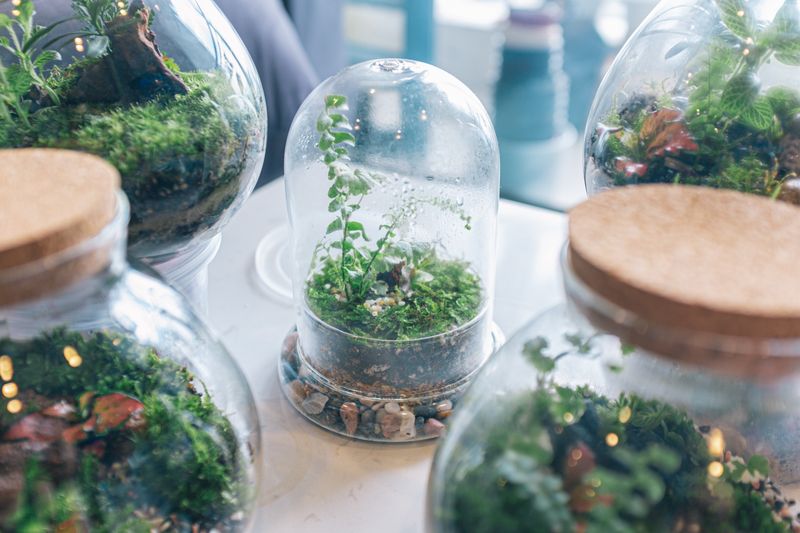
The little glass terrarium on my desk was supposed to be the one calm thing in my workday. I built it in a jar about the size of a coffee mug, a couple of tiny succulents, a bit of moss, a layer of pebbles, soil on top, and for the first ten days it looked like a postcard. Then the moss went brown, a gray fuzz crept across the soil, and the succulents started dropping leaves one by one until the whole thing was mostly bare dirt under fogged glass.
Here's what made it worse: I was checking on it constantly, because it sat right next to my keyboard. Every glance became a reason to fuss. A spritz here, a reposition there, a "helpful" turn toward the window. I was managing that terrarium to death, and it wasn't until I stepped back and treated it like a tiny ecosystem instead of a houseplant that it finally stabilized.
Why This Happens
Small terrariums are inherently unstable, and that's the part nobody warns you about when you buy a cute mini kit. Volume is the enemy of balance: in a big enclosure, a little excess moisture or a single dying leaf is a drop in the bucket, but in a coffee-mug-sized jar the same excess swings the whole system. There's very little substrate to buffer anything, so mistakes compound in days instead of weeks, and by the time you notice a problem it's usually already advanced.
On top of that instability, most beginner desk terrariums combine plants that want opposite things. Succulents want dry, airy conditions; moss wants constant damp. Stuff them into the same tiny jar and one of them is guaranteed to be unhappy no matter which way you water. Add a sealed lid with no airflow and you've built a mug-sized swamp with a cactus in it. A setup that's fighting itself from day one.
The mold is the third piece of the puzzle. A closed, damp, poorly ventilated container with dead plant matter in it is a mold incubator. Gray fuzz on the soil isn't a sign you need to spray something; it's a sign there's too much moisture and too much rotting material for a healthy aquarium-style cleanup crew to handle. A functioning terrarium has tiny organisms that eat mold and decay so you never see either. An empty one just lets both take over.
What I Tried First — and Why It Didn't Work
My first fix was spraying more, because the brown moss looked dry. That's the trap of mixing moss and succulents, you're always over-watering one to please the other. The moss never recovered, and the extra moisture fed the mold and finished off the succulents faster.
Then I tried to disinfect the mold away, wiping it with a diluted vinegar solution and picking out the fuzzy patches by hand. It came back within three days every time, because the damp, stale conditions that produced it were still there. Killing mold on the surface of a sealed jar is the definition of treating the symptom.
Next I replaced the dead plants, buying fresh succulents and pressing them into the same soggy soil. New plants in an unchanged environment just repeat the old outcome, and they did, the replacements were gone within a couple of weeks, which is when it clicked that the jar itself, not the plants, was the problem.
Finally I tried leaving the lid off entirely, which dried the succulents out beautifully and made the moss into straw. Fully sealed and fully open are both wrong for a mixed planting; the answer was somewhere I hadn't looked yet.
What Actually Worked
The first real change was adding a cleanup crew, and it changed everything. I introduced a culture of Eco Culture Live Springtails, which colonized the soil and started eating the mold and decaying plant matter before I ever saw them. Springtails are microscopic detritivores, tiny, harmless, and completely uninterested in your plants. And once they were established, the gray fuzz simply stopped appearing. I haven't wiped mold off that terrarium since.
Second, I rebuilt the jar around plants that actually agree with each other and with a small space. Instead of fighting succulents against moss, I planted the whole thing with moisture-loving mini species from a proper Terrarium Kit designed for succulents and indoor plants, and I followed its planting layers rather than improvising. Using the right substrate and the right plant selection for a micro enclosure took the guesswork out of watering, because now every plant in the jar wanted the same thing.
Third, and hardest, I stopped touching it. I learned to gauge moisture by the condensation on the glass instead of by craving a to-do list, and I watered only when the fog cleared, roughly every week or so, a light mist, nothing more. I moved the jar off the sunny windowsill to bright, indirect light so it wouldn't cook, and then I did the radical thing a desk terrarium actually needs: I left it alone.
The last piece was patience about scale. I stopped expecting a mug-sized ecosystem to look like a magazine photo, and I accepted that it would take a couple of months to settle. Once the springtails established and the plants settled into the same moisture level, the jar stopped surprising me. It just quietly worked, which is all a desk terrarium was ever supposed to do.
What I'd Tell Someone Starting Today
For a desk terrarium, add a cleanup crew before you add another plant. Springtails are the single best thing I ever did for a small enclosure, they eat the mold and rot that otherwise ruin a mini build, and they cost almost nothing. Pair them with a real planting kit so your plants share the same water and light needs, and skip the succulent-and-moss combo, which sets up a fight the jar can't win.
Then get your hands off it. The instinct to fiddle with a terrarium sitting inches from your keyboard is the biggest threat to it, honestly bigger than any pest. Check it by looking at the glass, water rarely, keep it out of direct sun, and give it two months to settle. A tiny terrarium thrives on neglect far more than on attention. Mine finally did once I stopped hovering over it.
This post may contain affiliate links. If you buy through one of them, we earn a small commission at no extra cost to you.