
I Found Tiny Mushrooms Growing in My Terrarium — Before You Tear Yours Apart, Read This
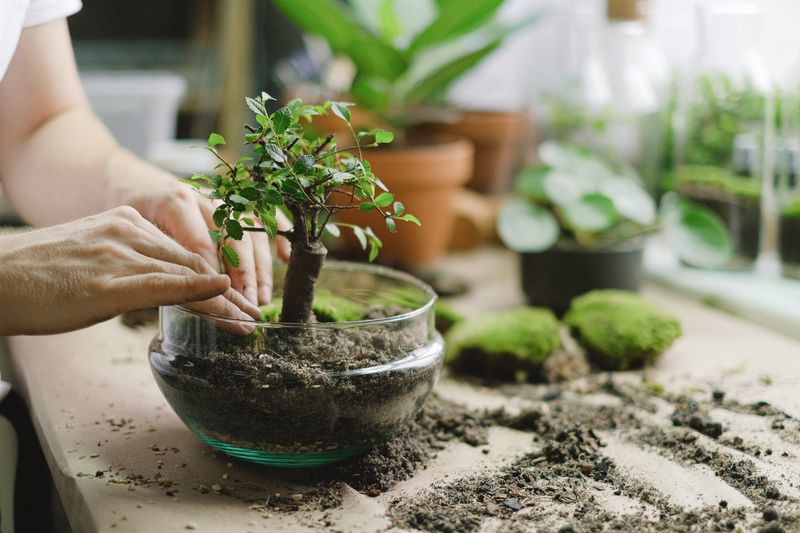
I built my first closed terrarium on a slow Sunday, feeling absurdly proud of the little glass jar of moss and ferns sitting on my desk. By Thursday morning there were three tiny mushrooms poking up through the moss like they had been invited. I did what any reasonable person does before coffee: took seventeen photos, texted them to a friend, and asked the internet whether my beautiful little ecosystem was dying of some horrifying fungal disease.
Here's what nobody tells you when you start building terrariums. The messy, living parts, the mushrooms, the springtails, the white threads under the soil, are usually a sign that you did something right, not wrong. I nearly destroyed a healthy micro-ecosystem because I had no idea what I was looking at. This is everything I wish someone had told me before I panicked.
Why This Happens
A terrarium is a tiny forest in a jar, and forests grow mushrooms. The spores don't come from nowhere, they ride in on your sphagnum moss, your soil, the bark on your little sticks, even the air when the lid was off while you were planting. Once the conditions line up, they fruit. The caps you see are just the above-ground part of a fungus whose real body is a network of threads, called mycelium, woven through the substrate underneath.
Those conditions are basically "humid, warm, and full of dead plant matter." A closed terrarium is exactly that. You have created a permanently damp, sealed box of decaying leaves and moss, which is heaven for fungi. The same humidity that keeps your ferns happy also feeds the mycelium. So if you've built a genuinely self-sustaining setup, mushrooms are almost inevitable. And often proof that your soil life is active and working.
The reason people panic is that they can't tell mushrooms apart from mold. Mold is the fuzzy, cobwebby, gray-white film that shows up fast and spreads across the surface. Mushrooms are structured, they have a stem and a cap, they stand upright, and they appear as individuals. One is a sign of imbalance; the other is a sign of a working ecosystem. Learning that difference is what saved my whole setup.
What I Tried First — and Why It Didn't Work
My first move was to yank the mushrooms out the second I saw them. I figured removing them would end the problem. It didn't, they were back within a week, because the mycelium was still alive underneath. Pulling the fruit off a fungus is like picking an apple off a tree and expecting the tree to vanish. I had removed the symptom and left the cause sitting right there in the soil.
Then I panicked about moisture and dried everything out. I cracked the lid, left it open for two days, and let the substrate go from damp to barely moist. The mushrooms did stop fruiting. So did everything else. My moss went crispy at the edges, two little ferns browned off, and the springtails died. I had traded a harmless mushroom for an actually damaged terrarium, which taught me fast that this is a humidity system, not a mushroom problem.
The third mistake was nearly buying an anti-fungal spray meant for potted houseplants and dosing the whole jar. I am genuinely glad I read the label first. Those products are designed for open-air pots; in a sealed environment they can wipe out the beneficial microfauna you actually want, the same cleanup crew that keeps real mold in check. I put the bottle down and started over from actual understanding instead of fear.
What Actually Worked
What worked was accepting the mushrooms and managing the ecosystem around them, which is the whole point of a self-contained build. My first real change was to stop trying to eliminate life and start balancing it. I introduced a proper cleanup crew, springtails and isopods, that graze on mold, decaying plant matter, and organic film. They do the job an anti-fungal spray only pretends to do, without nuking anything.
The second change was building a proper moss-and-substrate base so the enclosure largely self-regulates. That is where a terrarium moss kit earns its keep. A good kit gives you the layering that actually matters: a drainage layer of pebbles at the bottom, a barrier to keep soil out of the water, then a soil blend made for moisture retention, plus moss to carpet the surface. The moss is not decoration, it holds humidity, shades the substrate, and gives your cleanup crew somewhere to live. Once that base was in place, my setup stopped swinging between bone-dry and swampy, and the mushrooms settled into an occasional little pop instead of a takeover.
I also learned to manage airflow and condensation instead of fighting them. For a closed build, that means opening the lid briefly every week or two to let fresh air in and wiping condensation off the glass. That single habit keeps mold, the actual enemy, from getting a foothold while leaving the mushrooms alone. Heavy, constant condensation means the jar is too wet; dry moss means it is too dry. You want a light, even fog on the glass, not rain.
Finally, I stopped treating every mushroom as a crisis and started watching for the real warning signs: fuzzy gray mold, a rotten-egg smell, or stems going mushy and black. A clean little mushroom with a firm stem just means your soil is alive. Once I reframed it that way, the hobby got relaxing instead of stressful.
Terrarium Kit with Live Moss & Springtails
A complete layering kit with drainage pebbles, a soil blend, and live moss, the stable base a closed build needs.
Check price on AmazonGlass Terrarium with Drainage Layer
Live microfauna that graze mold and decaying matter so your ecosystem self-regulates without any sprays.
Check price on AmazonWhat I'd Tell Someone Starting Today
If you are staring at mushrooms in your terrarium right now, take a breath and leave them alone for a day. Check the real symptoms: does the jar smell bad, is there fuzzy mold, are things rotting? If not, you probably have a healthy little forest doing healthy little forest things, and the correct move is usually to add a cleanup crew and a proper moss base rather than tear it all apart.
Build the layers right from the start, keep the moisture balanced, and let the tiny ecosystem do what ecosystems do. A terrarium that grows a mushroom now and then is a terrarium that is working. Mine is two years old, it still throws the odd mushroom, and it is the least maintenance I have ever done on any plant project.
This post may contain affiliate links. If you buy through one of them, we earn a small commission at no extra cost to you.