
My Cat Started Hissing at Everything — Including Me, and I Didn't Know What Happened
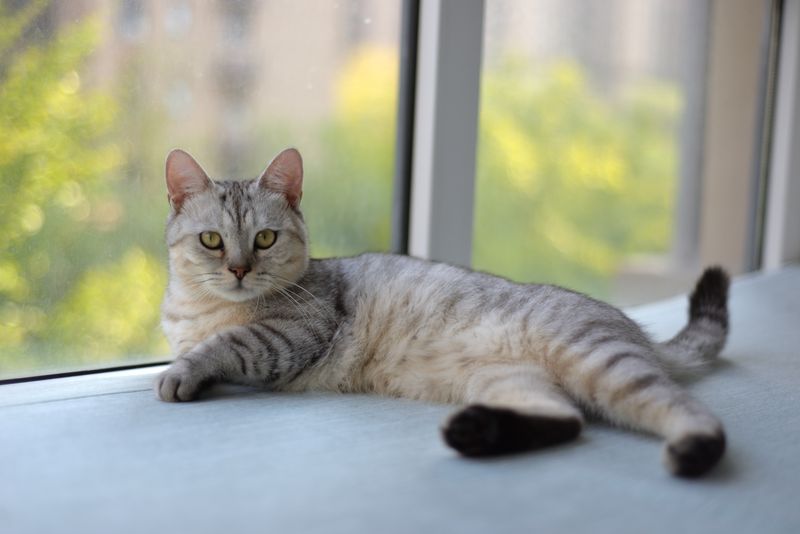
The hiss that broke me came from my own doorway. I walked in after work, said hello the way I always did, and my cat Clementine, the one who used to sleep on my chest every night, flattened her ears, puffed her tail, and hissed at me like I was a stranger who'd broken in. Two days earlier she'd been fine. By the end of that week she was hissing at the ceiling fan, at my shoes, at the window, and at the other animal in the apartment.
Then came the hiding. She moved under the bed and stayed there, coming out only at night to eat, and she started peeing on the laundry instead of going to her box. I made it worse before I made it better, because everything I did to "help", picking her up to comfort her, following her under the bed, trying to coax her out with treats, was just more pressure for a cat who already felt like her whole world had turned hostile. Something had genuinely frightened her, and I didn't know what.
Why This Happens
A sudden personality flip in a cat is almost never a personality flip. It's fear. Cats are territorial, and when something disrupts their sense of safety, the defensive reflex that looks like aggression, hissing, swatting, flattening, is really your cat trying to make the scary thing go away. A cat who hisses at you is not a cat who hates you. She's a cat whose alarm system has been set off and can't find the off switch.
There's a specific pattern worth knowing about called redirected aggression, and I think it's what happened here. A cat sees or hears something upsetting, a neighborhood cat through the window, a strange smell, a loud noise, and can't reach the actual trigger, so she lashes out at whatever is closest, which is often her person or the other pet. The timing looks random, but she's reacting to something you never saw.
The usual triggers are change and unpredictability: a move, a new pet, a new baby, a shifted schedule, a new smell on your clothes, construction outside, a medical problem like pain or dental trouble or a urinary issue. And underneath all of them is the same core need, an anxious cat wants a safe, enclosed, elevated place to retreat to, a predictable routine, and control over when she interacts. Take those away and you get the cat I had that week.
What I Tried First — and Why It Didn't Work
I tried to comfort her. I'd pick her up, hold her close, tell her it was fine, and every single time she'd struggle and hiss harder. For a scared cat, being scooped up and held is the opposite of comfort, it removes her ability to flee, which is the one thing she's trying to do. I was grabbing her precisely when she needed distance.
I tried forcing peace with the other pet, carrying them into the same room and hoping they'd just get over it. Predictable disaster. You cannot rush two stressed animals into friendship, and every forced interaction was another bad memory stacking up. The tensions got sharper, not softer.
I tried treating her with her favorite food whenever she seemed anxious, which sounds sensible but fell apart immediately, a cat that stressed won't eat, so I was waving snacks at a cat who was too wound up to care, and meanwhile the actual cause went untouched. I was managing a symptom and calling it progress.
What Actually Worked
The turning point was figuring out the trigger, and mine was quieter than I expected. My parakeet, Pickles, had been given a spot right next to the window Clementine claimed as her lookout, and Pickles had hit a restless, hormonal streak (flapping, shuffling, chirping at all hours, constantly moving in the edge of the cat's vision. To Clementine, that window, her safe spot, had become a place where something was always twitching and unsettling. Her territory felt unsafe, and she'd started defending it against everything, including me.)
So I fixed the bird's setup, which sounds like it has nothing to do with the cat, and that's exactly why it worked. I added a Rypet Parakeet Nesting Box with a perch so Pickles had a settled, private spot to retreat to instead of pacing the cage bars, and I put soft Sukh Bird Nesting Material inside so she'd have a place to burrow and busy herself. A calmer bird meant a quieter, stiller cage, and the flapping that had been secretly grating on the cat stopped. Within a few days the window stopped being a source of stress, and Clementine's baseline anxiety visibly dropped. The lesson stuck with me: when one pet's environment destabilizes, the anxious pet downstream often pays the price.
Then I rebuilt things around the cat herself. I gave her a covered hide high up where she could watch the room without being approached, so she had a retreat that was truly hers. I kept her meals, playtime, and the litter box on a fixed schedule so her day became boringly predictable, and I stopped picking her up entirely (letting her come to me on her terms. I also used a pheromone diffuser in the room she spends most time in, and I gave the two animals separate zones with their own food and water so neither felt like they had to compete. Slowly, on her schedule, she started coming back out.)
The hissing tapered off over about three weeks. She'd still flatten her ears if something moved too fast, but she stopped treating me like an intruder, and the laundry accidents stopped the moment her stress dropped.
What I'd Tell Someone Starting Today
Rule out pain and illness first. A cat who suddenly hisses at everything can be a cat with a toothache, a urinary problem, or another hidden source of pain, and no amount of behavioral work fixes a medical cause. Then stop trying to comfort a scared cat by holding her. Give her distance, a high hidden retreat, and total predictability. Reward calm, not clinginess.
And look honestly at the whole environment, including the other animals. The thing that fixed my cat had nothing to do with my cat. If your home has felt tense and unpredictable lately, your cat already knows, and she's been telling you the only way she can. Give her a safe place, a boring schedule, and time (and if she's still hissing weeks later, that's a call to your vet or a feline behavior specialist, not a reason to keep waiting.)
This post may contain affiliate links. If you buy through one of them, we earn a small commission at no extra cost to you.