
A Year In and We're Still Not Bonded — the Truth About Caretaker Fatigue
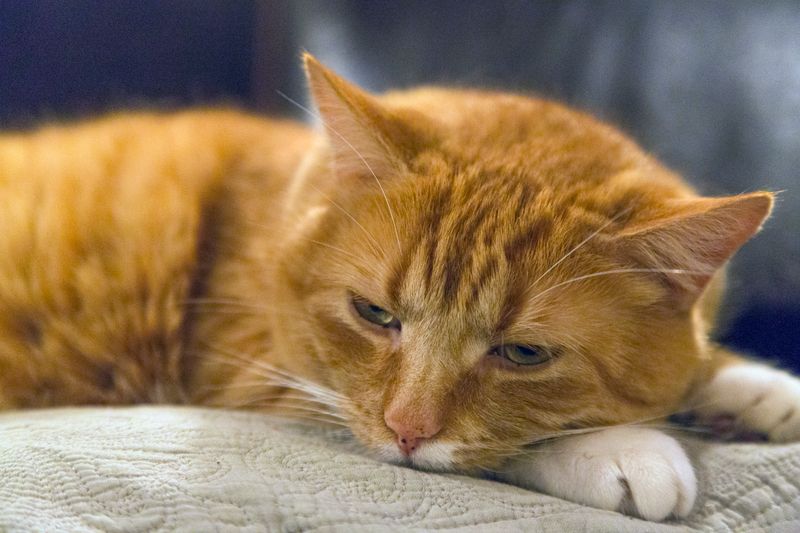
I found her in a cardboard box at about ten days old, eyes barely open, and I did what you do, I took her home and hand-fed her every two hours, kept her warm, and willed her to live. I raised her in a brooder because she could not regulate her own temperature, syringe-fed her formula, and cleaned up after her around the clock. I saved her life. And a year later, she still will not let me pet her.
That is the part nobody prepared me for. I gave this animal everything for twelve months, and we are not bonded. Not in the way I imagined, anyway. And the emotional weight of that, combined with the practical weight of constant care while working from home, is what people mean when they talk about caretaker fatigue. It is real, and I want to be honest about it.
Why This Happens
Bottle babies miss something important. A kitten raised without its mother and littermates, especially one who spent her first weeks in an incubator fighting to survive, can come out of it with a nervous system wired for caution. The critical socialization window. The few weeks when kittens normally learn that humans are safe and predictable, can be disrupted by illness, isolation, and survival stress. So even though I raised her, she did not learn "people are safe" the way a mother-raised kitten would have.
There is also the myth of the grateful rescue. We expect an animal we saved to bond to us harder in return, like a debt. That is not how animals work. Love and trust are built through repeated safe experiences, not through a rescue history, and a shy cat is not withholding anything, she is protecting herself the only way she knows how. Accepting that reframe was the first step toward not resenting her.
And then there is the fatigue itself. Caring for a fragile animal while working from home means there is no separation between caretaking and working and living. Every hour is both. The cat that will not let me touch her still needs feeding, litter, vet visits, and constant watching, and doing all of that from inside the same apartment where I also try to hold a job wears a person down in a way that has nothing to do with how much I love her.
What I Tried First — and Why It Didn't Work
My first approach was to force closeness, thinking exposure would fix it (picking her up, cornering her for cuddles, following her around the apartment. This is the single worst thing you can do to a shy animal. Every forced interaction taught her that I was the thing to avoid, and she got more skittish, not less. Trust cannot be imposed; it has to be offered and left available.)
Then I tried to compensate by being there constantly. I stayed home more, skipped plans, hovered, and made myself available at all hours so she would have no reason to be wary. It did not build the bond, and it made the caretaker fatigue dramatically worse, because I had erased every boundary between me and the job of caring for her. Being endlessly present is not the same as being trusted.
My third failed attempt was to look for a fix in a product or a shortcut. I bought toys, tried treats, asked if another cat would help. A companion animal does not fix a human-animal bond problem, and no gadget substitutes for the slow work of feeling safe. I was shopping for a solution to something only time and patience could touch.
What Actually Worked
What changed things was dropping my expectations and letting her come to me on her terms. I stopped approaching her entirely. Instead, I sat quietly on the floor near her, doing nothing, reading, working on my laptop, and let her curiosity do the work. Cats investigate what is not chasing them. Within a few months she started sitting a few feet away, then closer, and eventually on the edge of my workspace. She still does not love being held. But she chooses to be near me now, which is a bond, just not the one I pictured.
Boundaries saved my mental health. I structured my day so caretaking had a schedule and a stop time, instead of bleeding into every hour. That meant giving her a secure, contained space in the apartment where she could be safe and out of the way while I worked, rather than pacing the whole place. For that, a playpen that I could set up near my desk was genuinely useful, it gave both of us a defined area, so she had her own territory and I had a few uninterrupted hours. I have a versatile one that I move between the office and the living room, and it let me stop refereeing her every move.
I also accepted that some of the early-stage care is a season, not a life sentence. When she was tiny and fragile, she really did need around-the-clock warmth, and I used a proper brooder incubator to keep her stable and safe while she was too young to hold her own temperature. That setup was exactly right for that phase, and it kept her alive in those fragile weeks. But it was never a permanent thing, and releasing myself from the caretaking that was only meant for those first weeks was part of recovering.
Last, I found support. A friend who has fostered bottle babies, a foster chat group, a rescue that answered my questions, just having people who said "this is normal, and it is okay that it is hard" changed how I carried it. Caretaker fatigue is not a character flaw. It is what happens when you pour everything into an animal that cannot yet give it back, and it deserves to be talked about out loud.
Cat Tree & Window Perch
A versatile indoor and outdoor pen that gives a shy pet its own contained territory, and you a few hours to work.
Check price on AmazonHeated Cat Bed for Senior Cats
Controlled warmth for the fragile first weeks with a neonate rescue, an intensive-care setup, not a permanent one.
Check price on AmazonWhat I'd Tell Someone Starting Today
If you are a year in and it has not clicked, you are not failing. Drop the timeline and the fantasy of the grateful rescue, stop forcing contact, and let the animal choose you at its own pace. Set real boundaries around the caretaking so it does not consume your every waking hour, get help from people who foster, and give it time, bonds with nervous animals are measured in seasons, not weeks.
She came and sat next to me on the couch last week and stayed there for an hour while I worked. A year ago she fled the room if I looked at her. That is not the bond I imagined when I pulled her out of that box. It is the one we actually built, and some days that is enough.
This post may contain affiliate links. If you buy through one of them, we earn a small commission at no extra cost to you.