
My Four-Month-Old Husky-Akita Mix Is Aggressive and Pooping on My Bed — Here's the Plan
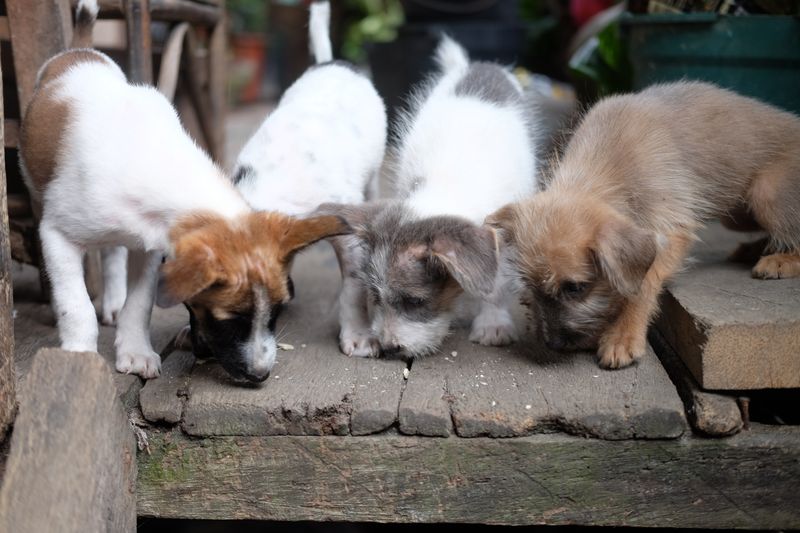
At four months old, my husky-Akita mix Nala has two moods: adorable and terrifying. Ten minutes ago she was wiggling on her back for belly rubs. Then I reached for her food bowl to top it up, and she flattened, showed teeth, and growled at me like I was a stranger breaking into her crate. And two nights ago, she pooped on my bed while staring right at me. I am not proud of how close I came to crying in the hallway.
I want to be clear up front: I am not a trainer, I am a dog owner in over my head who did a lot of reading and a lot of paying attention. Here is what I learned about what is actually going on with an adolescent northern-breed mix, and what finally started to help.
Why This Happens
The first thing to understand is that four months is the beginning of adolescence, and this is when the puppy brain gets rewired by hormones at the same time the breed instincts come online. Huskies and Akitas are both powerful, independent, high-drive breeds. A husky is bred to make decisions on its own and ignore you; an Akita is bred to be a guardian, territorial, and often same-sex dog-aggressive. A mix of the two is a lot of dog, and a four-month-old version of it is testing every boundary it can find.
The growling over the bowl is almost certainly resource guarding, and it is a normal, hardwired behavior, a dog protecting something valuable. It is not evil; it is instinct. But it escalates fast if you handle it wrong, and it is the kind of thing that made me sit up and take it seriously rather than hoping she would grow out of it. The good news is that resource guarding responds well to the right approach, especially in a young dog.
The bed-popping is a separate problem, and the culprit is usually freedom. A dog that poops on your bed is generally a dog that has not actually been housetrained yet, who has too much unsupervised access, and who has found a spot that feels safe. Adding adolescence, an unfinished housetraining process, and possibly some stress on top of that gets you exactly what I have. Both behaviors are signs that she is being given more freedom than she can handle.
What I Tried First — and Why It Didn't Work
My instinct when Nala growled was to take the bowl away to show her who was boss. That is exactly backwards, and it makes guarding worse, because it teaches the dog that people approaching the food really are a threat. It confirmed her fear instead of dissolving it. The right move is the opposite: approaching food means something good gets added, never taken. That took me a while to unlearn.
For the bed-popping, I tried scolding and shoving her nose at it, which is the old-school advice nobody should follow. She had no idea what I was yelling about, and it just made her nervous about me, which does not train anything except distrust. She also had free run of the whole apartment, so the scolding was competing with a complete lack of structure, there was no way it was going to stick.
My third mistake was to try to burn off her "aggression" with more exercise and rougher play. For a breed this drivey, more high-arousal play just trains the dog to be more aroused. We were rehearsing the exact state I was trying to eliminate. The answer was not more stimulation; it was structure, calm, and clear rules.
What Actually Worked
What worked was going back to management first, way less freedom, way more structure. I stopped giving Nala the run of the house and put her on a strict schedule, crated when I could not watch her, and taken out on a real potty schedule, which is the actual fix for a housetraining regression. A four-month-old does not get to be unsupervised in the bedroom anymore. The bed incident was my failure of management, not hers.
To keep her contained, safe, and still part of the household, I set up a proper exercise pen instead of confining her to a crate all day. A foldable metal pen that I can move from the living room to the kitchen and out to the yard gave her a defined, dog-safe space where she could be nearby without having the freedom to practice the wrong behaviors. It turned a constant supervision problem into a manageable one, and honestly it lowered the temperature in the whole house, because I was not constantly on edge waiting for the next incident.
For the resource guarding, I worked on the "trade up" protocol: every time I came near her bowl, I dropped something better into it, so my approach started to predict good things rather than theft. I also fed her with my hands sometimes, and practiced giving her a valued chew and then walking by and tossing a treat near her. Slow, boring, and it worked. She has stopped guarding the bowl. I would still tell anyone with a dog who is actively guarding to work with a trainer or behaviorist rather than winging it, because bites happen fast, but the direction is "approach equals good things," never "take it away."
And I rethought her exercise. Instead of wild, chaotic play that revved her up, I switched to structured walks and impulse-control games that made her think and settle, plus a lot of enrichment to drain the breed's need to work. A tired-from-thinking dog is far calmer than a dog that has just been sprinting in a frenzy. For those times when she was over-aroused and could not come down, I kept the environment calm and predictable, which is the real treatment for an adolescent learning to regulate.
Calming Chews & Diffuser for Dogs
A movable indoor/outdoor pen that gives a high-drive adolescent a defined space instead of free run of the house.
Check price on AmazonNo-Bark Training Aid for Dogs
A taller, clear-sided pen that keeps a big breed contained while she can still see and stay part of the action.
Check price on AmazonWhat I'd Tell Someone Starting Today
Take the growling seriously and get help early. Do not try to dominate a guarding dog, and do not shrug it off. Cut the freedom, put the structure in, go back to basics on potty training, and manage with a pen or a crate instead of hoping she will behave unsupervised. If she has already made contact or drawn blood, call a certified trainer or a vet behaviorist today, because this is the age where it is fixable and worth fixing.
Nala is still a lot of dog, still independent, still not the kind of dog who lives to please me. But we have not had a guarding incident in two months, the bed is safe again, and I finally feel like I understand the animal I brought home. Four months is hard. It is also, thank goodness, still young enough to teach.
This post may contain affiliate links. If you buy through one of them, we earn a small commission at no extra cost to you.