
My Chihuahua Was Home 7 to 5 and Peed on Everything — Including My Bed
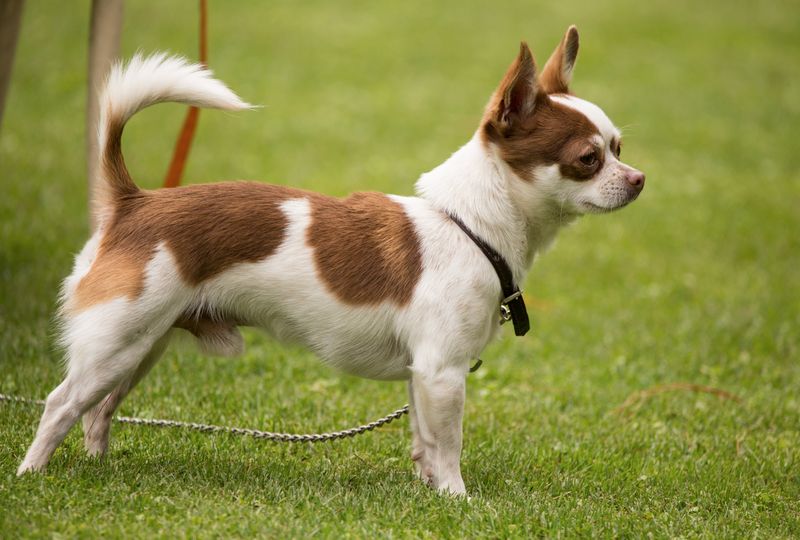
I came home from work last Tuesday, walked into my bedroom, and found a wet spot square in the middle of my mattress. My one-year-old chihuahua, Pico, was sitting on the pillow like nothing had happened. That same week I found accidents by the door, in the hallway, and on the bath mat. I was gone from before 7 until after 5, five days a week, and I was starting to think I had gotten a dog I simply could not keep.
What I learned is that "peeing everywhere" is a symptom with several very different possible causes, and I had been treating them all as one problem. And punishing it, which only made it worse. Here is how I finally sorted it out.
Why This Happens
The most obvious factor is plumbing and time. A chihuahua is one of the smallest breeds, with a genuinely tiny bladder, and eight to ten hours alone is simply longer than it can comfortably hold. Even a fully housetrained adult small breed may struggle with a stretch that long, so some of what I was seeing was not a behavior problem at all, it was a capacity problem. On top of that, if the whole house has become an acceptable bathroom over the last year, then he never actually finished learning the rule in the first place.
The bed, though, is a special case worth understanding. Dogs often eliminate on soft surfaces like beds and couches, because the texture reminds them of the grass or puppy pads they were trained on, and because those spots carry your scent and feel safest. Add anxiety to that, a dog who is stressed about being left for ten hours, who has learned to dread the daily departure. And peeing on the bed becomes a comfort behavior, not spite. It is not defiance. A dog cannot think "I will ruin his bed to punish him for leaving."
And there is the medical piece I could not skip. Frequent urination, accidents when he never had them before, or a sudden increase can point to a urinary tract infection, which is common and very treatable. A quick vet check is the responsible first move whenever a dog's potty habits change suddenly, before assuming it is behavioral.
What I Tried First — and Why It Didn't Work
My first reaction was anger, and I scolded him when I found the mess. This is the one thing every source agrees on: do not do this. Pico had no idea what I was shouting about an hour after the fact, and all I actually taught him was that coming near me when I got home was scary. He started hiding when I walked in, which told me he expected trouble, not that he understood the rule.
Then I tried restricting his water during the day, thinking less in meant less out. For a small breed that is a genuinely bad idea, hydration matters, and it just made him desperate whenever he did drink. It did not fix the accidents; it just added a health risk and made me feel terrible.
My third mistake was covering the whole apartment in puppy pads. It felt practical, but it taught Pico that peeing indoors was fine, which is the exact opposite of what I wanted. I had given him permission for the behavior I was trying to eliminate, and it confused the whole picture. Pads are a tool for a specific, temporary situation, not a permanent carpet.
What Actually Worked
The real fix started with logistics, not training: I broke the ten-hour stretch. I hired a midday walker for the days I am in the office, so Pico gets out around the four-hour mark to potty. That single change cut the accidents dramatically, because for a dog this small, the honest answer to "why is he peeing" is often "because nobody let him out." If a walker is not possible, doggy daycare or a neighbor can solve the same problem.
While the walker was getting set up, I also rebuilt the housetraining from scratch: strict schedule, out first thing in the morning, after every meal, right before I leave, the second I get home, and right before bed. I took him to the same spot every time and celebrated immediately when he went outside. Underneath the schedule training, I kept him in a properly sized crate while I was gone, so he was not practicing the wrong behavior all day. When a dog practices a habit hundreds of times, it sticks; the crate simply stops the practice.
The bed problem needed a specific solve. I made the bedroom off-limits entirely while we were fixing this, closed the door, and got a waterproof mattress cover in case of another lapse. Removing the soft surface, plus breaking the long alone stretch, killed the bed accidents within a few weeks. As he proved reliable, I slowly let him back into the room with supervision.
And, crucially, I dealt with the residual smell, because if an accident spot smells like a bathroom, a dog will keep using it. Ordinary household cleaner does not remove the scent a dog's nose picks up; it has to be an enzymatic cleaner that actually breaks down the urine. I soaked every spot thoroughly, let it sit the way the label says, blotted, and let it air dry on its own. Once the old spots genuinely stopped smelling to him, he stopped returning to them. That detail is what makes the difference between a fixed problem and a fading one.
Enzymatic Dog Urine Stain & Odor Remover
Enzymatic cleaner that breaks down the urine scent so a dog stops returning to the same spot again and again.
Check price on AmazonWashable Dog Pee Pads
The smaller bottle for spot cleanups and touch-ups around the house, so you always have some on hand.
Check price on AmazonWhat I'd Tell Someone Starting Today
Never punish accidents, get your dog checked for a UTI, and break the long alone stretch with a midday potty break if you possibly can. Then rebuild housetraining with a real schedule, keep him from practicing the wrong behavior in a crate, and clean every spot with an enzymatic cleaner so the smell does not invite a repeat. The bed is not personal, it is comfort and soft texture and a full bladder, all at once.
Pico has not had an accident in the house in three months. The walker shows up at noon, the bedroom door is open again, and I finally stopped dreading opening my own front door. He was never a bad dog. He was a tiny dog left alone too long, in a house that never really taught him the rule.
This post may contain affiliate links. If you buy through one of them, we earn a small commission at no extra cost to you.