
My Cat Wants to Climb. Then I Stopped Letting Her
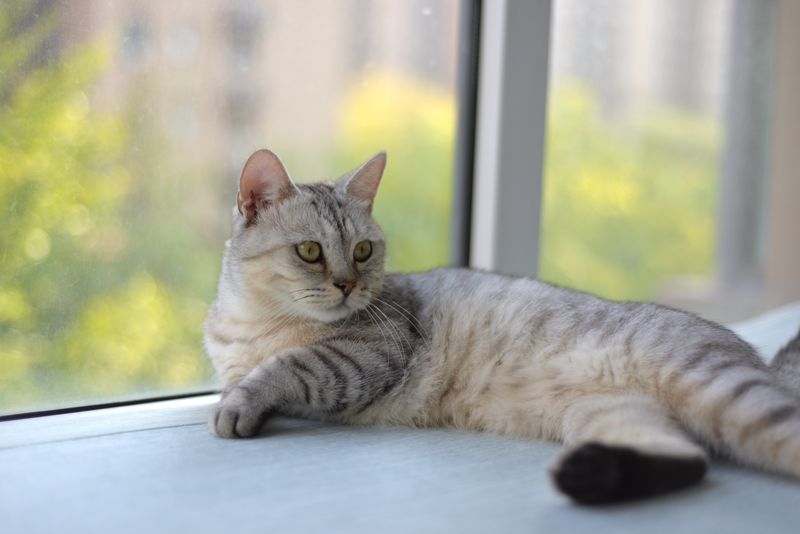
For about a year, I had a running argument with my cat that I didn't know I was having. She'd try to get on top of the bookshelf, I'd shoo her down. She'd line up a jump onto the kitchen counter, I'd clap my hands. She'd scale the curtains, and I'd unhook her claws one at a time, muttering. I thought I was teaching her the rules of the house. What I was actually doing was taking away the one thing she needed most and expecting her to be fine with it.
The tipping point was the meowing. Not the normal hello-meow, but a specific, insistent, rising complaint that started around seven every evening and didn't stop until I went to bed. My vet checked her over and found nothing wrong. Then she asked me one question: "Where is she allowed to go up?" And I realized the honest answer was nowhere.
Why This Happens
Cats aren't floor animals that occasionally climb. They're vertical animals who happen to spend time on the floor. In the wild, and in the average cat's head, which is still largely wild. Height equals safety. High perches mean you can see danger coming, you're out of reach of anything that might grab you, and you control the room without being in it. A cat who never gets to go up is a cat who never gets to relax.
That's the part I'd completely inverted. I was reading her climbing as naughtiness, a thing to be corrected. But a cat who wants to be on top of the wardrobe isn't testing my authority. She's trying to get somewhere she feels safe. Every time I shooed her down, I was pushing her back into the insecure space and telling her that was where she belonged.
There's a second layer, which is boredom. Cats are ambush predators with a short, intense burst of energy and a long stretch of quiet. Vertical space is what makes their hunting circuit make sense, up high to survey, down low to stalk, along a shelf to move without touching the ground. When a cat has no vertical route, that whole circuit collapses into pacing, meowing, and knocking things off counters for entertainment. My cat wasn't being difficult. She was unemployed.
And the counter-jumping, the thing I hated most, was actually the clearest signal of all. Cats take the highest available path, and if the only high path runs across your kitchen counter, that's the path they'll take. The counter was never the problem. The absence of a better option was.
What I Tried First — and Why It Didn't Work
My first fix was pure management: I cleared the tops of everything and put double-sided tape on the counters. This kept her off the counters for about a week, at the cost of making her miserable and turning my kitchen into a museum. It didn't reduce her need to climb by one percent. It just took away her only option and left her with nothing, which is why the meowing got worse, not better.
The second thing I tried was a small scratching post, one of those carpeted ones on a wobbly base about knee-high. She ignored it completely. In hindsight this was obvious: I had bought a solution for her claws when the problem was her need for height. A knee-high post doesn't let a cat get above anything. It's a scratching pad pretending to be furniture.
Then I tried punishment, which I'm not proud of, a spray of water when she climbed. It worked in the sense that she stopped climbing in front of me. It did not work in the sense that she stopped climbing. She just did it when I wasn't looking, which is worse for everyone, because now I couldn't redirect her and she'd learned that climbing was something to hide. Punishment doesn't remove a need. It just teaches the animal to meet it covertly.
What Actually Worked
The fix was to give her a legitimate version of the thing she kept trying to steal, and to make my version better than the counter. That meant real height, real stability, and a place that was clearly hers.
The turning point was a proper cat tree, tall, weighted at the base, with a platform high enough that she could sit above my eye level. That last detail mattered more than I expected. A perch that lets a cat look down on the room is worth three that keep her at human height. The first week, she barely left the top platform. She'd sit up there for an hour at a time doing nothing, perfectly content, which is exactly what a secure cat looks like.
I placed it where she already wanted to be: near a window, in the room we actually use, positioned so she could watch the front door and the bird feeder at the same time. Location did as much work as the tree itself. A cat tree shoved in a spare bedroom is furniture you bought for yourself. A cat tree in the middle of the action is territory.
I also gave her a climbing route instead of a single destination. A couple of wall-mounted steps and a shelf she was allowed on turned "get up high" from a forbidden act into a normal path. Once she had a sanctioned route, the route became the habit, and the counter stopped being the only way up. Cats follow established paths with almost obsessive consistency, so building one on purpose is the entire game.
There's a scratching element here too, and it's worth doing properly. A tall sisal post lets a cat stretch fully, front paws up high, back arched, which is how cats actually mark territory and maintain their claws. The small carpeted post never let her do that. Once she had a post she could really stretch on, the couch corner lost most of its appeal.
What I'd Tell Someone Starting Today
Before you decide your cat is misbehaving, count how many places she's allowed to go up. If the answer is zero or one knee-high post, you've found your problem. Get something tall, put it where the family actually hangs out, and weight it so it doesn't wobble, a cat won't trust a perch that moves.
The meowing stopped in about two weeks. The counter-jumping stopped on its own once there was a better route. And somewhere in there I stopped thinking of her as a cat who was trying to annoy me and started seeing her as a cat who was trying to get somewhere safe. She still climbs everything. It's just that now it's furniture I chose, in a direction I built, and we're both fine with it.
This post may contain affiliate links. If you buy through one of them, we earn a small commission at no extra cost to you. Prices are approximate and change over time.