
My Shiba Will Take Treats Inside and Completely Ignore Me Outside — What Finally Worked
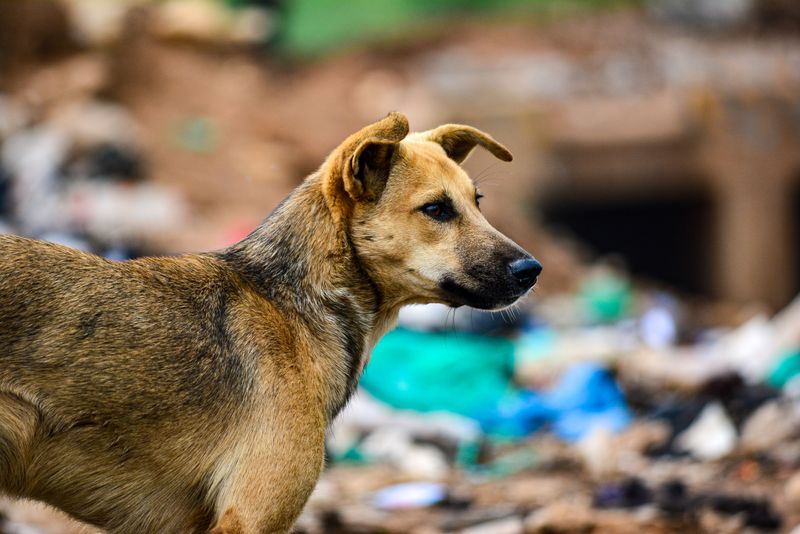
Inside my apartment, my seven-month-old shiba is a training genius. Sits, downs, comes when called, all for a piece of chicken. The second we step out the front door, that dog acts like he has never met me. I hold up the exact treat that had him spinning in circles ten seconds earlier, and he looks at it, looks at me, and goes back to sniffing a bush. It is the most humbling experience of my life, and for a while I thought he was just stubborn.
He is not stubborn. Shibas have a reputation for independence that is earned, but the real problem here is not personality, it is context, and it is nearly universal. Once I understood why the treats stopped working outside, the whole thing became trainable instead of maddening.
Why This Happens
Treats have different value in different places. Inside, your kitchen is boring, you are the most interesting thing in the room, and a piece of kibble is a fantastic reward. Outside, the world is exploding with smells, sounds, motion, and other dogs, and your treat is suddenly competing with a hundred infinitely more interesting things. What is a high-value reward at home is a low-value reward outdoors, and a dog will not work for a reward that does not beat the alternative.
The second factor is threshold. When a dog is over-stimulated by the environment, his thinking brain shuts down and his instinct brain takes over, trainers call it being "over threshold." At that point, he is not ignoring you out of spite. He genuinely cannot process a command, because the part of his brain that understands commands is offline. Every time I stood there repeating "sit, sit, SIT" at a dog who was already past his limit, I was nagging a dog who could not hear me.
And then there is the shiba factor specifically. Shibas were bred to think independently, hunt on their own, and not look to a human for direction. That does not mean they cannot be trained, they absolutely can, but it means the reward has to be worth their while. A shiba who does not see a reason to comply simply will not, and respectfully, that is not a flaw to be broken. It is the breed, and you have to work with it instead of against it.
What I Tried First — and Why It Didn't Work
My first instinct was to just take the training outside with the same treats and the same expectations, as if the location were neutral. It was not. He blew me off, I got frustrated, he got frustrated, and the session accomplished nothing except teaching both of us that outside training was a losing battle. I was trying to run a beginner lesson in an advanced environment.
Then I made the classic mistake of turning up the volume. If he did not respond to a normal command, I repeated it louder and more insistently. For a dog already over threshold, this does nothing but add pressure, and it teaches the dog that "sit" means "a string of meaningless noise." Repeating a cue you cannot enforce just trains the dog to ignore cues.
My third failure was marathon sessions. I would stand out there for half an hour, convinced that sheer time and repetition would break through. It never did. Long sessions in a distracting environment just meant a long stretch of me being ignored, which is the exact opposite of the short, high-success reps that actually build behavior. I was practicing failure on a loop.
What Actually Worked
The fix started with building his food drive at home, and that meant changing how meals worked. Instead of dumping his food in a bowl and hoping he cared about treats later, I started making him work for meals and slowing them down. A slow feeder bowl turned a two-minute inhale into a real puzzle, and it did something subtle but important: it made food matter to him. A dog who has to engage his brain to eat is a dog who values food more, and suddenly the reward I was offering outside carried actual weight.
Next, I raised the stakes for the outdoor environment specifically. Inside, plain kibble works. Outside, where the competition is fierce, I switched to something he only ever gets on walks, real chicken, tiny cubes of cheese, freeze-dried meat. It is the difference between paying someone in pennies and paying them in gold. When I made the outdoor reward genuinely special, he started making the choice to work with me, because the math finally favored it.
Then I peeled the difficulty back to the point where he could succeed. I started training at the front door, with it closed. Then the doorway, then the sidewalk out front, then the quiet end of the block, and only much later the busy park. Each step only advanced when he could still take food and respond, that is the signal that a dog is still under threshold and can actually learn. If he stopped taking food, I had pushed too far and I backed up. That rule alone fixed ninety percent of my problem.
I also changed what I rewarded. Instead of just drilling commands, I paid him heavily for simply checking in with me. Any voluntary look in my direction got a jackpot. That built the habit of paying attention to me outdoors, which is the foundation everything else rests on. And I switched to a long line outdoors, so I could give him some freedom safely without relying on a recall I could not yet trust. Shiba owners know the breed's flight risk; a long line is not optional for a curious dog with a nose.
Last, I kept sessions short. Three to five minutes, ended on a win, and always finished before he lost interest. For a dog this independent, the goal was never obedience under pressure. It was making cooperation more rewarding than ignoring me, one small rep at a time.
Slow-Feed Puzzle Bowl for Dogs
Makes meals a puzzle so food genuinely matters. The first step to a dog who will work for treats outdoors.
Check price on AmazonElevated Dog Bowl with Stand
An interactive feeder that builds food motivation at home, so high-value rewards land harder outside.
Check price on AmazonWhat I'd Tell Someone Starting Today
Do not take a beginner lesson into an advanced environment. Start inside, build food value with puzzle or slow feeders, upgrade to a reward your dog only gets outside, and move in tiny steps, only advancing when he is still willing to eat and listen. If he stops taking food, you have gone too far; back up and try again. And never repeat a cue you cannot enforce, with a shiba least of all.
My shiba still ignores me sometimes, because he is a shiba and that is the deal. But he checks in on walks now, comes when it matters, and works for me outside, because I stopped fighting his nature and started paying him what the environment was actually worth. Turns out he was never ignoring me. I was just bidding too low.
This post may contain affiliate links. If you buy through one of them, we earn a small commission at no extra cost to you.