
Two Dogs Meet in One Elevator Every Morning — Here's What I Learned About Making It Not Awkward
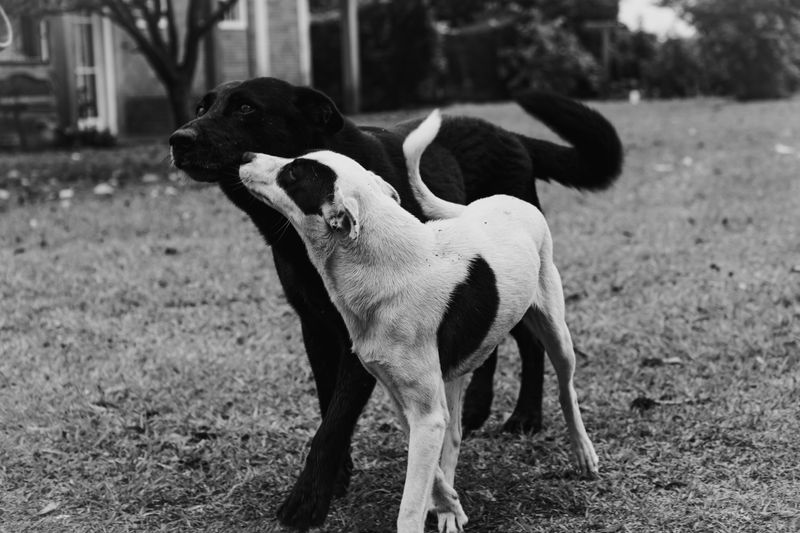
7:45 a.m., the doors slid open on the ninth floor, and there was my neighbor cradling a cup of coffee with a terrier at the end of a six-foot leash, while I stood there with my seventy-pound lab mix, Gus, already awake and interested. Both dogs locked eyes. Both leashes went taut. Nobody said a word, the doors closed, and we rode eleven floors in the most excruciating silence two adults and two dogs have ever shared. This happened four mornings a week for a month before I finally worked out what the heck you're supposed to do.
I googled it that first week and got a wall of contradictory answers. Some people said it's fine, let them sniff. Dogs need to say hi. Others said on-leash greetings are rude and you should never allow them. Meanwhile Gus had started getting wound up the moment we hit the lobby, and my neighbor had started taking the stairs. That's when I realized the question isn't "is it rude." The question is what actually keeps two dogs calm in a space the size of a phone booth.
Why This Happens
Tight enclosed spaces are genuinely hard on dogs, and it's worth understanding why before you decide how to handle the elevator. A dog's first language is body language and space. When two unfamiliar dogs meet, the polite version of the conversation involves arcs, one dog curves in a wide circle around the other, reads the signals, and either initiates a greeting or moves off. That's how dogs negotiate "friend or not friend" without conflict.
An elevator removes every one of those options. There's no arc, no lateral space, no way to retreat. Both dogs are trapped nose-to-nose on taut leashes, and leashes make it worse, because a dog that feels trapped but can't back away and can't advance is being set up for tension. Add that neither dog can read the other normally, since they're stacked in a narrow box, and you get the perfect recipe for a stiff, worried interaction that escalates. Most dog scuffles in apartment buildings aren't about aggression at all, they're about two dogs being forced into a greeting neither one would have chosen on open ground.
There's also a human factor. We read a relaxed off-leash dog park and a tense elevator the same way. "they should just get along", but they're completely different situations. A greeting that's perfectly appropriate in a yard is borderline rude on a leash in a box. So the answer to "is this rude" is yes, in the sense that forcing it is. Not rude on the dogs' part. Rude in the sense that the setup doesn't give them a fair chance.
What I Tried First — and Why It Didn't Work
My first move was to hold Gus's leash short and tight every time we stepped in. I figured keeping him glued to my side would prevent any contact. It made him stiffer and more reactive, not calmer (a tight leash broadcasts your own tension down the line, and it robbed him of the one comfort he had, which was a little slack.)
Then I tried the opposite: let them sniff it out. I let the leashes out, and the two dogs crowded each other in the corner, hackles up, until my neighbor yanked her terrier back. On-leash greetings in a tiny space, between two dogs who don't know each other, is basically asking for a sharp word. I'd traded one problem for a worse one.
The third thing I tried was avoidance, I started taking the stairs, thirteen floors, twice a day, which is great cardio and a terrible long-term plan. And on the days I did ride, I'd pick Gus up, which he tolerated and clearly resented. Managing around the problem kept the peace, but it never made the elevator an easier place for him.
What Actually Worked
The breakthrough was giving both dogs a job and a focus that wasn't each other, and one of the tools that did it was a tough chew toy Gus could hold in his mouth. I started handing him a Frienhund Tough Dog Toys chew on the way into the building, and a toy in a dog's mouth is genuinely incompatible with growling and lunging, he can't do both. Instead of staring down the terrier, he stood there gnawing, and the two dogs had something neutral to do with their mouths other than trade warnings. The toy being practically indestructible mattered, because Gus is a serious chewer and a flimsy toy would've been shredded in the time it takes to rise five floors.
I also kept a second set going. The WinTour Tough Dog Toys for Aggressive Chewers stayed clipped by the front door, so I always had one handy without scrambling. Rotating them kept the "elevator toy" special instead of stale, and the two of us had a routine: leash on, toy in mouth, ride up. A dog that's had a real chew outlet during the day is also just calmer at the office-door moments, and these held up to daily abuse far better than anything softer I'd bought.
The rest was etiquette, and I had a friendly two-minute conversation with my neighbor that fixed most of it. We agreed on a signal, if one of us already has a dog in the car, the other waits for the next one. If we do ride together, we stand in opposite corners, each dog behind the handler's legs, and we don't let them greet. We keep our voices flat and boring and we don't reach down. On the ground floor, one person exits first and stands aside, so nobody's funneled through the same doorway at the same time. It feels fussy. It works. Gus rides the elevator now without even looking at the terrier, because the toy and the routine told him what to expect.
What I'd Tell Someone Starting Today
Don't let your dog greet unknown dogs in the elevator, and don't take it personally if a neighbor decides not to let theirs greet you either. On-leash greetings in a confined space are a setup neither dog chose, and the kindest thing you can do is manage the space so nobody has to. Stand on opposite sides, keep a little slack in the leash, keep your body relaxed, and skip the "they just need to sniff" experiment.
Give your dog something to do with his mouth (a durable chew he holds while the doors close, and you'll watch the tension drain right out of the ride. And if there's ever a real hard stare or a tucked tail, just take the next elevator. It's a twenty-second wait, and it's the difference between a calm building and a dog who starts dreading the lobby. It took me a month of ten awkward rides to figure out that the elevator was never the problem. The lack of a plan was.)
This post may contain affiliate links. If you buy through one of them, we earn a small commission at no extra cost to you.