
My Cat Only Drinks From the Little Fountain — Here's Why, and How I Fixed It
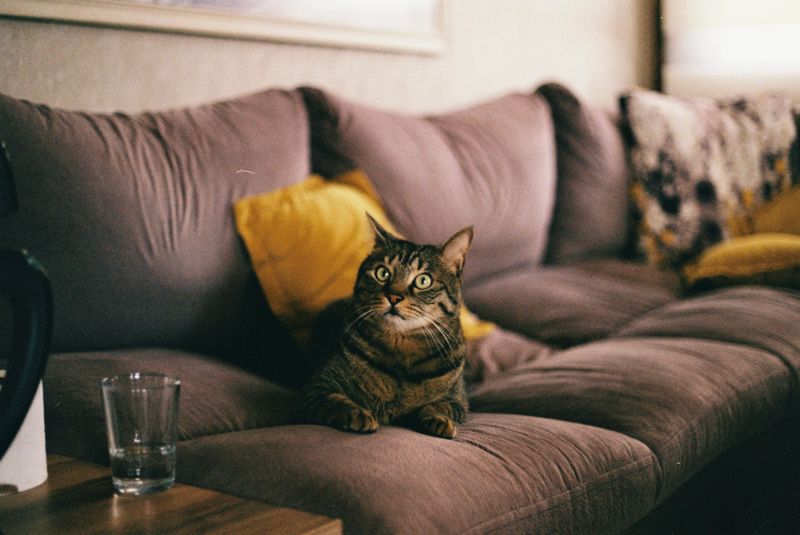
For almost two years, my tuxedo cat Pearl treated the ceramic water bowl by her food like it was furniture. She'd walk past it a dozen times a day and never touch it. The only thing she'd actually drink from was a cheap little fountain I'd bought on a whim at a discount store. And even then, she'd sit and stare at the stream for a full minute before she'd finally lower her head.
I assumed it was just a quirk. Then her annual bloodwork came back with concentrated urine and a note from the vet about mild dehydration. That's when the quirk stopped being cute. A cat that barely drinks is a cat on a slow road toward urinary crystals and kidney strain, and I'd been watching it happen in my own kitchen and calling it personality.
Why This Happens
Cats are descended from desert hunters, and their bodies run on a low thirst drive, they evolved to get most of their moisture from prey. That means a cat's "I'm thirsty" signal is weak to begin with. When you add a still bowl of water, you're stacking the deck against them. Out in the wild, stagnant water is the water you avoid. Moving water reads as fresh and safe to a cat's instincts, which is why a fountain gets attention a bowl never will.
There's another factor most people never think about: whisker fatigue. A cat's whiskers are loaded with sensitive nerve endings, and every time they brush against the rim of a narrow bowl, they get a small unpleasant signal. Deep, wide bowls solve this; tall narrow ones don't. Pearl's old bowl was narrow and tall, and I watched her flick her ears every time she drank from it. That flick was sensory annoyance, not indifference.
And then there's placement. Cats are oddly superstitious about water near food. In the wild, a dead carcass near a water source can contaminate it, so many cats instinctively avoid drinking right next to their dinner. Pearl's bowl sat six inches from her kibble. That alone can turn a perfectly good water source into a no-go zone.
One more thing worth knowing: cats drink in tiny, frequent sessions, a dozen or more small laps a day, and each session gets triggered by opportunity, not by a thirst signal the way it works for us. That's why total daily intake is so easy to undercount. A cat taking three polite laps from a boring bowl may be getting a fraction of what she needs, and the shortfall doesn't show up as obvious dehydration. It shows up months later, as crystals or a stressed kidney, on a blood panel you didn't expect to worry about.
What I Tried First — and Why It Didn't Work
My first move was to buy a bigger bowl. If she liked water, I reasoned, more water would be better. Wrong. It was still, still narrow, and still parked next to her food. She ignored it exactly as thoroughly as the old one.
Then I tried moving water around the apartment, bathroom, hallway, bedroom windowsill. She'd sniff each new location and walk away. What I didn't understand yet was that motion was the trigger, not novelty. I was relocating a bowl, not changing what made the bowl boring.
Next I tried adding ice cubes because I'd read somewhere that cats like cold water. She batted one cube around the floor for a minute like a toy, then lost interest entirely. The water underneath was still standing, still silent, still ignored. Three strikes, and I finally understood the pattern.
What Actually Worked
The fix was to give her moving water she couldn't resist, properly set up. I upgraded to a dedicated cat water fountain with a wide drinking area and a gentle stream, and the difference was immediate, she was at it within an hour, drinking in long pulls instead of polite sips. The key details: stainless steel or food-grade material she couldn't taste, a quiet pump so the noise didn't spook her, and a carbon filter so the water stayed fresh between changes.
Filtration matters more than people realize. Cats have a far stronger sense of smell than we do, and a bowl that's been out for two days picks up flavors we can't detect but they absolutely can. A fountain with a filter keeps the water tasting clean, which keeps a finicky cat coming back instead of drifting off to the toilet.
I also broke the golden rule of cat plumbing and separated her water from her food completely. The fountain went into a quiet corner across the room, and I added a second backup bowl in the hallway in case the pump ever failed while I was at work. Redundancy sounds excessive until you've come home to a dead pump and a cat who's been dry for eight hours.
The last piece was maintenance, which is the unglamorous part nobody mentions. I rinse the fountain every other day and do a full disassemble-and-scrub once a week, because a slimy fountain is worse than any bowl. Once the habit was built, it took two minutes and Pearl's bloodwork came back normal at her next check-up.
What I'd Tell Someone Starting Today
If your cat ignores their bowl, stop assuming it's fine. Put the fountain across the room from the food, give it a wide drinking surface, and clean it on a schedule you'll actually keep. Don't buy the smallest, cheapest unit. A fountain that annoys you with noise is one you'll stop refilling, and a dry fountain does nothing.
Watch the litter box, too. Bigger, more frequent clumps mean a better-hydrated cat. That's the feedback loop that kept me honest when I couldn't tell by looking whether she was drinking enough. Pearl still loves a moving stream. I just stopped pretending that was a personality trait and started treating it as a requirement.
This post may contain affiliate links. If you buy through one of them, we earn a small commission at no extra cost to you.