
My Rescue Cat Goes Scraggly Every Six Months — The Grooming Routine That Finally Stuck
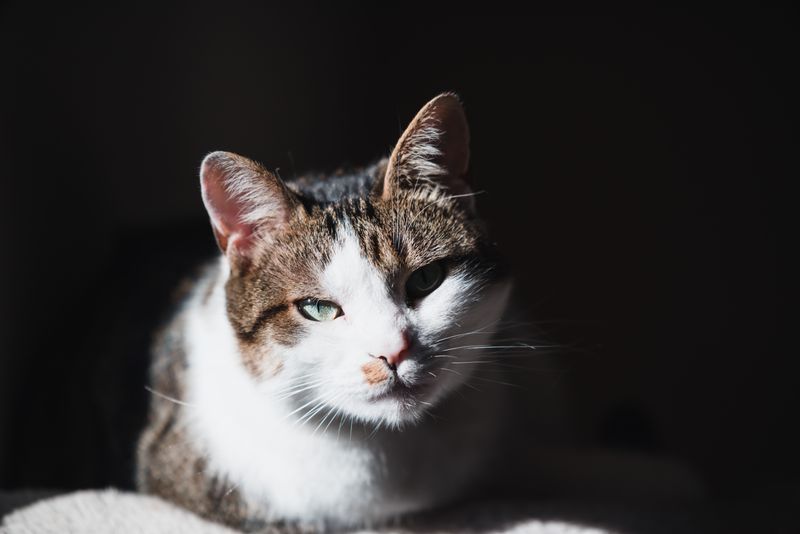
Miso came to us at four years old with a file that said "unknown coat history" and a body that told a different story, patches where fur had grown back unevenly, a tail that had clearly been through something, and a habit of flinching when my hand came near her back. Twice a year, without fail, her coat would go from soft to what I can only describe as scraggly: dull, greasy near the roots, and matted behind the ears and under the collar.
For the first two years I did what seemed obvious for a cat whose fur kept knotting up. I had her shaved down every six months. She'd come home looking like a plucked chicken, miserable for a week, and then the scraggle would start all over again within months. It took me embarrassingly long to realize I was treating the symptom and making the cause worse.
Why This Happens
A cat's coat is a self-regulating system. The dense undercoat traps air for warmth in winter, and the topcoat sheds that undercoat out in spring. When a cat can't complete that cycle. Because of poor grooming, stress, age, or the fact that rescue cats often carry old skin issues. Dead undercoat stays trapped. That trapped fur is what mats, holds oil, and gives a coat that dull, ratty look.
Shaving removes the topcoat but doesn't solve the undercoat problem. It resets the clock and can even damage the coat's ability to regulate itself, which is why so many shaved cats grow back patchy and why the scraggle returns. Shaving is sometimes medically necessary, but it's a sledgehammer, not a maintenance plan.
Rescue cats also carry a stress history that shows up directly in the coat. Stress suppresses grooming. A cat who isn't grooming five to ten minutes a day has oil building up, dander accumulating, and loose fur sitting un-shed. Miso's flinch told me she'd learned that hands near her back meant something unpleasant, so she'd been under-grooming that exact spot for years before I ever met her.
Skin health and coat health are really the same project. A cat on a poor diet, or one quietly carrying fleas or seasonal allergies, produces extra dander and oil that a struggling coat can't clear. That's the other reason a pure "just brush more" approach fails on its own, the fur you're fighting is a symptom of skin underneath it, and both have to be handled together.
What I Tried First — and Why It Didn't Work
The shaving cycle was my first mistake, and it was a big one. Every six months: shave, chicken, regrow, repeat. I was paying a groomer to erase the problem instead of resolving it, and my cat's coat never got healthier, just reset.
My second attempt was a human hairbrush I had in a drawer. I dragged it across her back, she hissed, and I learned that a human brush grabs live fur as well as dead fur. It hurt her. That's the quickest way to teach a nervous rescue cat that brushing is punishment.
Then I tried bathing her, because the greasy roots felt like a "she's dirty" problem. She screamed, I got scratched, and the grease came right back within two weeks because the trapped undercoat was still there, holding oil and refusing to shed. Water doesn't fix what a brush should be removing.
What Actually Worked
The routine that finally worked is boring, and that's exactly why it worked: short, daily brushing with the right tool, done on the cat's terms. I started with the Depets self-cleaning slicker brush, and the self-cleaning feature turned out to matter more than I expected, the fine bent wires grab loose undercoat and dander without yanking live fur, and the retractable bristle pad means you empty the brush with one button instead of picking fur out by hand. Friction-free for her, low-effort for me, which is the only kind of routine a human will actually keep.
I built it up slowly, about ten to fifteen strokes a day, working from her shoulders toward her tail and always stopping before she flattened her ears. Within three weeks the mats behind her ears had broken up and the greasy roots started to resolve. Within two months her coat had that dense, glossy quality I'd assumed she simply couldn't have. The key was daily, not weekly. Undercoat that gets brushed out a little each day never gets the chance to knot.
The second half of the routine handles the shedding that lands on the furniture. I keep the ORDORA reusable pet hair remover brush by the couch, because a fine-bristle looped brush lifts embedded fur off upholstery better than any vacuum attachment I've tried, and it doesn't need replacement pads or sticky refills. It's the companion piece, the slicker keeps the fur on the cat healthy, and the remover keeps it off everything she sheds on.
I also fixed the underlying stress. I stopped reaching over her back without warning, started approaching from the front where she could see my hand, and gave a treat after every brushing session. Calm cats groom themselves well, and a cat who's grooming herself properly has far less of the undercoat buildup that started this whole mess.
What I'd Tell Someone Starting Today
Brush a little every day instead of a lot once a week, and buy a tool designed for the job, a slicker for the loose undercoat, a separate remover for the furniture. Stop shaving unless a vet says you have to; you're treating a symptom and paying for a redo.
Give it two months before you judge the results, and take photos so you can see the change your eyes stop noticing day to day. Miso will never be a show cat. But she's soft again, she doesn't flinch when I brush her, and I haven't paid for a shave in over a year.
This post may contain affiliate links. If you buy through one of them, we earn a small commission at no extra cost to you.