
Three Cats — Two Sleepless Adults, and a Territory War We Finally Ended
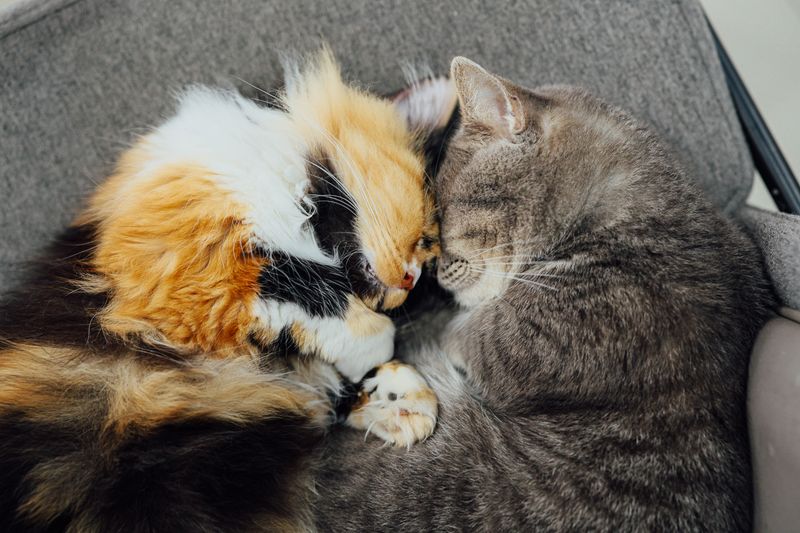
The first month with our third cat, I stopped sleeping. Not the newborn-baby kind of not sleeping, the kind where you're wide awake at 3 a.m. Because two cats are yowling at each other in the hallway and the third is standing on your chest, staring at the door. My partner and I started snapping at each other over things that had nothing to do with cats, and the phrase "your cat" entered our vocabulary for the first time in six years together.
I'd read all the calm advice about letting cats "work it out." They didn't work it out. What happened instead was that our apartment quietly split into armed camps, one cat claimed the couch and peed on it twice to prove the point, and the humans in the house became negotiators in a cold war they never signed up for.
Why This Happens
A cat doesn't experience territory as a map. It experiences territory as a set of resources it can reach without stress: food, water, litter, high perches, and escape routes. When three cats share a space with one food station, one litter box, and one good windowsill, you haven't created a home. You've created a bottleneck. Every trip to the litter box becomes a potential confrontation.
The nighttime yowling that was wrecking our sleep wasn't random spite. Cats are crepuscular, most active at dawn and dusk, and a cat who feels crowded during the day uses the quiet hours to patrol and reassert. Every yowl was a cat saying "this is mine" to a rival who disagreed. We were being kept awake by a boundary dispute, not by misbehavior.
And the fights between my partner and me had a real biological cause underneath. Sleep deprivation wrecks emotional regulation for humans the same way stress wrecks it for cats. We were both exhausted, both convinced the other person wasn't helping, and both wrong. The cats weren't the problem. The overcrowded setup was, and it was making everyone in the house miserable.
What I Tried First — and Why It Didn't Work
My first tactic was the squirt bottle. A spray of water whenever a cat yowled or lunged, on the theory that a little deterrent would teach them to knock it off. It taught them to associate me with getting wet. The yowling moved to rooms I wasn't in, and one cat started avoiding me entirely. Punishment doesn't reduce conflict between cats; it just moves it out of your sight.
Next I tried separating them at night into different rooms. That stopped the 3 a.m. Fights, and it also stopped any progress. When you wall cats off from each other, you prevent fights but you also prevent the calm, side-by-side time they need to build tolerance. I was buying sleep at the cost of ever solving the problem.
Then I went the toy route, a basket of new catnip mice, a laser, a feather wand, the whole aisle. The play was fun and completely beside the point. Territory conflict isn't boredom. Half an hour of play doesn't fix a cat who has to cross enemy ground just to reach the litter box.
What Actually Worked
The fix was to stop thinking about the cats and start thinking about the resources. The rule I adopted, and the one that ended the war, is N plus one: for three cats, four of everything. Four litter boxes in four different rooms, four water stations, four feeding spots spread far enough apart that no cat has to eat with its back to a rival. Overnight, the bottleneck disappeared, and with it most of the tension.
Vertical space was the second open up. Cats defuse conflict by going up. A cat on a shelf is a cat who isn't fighting. I added cat trees and cleared the top of a bookshelf, and suddenly there were neutral high grounds where a nervous cat could perch and watch without being cornered. The yowling at night dropped by half within a week once everyone had somewhere safe to be.
The third piece was giving each cat its own decompression spot at floor level, and this is where a real bed mattered. I set up separate sleeping stations, including a dedicated orthopedic cat bed in the quiet corner each cat had claimed as home base. A supportive, washable bed isn't a cure for conflict, but a cat with a soft, defined, personal spot sleeps more deeply, guards less, and starts the day with a lower baseline of stress, which is the raw material every other fix depends on. Buying three beds felt excessive right up until I watched all three cats conk out in their own corners for the first full night in months.
The last thing I did was retrain the humans. We split the morning routine into two shifts so no single cat got ambushed at breakfast, and we agreed that "your cat" was banned from the vocabulary. Sound stupid? It stopped the fights between us within a week, which lowered the stress in the house, which the cats could feel. Nobody yells in a calm house.
What I'd Tell Someone Starting Today
Count your resources before you count your cats. If you have more cats than litter boxes, water bowls, or safe sleeping spots, you already know where the problem is. Add one of everything, spread it out, and give it two weeks before you decide it isn't working.
Go vertical, give each cat a bed they can call their own, and stop punishing. We sleep through the night now. The couch has been reclaimed by humans, the peeing stopped, and the only thing our cats fight over anymore is who gets the sunny spot on the shelf, which, frankly, they can have.
This post may contain affiliate links. If you buy through one of them, we earn a small commission at no extra cost to you.