
My Six-Month-Old Kitten Went Weird After His Neuter — How I Redirected the Chaos
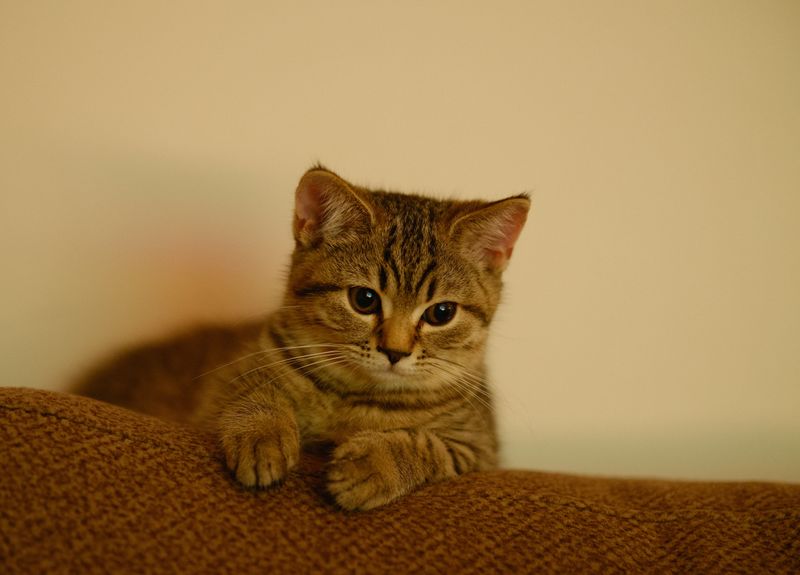
Otis came home from his neuter a completely different cat than the one I'd dropped off that morning. For two days he was glassy-eyed and clingy, which I expected. What I didn't expect was the cat who emerged on day three: pacing the hallway at midnight, yowling at nothing, nipping at my ankles, and licking his incision so obsessively the fur around it had gone raw. I'd read that neutering would calm him down. Nobody told me about the stretch in between.
I spent a week convinced I'd broken my kitten. Then a friend who fosters said a sentence that reframed everything: a confined, bored, six-month-old kitten with energy to burn and a sore spot he can't reach is a recipe for strange behavior, and "strange" was exactly what I was seeing.
Why This Happens
Six months is peak kitten adolescence. Otis was at the age where a cat's body is nearly grown but his brain is flooded with the drive to explore, hunt, and play, the same age a wild cat would be learning to survive on its own. Neutering removes the hormonal driver behind some of that restlessness, but it doesn't switch off the energy. For a lot of cats there's a lag: the behavior actually peaks in the weeks right after surgery, because you've locked them in a quiet room to heal while their energy does the opposite of quiet down.
The incision is the other half of it. A neuter leaves a small wound, and cats respond to a wound by licking it. Licking is soothing, so it becomes a loop, lick, soothe, dry out the skin, itch, lick again. That loop produces the pacing and the crankiness everyone notices, because an uncomfortable cat with nothing to do is a cat in a bad mood. Otis didn't turn strange. He turned bored and itchy at the same time.
And then there's confinement itself. Vets tell you to keep the cat calm and quiet for a stretch after surgery, which is correct, but a kitten who's used to roaming the whole house suddenly boxed into one room reacts like any confined animal. With restlessness, vocalizing, and attempts to escape. The behavior isn't a personality change. It's a response to a temporary cage.
What I Tried First — and Why It Didn't Work
My first move was the cone. The vet sent us home with a plastic Elizabethan collar, and I dutifully put it on. Otis hated it on a level I'd never seen, he walked backward, refused to eat, and rammed his head into walls trying to get it off. Worse, he couldn't reach his incision, so the licking stopped, but he was so distressed by the cone that I don't think he slept properly for two days. It "worked" in the narrow sense and failed in every way that mattered.
Next I tried to tire him out with play, figuring a worn-out kitten would settle. He was still on limited activity, though, so I had to keep it gentle, and gentle play barely dented the energy. I'd get him panting slightly and then have to stop, which left him revved up with nowhere to put it. Redirecting energy only works if the outlet is big enough to matter.
Third, I tried simply ignoring the yowling at night, hoping he'd self-soothe. He didn't. He escalated, and I lost three nights of sleep and my patience, which is a terrible combination when you're tending a recovering surgical patient. Ignoring an uncomfortable cat isn't training. It's just ignoring.
What Actually Worked
The fix started with ditching the cone for a soft recovery suit. The kind that wraps the abdomen like a snug bodysuit instead of jutting out from the neck. That single swap changed Otis's whole demeanor. He could eat, sleep, walk, and play normally, and the fabric over his belly kept him from getting at the incision. Within a day he was calm enough to nap in the sun, which is medicine in itself for a cat who's healing. If a plastic cone is turning your cat into a stressed wreck, a comfy surgical suit is genuinely worth trying, just size it right so it covers the incision without rubbing.
With the licking loop broken, I could finally give his energy somewhere to go. I built a rotation: a wand toy for short, supervised sessions during the day, a couple of puzzle feeders so mealtimes took real effort, and a window perch so he could watch the neighborhood instead of the walls. Rotating toys every few days kept them novel. The pacing dropped off within a week, because a kitten with three small outlets isn't desperate enough to invent trouble.
I also adjusted his recovery space rather than fighting it. Instead of one bare room, I set up a smaller pen with his bed, food, water, and litter all within sight of each other so he felt secure rather than confined, and I spent the first hours sitting in there with him so being calm was rewarded with company. Once he trusted the space, he stopped trying to escape it.
The last piece was patience about the timeline. Neutering doesn't instantly produce a mellow cat, and expecting the "new calm Otis" by day three set me up to panic. By about three weeks out, the energy had settled into normal kitten rhythm instead of chaos, and by two months he was the laid-back cat I'd been promised.
What I'd Tell Someone Starting Today
Expect the weird stretch after a neuter, and don't read it as a personality change. Guard the incision with a soft suit if the cone is causing more stress than it prevents, give the energy real outlets in small doses, and make the recovery space feel safe instead of like a cell. Keep activity gentle until your vet clears him, and call them if the incision looks angry or he stops eating.
Otis still has his midnight moments. But he's not pawing at a wound or yowling at ghosts anymore. He's a kitten being a kitten, which is all he ever was.
This post may contain affiliate links. If you buy through one of them, we earn a small commission at no extra cost to you.