
My Cat Turns Into a Buzz Saw Every Time I Pick Her Up — How Handling Finally Stopped Drawing Blood
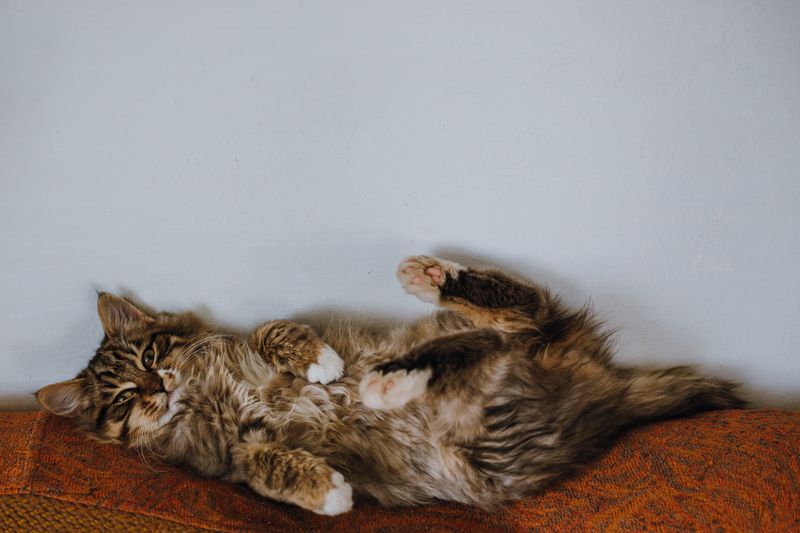
I still have a faint scar on the back of my right hand shaped like a comma. Sable gave it to me in October, when I made the mistake of lifting her off the windowsill to trim the two claws that had curved into little hooks. She had always been a tolerant cat. She let me pick her up, at least for the ten seconds it took to move her. Then she didn't. One week she was a lap cat, and the next she was a bundle of teeth and back feet, and I could not figure out what had changed.
What changed was that I had started handling her more, claw trims, ear drops for a mild infection, and a monthly supplement I had to squirt into her mouth. Each event was quick and rotten, and she had no way of knowing it would ever end. So the equation in her head got very simple: hands are bad, being lifted is worse. By the time I noticed, she was growling the instant my palms slid under her chest.
Why This Happens
Here's the part I wish I'd understood from the start: cats are not a species we bred to be handled. Dogs have spent thousands of years being picked up, restrained, and carried, and most have a tolerance baked in. Cats evolved as both predator and prey, and being lifted off the ground removes the one thing they rely on most, the ability to flee. When running isn't an option, the only tools left are teeth and back claws. So the biting isn't a personality flaw. It's what a small animal does when it has run out of options.
There is usually an accelerant on top of that. Pain is the big one, a cat with a sore tooth, an achy hip, or an irritated ear can be perfectly friendly right up until you touch the wrong place. Overstimulation is the other. Cats have a touch threshold, and it can be surprisingly low, especially for a cat who is new to the house or wound up. A cat who bites during handling is often a cat whose limit was crossed three times before anyone noticed.
And then there's the handling gap, which was my real problem. Cats don't get handled much just for the fun of it. We scoop them up for vet visits, pills, nail trims, and baths, the four worst things in a cat's day. So a cat's whole history with hands is a long, boring wait punctuated by unpleasant surprises. You have to actively teach the opposite lesson, or the math never changes.
What I Tried First — and Why It Didn't Work
I scruffed her, because that's what my mother did with generations of barn cats and what a cat mother does with kittens. Sable is three years old and eleven pounds; the scruff reflex that quiets a kitten had long since stopped meaning anything to her. All it did was pin her shoulders and free up her back legs. She got faster at scratching, not slower.
Then I went the towel route. A bath towel, a quick wrap, a burrito with only the head poking out. It worked exactly once. The second time, she heard the linen-closet door and was under the bed before I had the towel unfolded. I had accidentally taught her that the sight of a towel predicts the worst part of her week.
My third dumb idea was correction. I said "no" firmly, and once, out of pure reflex, tapped her nose when her teeth connected. That taught her precisely nothing about being calmer and everything about the fact that my hands come at her face. She stopped warning me with a growl and started going straight for a bite. Punishing the warning is the most common mistake newer cat owners make, and I made it.
What Actually Worked
The turn came when I stopped trying to win the handling fight and started paying her for showing up. The technique is cooperative care, and it sounds fancier than it is: you break every handling task into pieces small enough that the cat can earn a reward for each one. My first session I didn't touch her at all. I laid the nail clippers on the floor, gave her a treat for looking at them, and ended it. The next day, a treat for letting me touch one paw. Ten days later, one claw. Yes, it took ten days. That's the deal.
The real open up, though, was getting my hands out of the bite zone while I worked. I picked up a set of 2 Pcs 10.6" Stainless Steel Reptile Feeding Tongs & Tweezers, and what began as a reptile-feeding tool became the best piece of cat-handling gear I own. I'd squeeze a stream of lickable churu onto the tip and hold it out at arm's length, so Sable had something to do with her mouth that wasn't biting me. A cat whose tongue is busy working a lickable treat is not rehearsing the ambush. With her occupied at the end of those long tongs, I could stroke a paw, touch an ear, or clip a claw with my free hand, and she'd let me, because the good thing kept coming.
The tongs fixed a second problem, too. Before, my fingers were the reward-delivery system, which meant the reward and the threat were the same object. Once the food arrived on a separate, inanimate stick that lived on the shelf until handling time, my hands stopped being the whole story. She began leaning toward the tongs instead of watching my fingers like a snake.
The other half was the space itself. Stress-peeing is common in cats who brace for handling, and Sable had marked the inside of the carrier and the corner of the table I used for nail trims, more than once. That residue kept announcing "danger zone" every time we walked in. I cleaned the carrier, the table, and the floor with Rabbit Cage Odor Eliminator & Cleaner Spray, 32oz, working it into the plastic and the grout until the sour smell was genuinely gone rather than just covered. It's sold for hutches and cages, but an enzyme cleaner that breaks down urine compounds doesn't care what species made the mess. Once the room stopped smelling like her worst memory, she stopped flinching the moment we sat down.
I also changed the schedule. Handling sessions got capped at ninety seconds and always ended with her walking away first, not me. If she bailed, fine, session over, try again tomorrow. Within six weeks I could trim a front paw without a growl. She'll probably never love being carried around like a baby, and that's okay. I don't need her to love it. I need to be able to move her without bleeding.
What I'd Tell Someone Starting Today
Start by assuming nothing is wrong with your cat and everything is wrong with how the handling feels to her. Get the medical side checked first, a sudden change in how a cat tolerates touch can be a mouth or joint problem, and no training trick fixes pain. Then slow down, pay her for each tiny step, and get your hands out of reach while you work. Keep sessions short, end on a win, and let her be the one who decides when you're finished.
And if your cat is biting hard enough to break skin, or coming after you unprovoked, stop treating it as a behavior you can read your way out of. That's a job for a veterinary behaviorist, and there's no shame in calling one. A cat bite is genuinely dangerous, the bacteria in a cat's mouth can turn a punctured knuckle into a same-day doctor visit, not a wait-and-see. I got lucky with a scratch. Don't gamble with the bite.
This post may contain affiliate links. If you buy through one of them, we earn a small commission at no extra cost to you.