
My 4-Month-Old Kitten Was Breathing Fast While Resting. What It Turned Out to Be
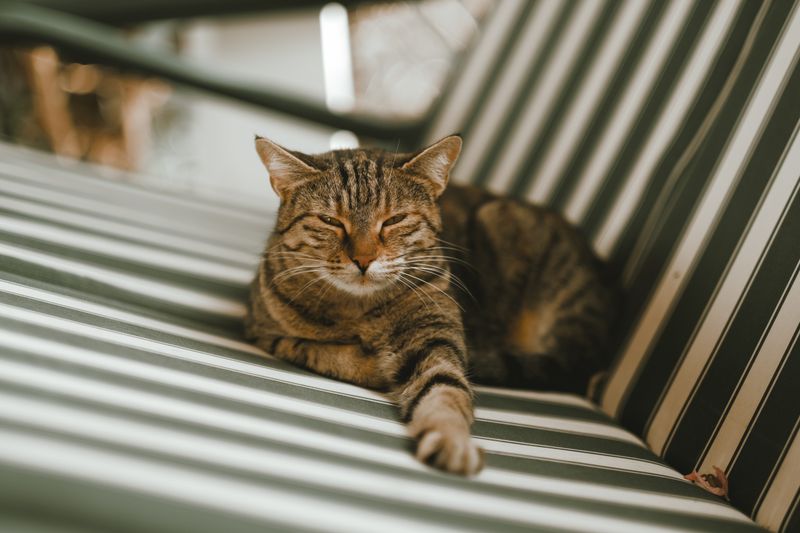
Pip was curled on my chest one Sunday morning, purring, when I noticed her whole ribcage moving. Not the slow rise and fall of a relaxed cat (a fast, shallow flutter, maybe two per second, while she was doing absolutely nothing. I counted for a full minute. Sixty-plus breaths. I put my hand on her side and felt her heart skittering underneath.)
I did the worst possible thing, which was to open a browser tab. Fifteen minutes later I was convinced she had heart failure, fluid in her chest, or a collapsed lung, and I was in the car with her in a carrier, still in my pajama pants. I want to be clear about that part up front, because it's the part that turned out to matter: fast breathing in a kitten is not something you watch and wait on. It's a vet visit.
Why This Happens
Kittens do breathe faster than adult cats, a relaxed adult runs somewhere around 20 to 30 breaths a minute, and a healthy young kitten can sit in the 30 to 40 range, especially when warm or just done playing. What matters is the context. A kitten breathing fast while romping is normal. A kitten breathing fast while asleep, while held, or while resting quietly, and staying that way for minutes (is the flag. Anything with open-mouth breathing in a cat, at any age, is a same-day emergency.)
The list of things that can drive a young kitten's resting rate up is long and serious: a heart problem it was born with, fluid around the lungs, a fever, anemia, a respiratory infection, or simple pain. Stress and heat are real factors too, and a four-month-old who has just been moved, vaccinated, or crowded by other animals is a stressed animal. That's why the diagnosis is a vet's job and never a search engine's.
What my vet walked me through afterward is the part I hadn't considered: the environment. Young kittens have small airways and immature immune systems, and I was running the whole setup against her. I was using a heavily scented, dusty clumping litter in a covered box I cleaned every few days, in a bathroom with no window. Litter dust and the ammonia that builds in a neglected box are both airway irritants, and in a little cat they show up as wheezing, watery eyes, and a raised breathing rate. The box and the feeding station were also jammed into the same corner, so she was eating two feet from where she peed.
What I Tried First — and Why It Didn't Work
My first move, once I'd calmed down, was to try to wear her out at night so she'd sleep more soundly. I broke out the wand toy and played her hard for twenty minutes. Her breathing, of course, went through the roof and stayed there for half an hour. I had multiplied the thing I was worried about. A wound-up kitten is a fast-breathing kitten, and I was the one winding her up.
My second mistake was deciding the breathing was "just the litter dust" and fixing it the cheapest way I could, I switched to an even cheaper clay litter to save money, which kicked up more dust, and I put off a deep clean of the box because I'd read that cats "like" their own scent. That advice is about not scrubbing with harsh chemicals; it isn't license to leave urine sitting in a tray. The box smelled like a gas-station bathroom and my kitten's eyes were watering.
My third attempt was rearranging nothing. I moved the food slightly closer to the box, which is exactly backwards, and I kept the covered box because it looked tidy in the apartment. I was managing my own sense of aesthetics, not her airway.
What Actually Worked
The real fix started at the vet, and I'm not going to pretend a product did the work of a diagnosis. Pip had a mild upper respiratory infection, common in shelter kittens, which my vet treated with a course of medication, and once she was on it her fast breathing calmed within a week. But my vet also made clear the environment would keep dragging her back if I didn't fix it, so that's where I put my energy.
I rebuilt the box zone from the floor up. First, I put a Cat Litter Mat, the double-layer honeycomb kind, at the box's exit. The top layer has holes and the bottom layer catches everything that falls through, so instead of a permanent grit trail across the bathroom floor I could tip the trapped litter straight back into the box. That mattered more than it sounds, because a cat who tracks litter everywhere also walks that litter to her food bowl, and a clean floor is one less irritant in her air. It also made me actually keep the area tidy instead of resigning myself to a scuzzy bathroom, and a floor I swept daily meant the box itself got scooped daily out of pure habit.
Under and around the box, I laid a Cat Litter Mat 47" x 33", the urine-proof XL one. This solved the problem the honeycomb mat couldn't: when Pip occasionally overshot the box, which young kittens do. The urine hit the mat, not the grout, and urine sitting in grout is where the ammonia smell comes from. Because the XL mat is waterproof, I could rinse it in the tub, dry it, and put it back, and the carpet underneath stayed genuinely dry. No ammonia, no dust sitting in a damp patch, no invisible irritant baking in the corner.
Then I got the animals' needs out of each other's space. Litter box on one side of the bathroom, food and water on the opposite side, and I filled the box with an unscented, low-dust litter scooped twice a day and swapped out weekly. I cracked the window for ten minutes a day. Within two weeks her resting rate was in the thirties, her eyes were clear, and she'd stopped sounding like she'd just run a race every time she sat still.
What I'd Tell Someone Starting Today
If your kitten is breathing hard while resting, or breathing through an open mouth at all, put the phone down and call your vet or an emergency clinic. Count the breaths for a full minute first so you have a real number to report, and film a ten-second clip, vets can read a lot from a short video. Don't wait for it to "pass," and don't let a search result talk you into either panic or denial.
Once the scary stuff is ruled out, treat the environment as medicine. Get the dust out of her litter and the ammonia out of her box, keep the box and the food apart, and clean the floor around the box so nothing is festering under her feet. Pip is a year old now and breathes like a metronome. Nothing I bought fixed her lungs, but I'd bet the clean, low-dust setup I built around her is part of the reason she's stayed clear.
This post may contain affiliate links. If you buy through one of them, we earn a small commission at no extra cost to you.