
My 14-Year-Old Cat Grew a Bump on Her Nose. What I Did and What Actually Helped
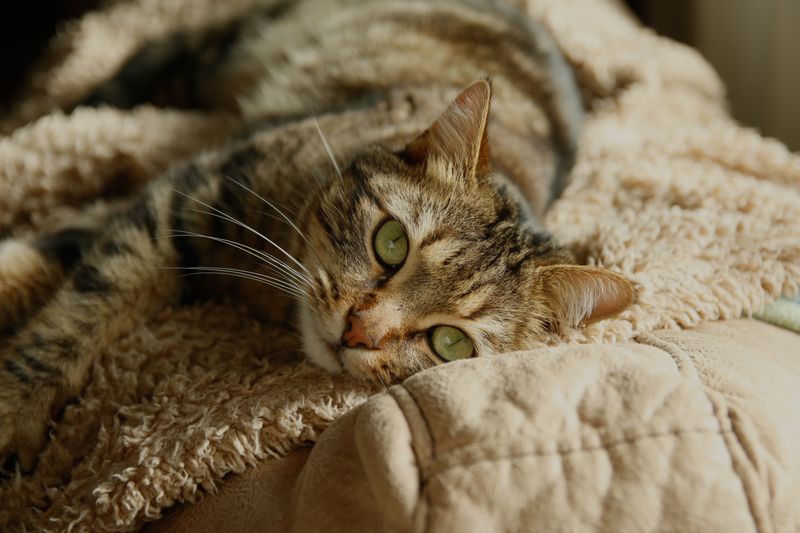
Cleo has slept on the arm of my reading chair for eleven years, and she has a specific way of tucking her nose into the crook of her own front leg when she drops off. That's how I found it, on a Tuesday night, chin-to-fur with her face: a small, firm swelling on the bridge of her nose, about the size of a lentil, that hadn't been there a month earlier. She didn't flinch when I touched it. She didn't seem to know it existed. I did not sleep that night.
By morning I had run every possible search and confirmed, in my head, that it was cancer. I made an appointment that afternoon and spent the two-day wait reading far too much and doing far too little that was useful. What I want to pass on to anyone in that window is this: a lump on an old cat's nose can be any number of things, most of them benign, and the only honest way to find out is in a veterinary exam. So the most helpful thing you can do is book the appointment and stop measuring the bump with your eyes.
Why This Happens
In older cats, a bump on or near the nose is a genuinely mixed bag. On the benign end you have sebaceous cysts, little blocked oil glands that are remarkably common in seniors; eosinophilic granulomas, raised, angry-looking lesions often tied to allergies; and simple abscesses or insect reactions. On the other end are the things everyone fears, skin cancers and nasal tumors, which do occur in cats, especially on sun-exposed or pale skin, and tend to grow rather than shrink. There is no reliable way to tell them apart by look or feel. A vet may want to take a fine-needle sample, a quick poke that pulls a few cells, and that sample is what turns a guess into an answer.
One thing I'd never thought about until my vet mentioned it: a nose lesion can be the first sign of a systemic issue rather than a local one. Inflammatory conditions and some skin diseases show up on the nose and face first because that's thin, exposed skin. So the exam isn't just about the spot. It 's a reason to check the whole cat, especially a fourteen-year-old.
And that brought up the bigger subject, which is the senior body itself. At fourteen, Cleo's needs had quietly shifted. She was sleeping more, drinking differently, and, the part that worried me, eating less while still looking a little thin, because older cats absorb nutrients less efficiently and often lose muscle mass even when they seem fine. A senior cat's care is about comfort and nutrition as much as it is about any one symptom.
What I Tried First — and Why It Didn't Work
Before the appointment I did what a lot of people do: I treated it at home. I dabbed a little antibiotic ointment on it, reasoning that if it were a scratch or an infection, that would help. It did nothing except annoy her, and smearing goo on a cat's nose is a great way to earn a swipe. Nose skin is thin and delicate, and guessing with human products is how small problems become irritated ones.
Then I tried the opposite and did nothing, telling myself I'd "keep an eye on it" for a couple of weeks. That was the wrong call too. Two weeks of watching would have changed nothing about whether it was serious; it would only have cost me two weeks if it was. The lump was firm and not shrinking, and "wait and see" on a new growth in an elderly cat is just anxiety with extra steps.
My third unhelpful move was to start throwing supplements at her general health in a panic, I bought two different multivitamins I'd seen recommended and ran them on top of each other. That's not a plan, it's noise. The right move was one vet-approved supplement at a sensible dose, not a shelf of half-open bottles.
What Actually Worked
The vet aspirated the bump, looked at the cells under a scope, and called me the next day with the news I'd been dreading and the diagnosis I hadn't: a benign, allergy-linked granuloma, the kind of inflammatory nodule older cats throw on the face and bridge of the nose. She treated it with a short course of a steroid and it flattened over about three weeks. No surgery, no biopsy, no drama after that first terrible night. The lesson I keep repeating to people: get it looked at, because the answer is often smaller than the fear.
With the bump handled, my vet and I turned to the part that actually shapes an old cat's life, her nutrition. She'd been trending skinny and eating half-heartedly, and older cats simply don't extract what they used to from their food. The one thing I would never have guessed I'd end up using was a jar of Dog Prenatal Vitamins. The label says pregnancy, but what my vet pointed to was the nutrient profile: folic acid, B12, DHA, and a broad B-vitamin blend, exactly the sort of thing she wanted for a senior cat who was absorbing less and needed easy, palatable calories. The soft chew was small and soft enough for Cleo to eat despite her fussy senior teeth, and the vet set the dose for a cat rather than a dog. I cleared every bit of that with her first, and I'd tell anyone the same, never dose a cat with a dog product without your vet's sign-off, because the difference between helpful and harmful is in the numbers, not the ingredient list.
For the second bottle, I kept a second formulation of the same prenatal blend on the shelf, Dog Prenatal Vitamins for Pregnant & Nursing Dogs. Because the count and flavor differed and it was the one she'd actually take on days the first made her turn her nose up. It was, functionally, the same nutritional idea in a different jar, and having a backup meant I never had a night where the supplement just didn't happen. Warmed wet food at every meal, a water fountain moved close to her favorite sleeping spot, and a heated pad under her blanket rounded out the routine, and she gained back most of what she'd lost.
Six months on, the nose bump is gone, her weight is stable, and she still tucks her face into her front leg on the arm of my chair.
What I'd Tell Someone Starting Today
If you find a new lump on your older cat, especially on thin skin like the nose, ears, or eyelid, book the vet and let them decide, because benign is far more common than you'd believe at two in the morning, and the only way to know is a sample. Don't put human ointments on it, and don't "watch it" for weeks. Take a dated photo today so you and your vet can track whether it's changing, and bring it with you.
Then separate the lump from the cat. Whatever the diagnosis turns out to be, an old cat needs warmth, easy access to food and water, and a nutrition plan built for a body that doesn't absorb like it used to, and any supplement you add, cat-labeled or not, has to be cleared and dosed by your vet. The lump is the alarm. The daily care is what you actually control. For Cleo, that turned out to be the whole story.
This post may contain affiliate links. If you buy through one of them, we earn a small commission at no extra cost to you.