
My Cat Favors One Leg On and Off — How I Finally Got His Mobility Under Control
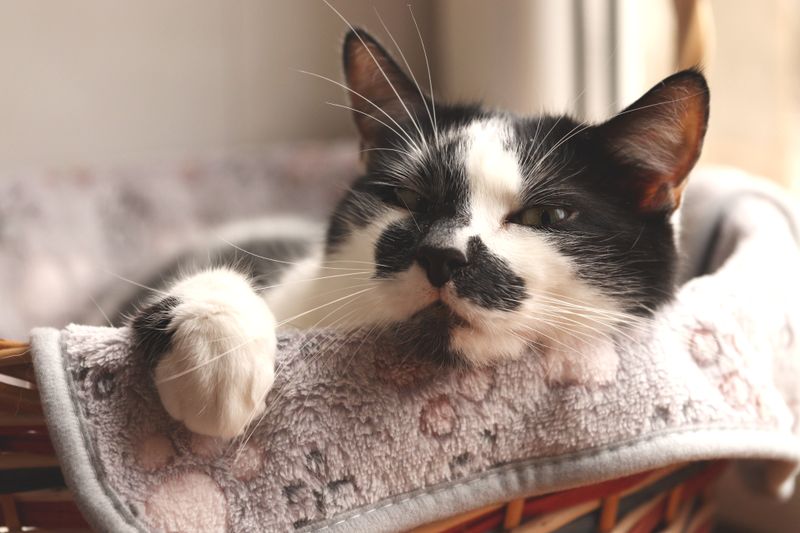
The first time I noticed Biscuit limping, he was eleven years old and jumped off the couch wrong. He held his front right paw up for a step or two, then walked it off like nothing happened. Over the next few months it turned into a pattern: fine for a week, then a little off for a day, then fine again. No crying, no swelling I could feel, no obvious wound. Just a cat who sometimes didn't want to come down the stairs.
I nearly brushed it off as nothing. Here's what pulled me up short (cats are masters at hiding pain, and a limp that comes and goes is one of the most common ways arthritis shows up in an older cat. I'd been waiting for a yowl that was never going to come, because Biscuit's instincts told him to hide any sign of weakness.)
Why This Happens
Arthritis is far more common in cats than most owners realize, and it's just as common as it is in dogs, we simply miss it more often. A cat carries maybe sixty percent of its weight on its front legs, and as joint cartilage thins with age, the motion that hurts most is the one cats do constantly: jumping down. That's why an off-and-on limp often appears right after a leap off the counter or the bed.
The reason it comes and goes is inflammation, which flares and settles. On a bad day the joint is swollen and painful; on a good day it's quiet. This flare-and-settle cycle is exactly why owners convince themselves nothing is wrong, you watch for a week, the cat seems fine, and you decide the limp was a fluke. Meanwhile the joint has quietly gotten worse underneath.
There's a weight connection too. Every extra pound on a cat is load carried on already-thin cartilage, and Biscuit had a little extra around the middle from his free-feeding days. An intermittent limp in an overweight senior cat is almost a cliché in veterinary offices, and it's a reminder that mobility support is as much about body condition as it is about any single supplement.
What I Tried First — and Why It Didn't Work
My first reaction was rest. If the leg was hurting, I figured, keeping him off it would help. But you can't keep a cat off a leg. Biscuit jumped and climbed when I wasn't looking, and strict rest in a senior cat mostly just made him stiff and frustrated. Rest works for a fresh soft-tissue injury, not for ongoing joint pain.
Then I tried ignoring it, honestly, because the good days fooled me. I told myself he was just getting older and there was nothing to do about age. That's the trap of intermittent symptoms, the problem is real every day, even on the days you can't see it. Ignoring it cost him a year of visible comfort.
Next I briefly overcorrected and asked about pain medication too early, before we had a diagnosis. That was the right instinct aimed at the wrong target. Medication without knowing what you're treating can mask a problem. Or, worse, hide a different injury. The vet's first step is always to rule out something acute, with an exam and often X-rays, before treating it as arthritis.
What Actually Worked
Step one was getting a real diagnosis. The vet examined the leg, felt the joints, and took X-rays that showed early arthritic change in his elbows and front wrists. Once we knew it was wear-and-tear rather than an injury, everything else made sense, including why it flared after jumping and settled with rest.
Step two was joint support, and this is where a daily joint supplement for pets earned its place in our routine. The vet recommended one built around glucosamine and chondroitin, and we went with a soft chew he'd actually eat rather than a pill I'd fight him over every morning. It's not a painkiller and it's not instant, it's a long game, supporting the cartilage and the joint fluid so the baseline is better. I didn't see much in the first two weeks. Around the six-week mark, the pattern of bad days had thinned out, and he was using the couch again. Consistency daily, same time, no skipping, that's how these work, and it's why a chewable he tolerates beats a better formula he refuses.
Step three was the unglamorous part that made the most visible difference: I changed his environment. I put a low-sided litter box on the ground floor so he didn't have to handle stairs when he was stiff, added a couple of sturdy steps up to his favorite windowsill so he didn't have to leap, and put an orthopedic foam bed in his spot by the radiator so he wasn't sleeping flat on hard floor. Warmth and softness don't cure arthritis, but a cat who rests comfortably moves better the next day.
Step four was weight management, and I'll be blunt about it because it mattered most. I measured his food and got the extra pound off over several months, and his limping visibly improved, the same way a person's knee pain eases when they shed a few pounds. A supplement can't outrun excess load on a bad joint.
What I'd Tell Someone Starting Today
If your cat limps on and off, don't wait for it to become constant. Get an exam and probably X-rays, rule out an acute injury, and then treat it as the chronic condition it usually is: a daily joint supplement, a softer environment with fewer jumps, warmth, and a serious look at your cat's weight. Keep a simple log of good days and bad days so you can tell whether anything you're doing actually helps.
Biscuit still has an off day now and then. But he takes the stairs again, he sleeps on the bed instead of the floor, and the good stretches are the rule now instead of the exception.
This post may contain affiliate links. If you buy through one of them, we earn a small commission at no extra cost to you.