
My Six-Month Kitten Won't Stop Roughhousing My Eleven-Week Kitten — How We Set Boundaries
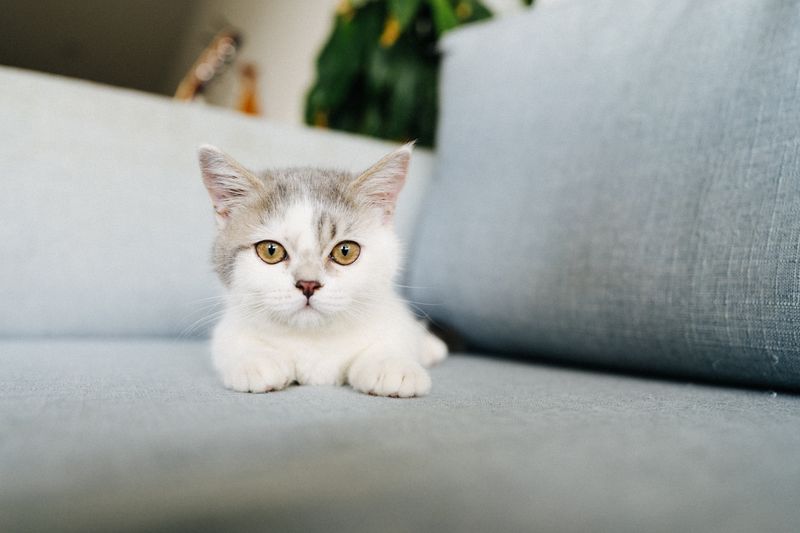
I brought home a tiny eleven-week-old kitten named Pip, and my six-month-old kitten Nova treated him like a live toy. For the first few days it was adorable, the wrestling, the little pounces, the two of them tumbling across the rug. Then Pip started squealing, and hiding behind the toilet, and flinching when Nova walked into the room. What had looked like play was turning into something one of them clearly wasn't enjoying.
Nova would pin Pip down, bite the back of his neck, and rabbit-kick him while Pip screamed and writhed. I kept telling myself it was normal kitten stuff. But a six-month-old cat is nearly three times the size of an eleven-week-old, and I realized I wasn't watching two kittens play, I was watching a bigger, stronger animal steamroll a baby who'd only just left his mother.
Why This Happens
Kittens learn bite inhibition from each other, and that's the crux of it. When a kitten bites a sibling too hard, the sibling yelps and stops playing, and over time the biter learns how much mouth is too much. Nova was taken from his litter early, so he never finished that lesson. He wasn't being mean. He simply didn't know his own strength, because nobody ever taught him.
The developmental gap makes it worse. Nova is in the peak of kitten play drive. The hunting-instinct phase where their whole job is to stalk, chase, and wrestle. Pip is barely coordinated. So Nova does what his instincts demand, and Pip gets overwhelmed, and because Pip keeps squealing and running, he accidentally rewards Nova with exactly the chase-toy reaction Nova craves. The more Pip reacts, the more Nova plays.
And then there's boredom as the hidden fuel. A kitten with an empty day directs all that hunting energy at the only moving target in the house. Nova was under-stimulated, and Pip was available. The roughhousing wasn't only about the two of them. It was about how little was happening in Nova's world.
What I Tried First — and Why It Didn't Work
My first move was to separate them completely. Pip in one room, Nova in another, and hope they'd "get used to each other." That stopped the roughhousing and stopped all progress. They never learned to be together; I just built two lonely cats on either side of a door.
Then I scolded Nova when he got too rough. All that taught him was that my presence meant interruption, so he'd wait until I left the room and then go at Pip harder. Punishing the play didn't reduce his drive; it just made him sneakier about it.
Next I gave up and let them "work it out," which is the advice everyone gives and the advice that nearly ruined Pip. There's a difference between normal kitten wrestling and one kitten terrorizing another, and the tell is easy: if both kittens keep coming back for more, it's play. If one is constantly hiding, crying, or peeing outside the box in fear, it's not. Pip was hiding constantly. I'd waited too long to intervene.
What Actually Worked
The fix had two halves: drain Nova's hunting drive, and teach him where the boundary was. I started with scheduled play sessions using a wand toy, twice a day, at the same times, long sessions that ended with Nova catching and "killing" the toy so the hunt had a satisfying conclusion. A minute of chasing a mechanical toy in the morning did nothing; a real, structured hunt where he got to win did. That alone cut the ambushes on Pip roughly in half within a week.
The second half was redirection at the exact moment of over-arousal. I learned Nova's tells, the tail starting to lash, the ears rotating back, the pupils going wide, and the second I saw them, I'd separate the two with a soft toy or end the interaction with a calm word and a break. Not a scold, just an interruption and a redirect. When the play stayed gentle, I stayed in the room and let it continue so gentle play got rewarded with my presence. Over about three weeks Nova started checking himself: the tells would show, and he'd break off on his own.
Then I gave Nova a chewing and hunting outlet of his own, and this was the piece that finally let him settle. I introduced silvervine sticks, natural, cat-attracting chew toys that give a kitten something to bite, bat, and gnaw that isn't his little brother. Nova went absolutely bonkers for them for twenty minutes, and a kitten who's just worn himself out on a silvervine stick is a kitten who leaves the baby alone. It became the go-to the moment his motor started running hot, and it gave Pip something rare and precious: peace.
The last thing was giving Pip his own safe zones, a baby gate Pip could slip through that Nova couldn't, a high perch, a quiet crate with a blanket, so that when he needed a break, he had one that didn't depend on me being there to referee.
What I'd Tell Someone Starting Today
Watch for the tell: play where both kittens re-engage is fine; play where one keeps hiding or crying is bullying, and size gaps make it worse. Drain the older kitten's energy with real, structured play sessions, redirect at the first sign of over-arousal, and give the biter a legal chewing outlet so his mouth has somewhere to go. Give the smaller one escape routes he can reach alone.
Pip's almost as big as Nova now, and they still wrestle, only now it's an even match, and neither of them screams. Nova just needed to learn his strength. It took a wand, a stick, and a lot of patience to teach him.
This post may contain affiliate links. If you buy through one of them, we earn a small commission at no extra cost to you.