
Why Does My Cat Lick Nonstop While I Pet Her? The Grooming Loop — Explained
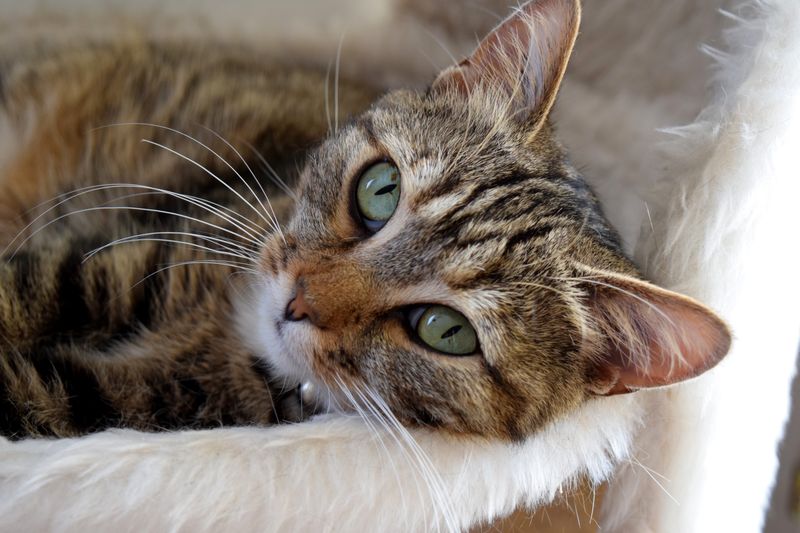
Here's the scene that played out on my couch every single evening. I'd settle in, my cat Missy would climb onto my lap, and I'd start petting her. She'd purr, knead her paws, and simultaneously begin licking, herself, frantically, over and over, like a cat with an itch she couldn't reach. And then she'd lick me, my hand, my shirt, in these frantic little rasps. After twenty minutes I'd stand up covered in fur, and there'd be a damp patch on my jeans shaped like a cat tongue.
I spent a full year convinced it was fleas. Then allergies. Then just "weird cat behavior." Eventually I realized the licking had a pattern, and the pattern was always me. The more I petted, the more she licked. The moment I stopped, she'd stop. That correlation was the whole clue, and once I understood it, everything else followed.
Why This Happens
Cats use grooming as a self-soothing tool, the same way some people absentmindedly bite their nails. Petting is intense sensory input, and for a cat, all that touch can tip past pleasant into overstimulating very quickly. When it does, a cat reaches for her most reliable calming behavior: licking. So the "grooming loop" you're seeing isn't affection in the human sense. It's a cat managing a slightly overwhelming amount of contact, and the licking is the pressure valve.
There's also a social dimension that makes it look reciprocal. In cat-world, grooming is a social act (cats groom each other as a bonding gesture. When you stroke your cat, you're playing the role of a grooming partner, and some cats respond by grooming in return or grooming themselves. That's why the licking tends to happen during petting and not at random. She's responding to the ritual, not to a bug.)
And then there's the fur itself, which is the part I completely ignored for a year. A cat who licks constantly is a cat swallowing a lot of her own loose hair, and that's what rolls up into hairballs and, worse, into the occasional vomiting bout that owners blame on food. The licking and the shedding are the same problem from two ends: more loose fur on the cat means more licking, more swallowed fur, and more mess everywhere I sat.
What I Tried First — and Why It Didn't Work
First I went full flea paranoia. I treated her monthly, treated the carpet, washed everything in hot water, and the vet confirmed there were no fleas at all. That was a hundred dollars and a lot of effort aimed at a problem that didn't exist. The licking wasn't parasitical. It was behavioral and mechanical.
Then I tried just stopping the petting the moment she started licking, thinking I'd teach her the two things were linked. She got the message all right. And started demanding more attention, following me around, meowing at my heels. I'd removed the petting without giving her any other way to get contact, so I'd created a clingier, more frustrated cat.
Third, I tried a bath, on the theory that if she was going to groom obsessively, at least she'd start clean and have less to lick. That was a two-person operation, a shredded forearm, and a cat who avoided me for three days. Bathing a cat who's already overstimulated is throwing gasoline on the fire.
What Actually Worked
The fix had two parts, and neither one was about the licking at all. The first part was changing how I petted her. I started doing shorter sessions, a few strokes, then a pause, checking her tail and ears before continuing. I learned the moment the tail started its quick lash or the skin rippled along her back, and I'd stop right there while the interaction was still pleasant. Almost overnight, the frantic licking during petting dropped off. I hadn't fixed her; I'd stopped overstimulating her. A cat who's comfortable doesn't need the pressure valve.
The second part was handling the fur, and this is where the routine actually got easier. I put both of us on a grooming schedule: a few minutes of daily brushing with the Depets self-cleaning slicker brush, which pulls the loose undercoat out before Missy can lick it down her throat. The self-cleaning feature matters more than it sounds, the brush ejects the collected fur with one click, so I actually do it every day instead of avoiding the messy cleanup. Within a few weeks, there was noticeably less fur flying, fewer hairballs, and, I think because her coat felt cleaner, less obsessive licking overall.
The other half of the fur problem was me. Because the grooming loop meant I finished every couch session covered in cat hair, and because I was tired of being a lint roller, the Twinko Max lint brush for pet hair became the tool I kept by the door. It's reusable, no sticky sheets to peel and replace, and it lifts embedded fur off black jeans in a couple of passes, the kind of thing that made me stop avoiding dark clothing. It's a small quality-of-life fix, but when you've spent a year being a cat-hair magnet, having a reusable answer at the door is genuinely satisfying.
The last change was adding a real outlet for her energy. A ten-minute wand-play session before our evening couch time meant Missy arrived at my lap already a little bit spent, which lowered her sensory threshold and made the whole interaction calmer. A tired cat tolerates more petting than a wound-up one, every time.
What I'd Tell Someone Starting Today
If your cat licks frantically while you pet her, cut the sessions shorter and stop at the first warning sign, the quick tail, the rippling back, the flattened ears. That's not rejection; it's preventing the licking before it starts. Then tackle the fur directly with daily brushing, and keep a reusable lint brush on hand so the shedding doesn't come out of your clothes and your sanity.
Missy still licks a little when we cuddle. Cats do that. But the frantic part is gone, my jeans are mostly cat-free, and I finally understand that her licking was her way of telling me to slow down (not of loving me more than the average cat.)
This post may contain affiliate links. If you buy through one of them, we earn a small commission at no extra cost to you.