
My Cat Got Spooked Every Time I Walked Into My Home Office — How I Fixed It
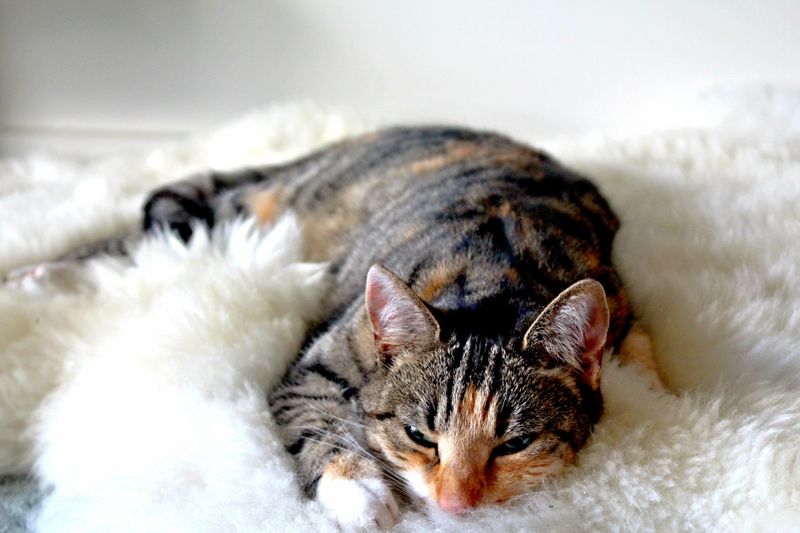
For six months, I worked from home, and for six months my cat Oreo treated my office doorway like a haunted threshold. Every time I walked in, he'd bolt, ears flat, low to the ground, gone under the bed before I'd even crossed the rug. It got to the point where entering my own workspace felt like triggering a smoke alarm. He was fine everywhere else in the house. Something about that one room, and me walking into it, had him convinced there was danger.
At first I thought he was just being dramatic. Cats are, sometimes. But then I noticed he wouldn't go in there even when I wasn't home, no napping on the desk, no basking in the afternoon sun that hit that exact window. He'd given up a whole sunny room, and that's when I stopped calling it drama and started calling it what it was: a stressed cat with a real aversion.
Why This Happens
Cats are creatures of pattern, and a startle is a memory that sticks. The most common reason a cat spooks at a specific room or a specific doorway is a single scary event tied to it, a loud noise, a sudden drop, a printer jamming, a bag collapsing, a person appearing suddenly. Cats form fast, durable associations, and one bad moment can paint a whole room as unsafe for months.
The other engine is the element of surprise itself. When you walk into a room a cat didn't hear coming, you appear out of nowhere from their perspective, and a cat who feels exposed and ambushed reacts with a flight response. Oreo's spook was worst when I entered quietly in socks, and I realized with a wince that my silent entrances were part of the problem. I was, to him, a predator materializing in the doorway.
And there's an environmental factor I completely overlooked: something about the room had changed, and cats notice tiny changes we never register. A new monitor, a chair that squeaks when it rolls, a mirror that shows a strange cat, a piece of furniture moved six inches. Oreo wasn't afraid of me. He was afraid of something in that room that he associated with my presence, because I was usually there when the scary thing happened.
What I Tried First — and Why It Didn't Work
My first tactic was to ignore the behavior and hope he'd acclimatize on his own by sheer exposure. He didn't. Six months of me coming and going had only cemented the association, because every time I entered and he bolted, the reaction got reinforced. Exposure on its own doesn't fix a fear if the fear keeps getting rehearsed.
Then I tried luring him in with treats, standing in the doorway and shaking the bag. He'd creep partway in, grab a treat, and retreat. It was progress on paper, but I was asking him to walk into the place he feared, which is backwards. Luring a scared cat toward the scary thing just adds pressure; it doesn't build safety.
Next I tried the opposite and simply shut him out, keeping the door closed so he'd have a boundary and stop bolting. That lowered his anxiety in the moment and solved nothing, because now the room was completely off-limits and he never got the chance to learn it was safe. I'd turned a fear into a permanent exclusion.
What Actually Worked
The breakthrough was figuring out the actual trigger, and the way I found it was by watching what Oreo avoided. He'd freeze near the desk chair specifically, not the whole room, just the corner where the chair sat. The chair was the culprit: its wheels squeaked, and one day early on, I'd leaned back hard and the thing had shot out from under me with a bang while Oreo was underneath. One loud, startling moment, and a room was ruined. Pulling the chair out and fixing the squeak took five minutes and did more than everything else combined.
Once the trigger was gone, the rest was a deliberate re-introduction. I stopped entering quietly, I'd knock gently on the door frame and say his name before stepping in, so I was never a surprise. I put one of his favorite beds in the room, moved his food bowl to the doorway so eating happened near the scary boundary and made it neutral, and started spending ten minutes in there each morning doing something calm and boring, just existing at the desk with him, ignoring him. No grabbing, no coaxing. A cat will explore a space on their own if you stop pressuring them.
I also added a calming layer. A plug-in pheromone diffuser in the office lowered his baseline anxiety so the re-introduction actually stuck instead of being overwhelmed by fear. It 's not a magic switch, but it takes the edge off enough that a nervous cat can learn. Paired with the de-triggered room and the no-surprises approach, Oreo was coming in on his own within two weeks.
The last piece was giving him a reason to want to be there. I installed a small cat perch by the window so the office wasn't just my workspace, it was also the best sunbeam and the best bird-watching spot in the house. Cats go where the good stuff is. Once the room offered him a reward instead of a scare, the balance tipped for good.
What I'd Tell Someone Starting Today
Find the actual trigger before you do anything else. Watch where your cat freezes or veers away, because it's usually one specific object or sound, not the whole room. Then stop being a surprise: announce yourself before you enter. Move food and a bed to the threshold to neutralize the scary boundary, and don't pressure the cat to come in. Add a pheromone diffuser if you want to speed it up, and give the room something the cat wants.
Oreo naps on my desk now and yells at me when I'm late refilling his bowl in the doorway. The office is his second-favorite room instead of a haunted one. All it took was fixing a squeaky chair and knocking before I walk in.
This post may contain affiliate links. If you buy through one of them, we earn a small commission at no extra cost to you.