
How Do You Teach a Puppy to Enjoy Cuddling? Here's What Actually Worked
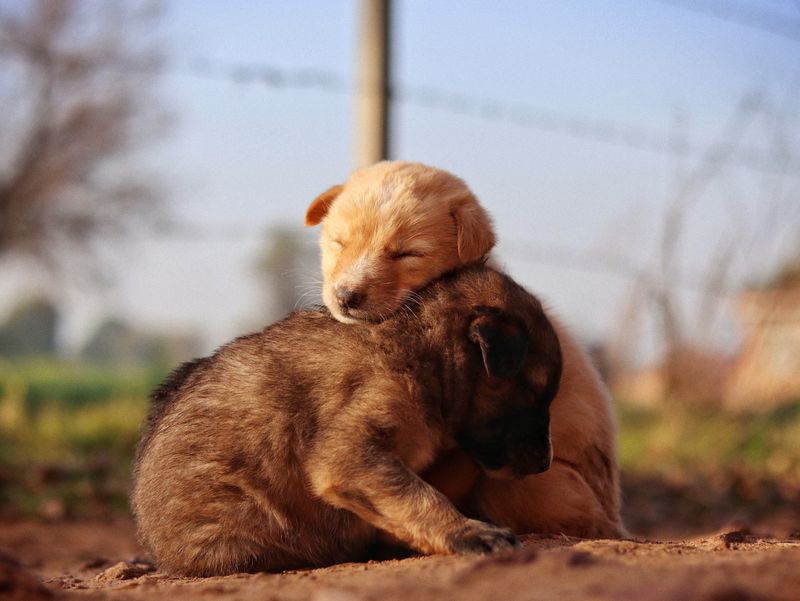
I had a picture in my head long before I got a puppy: the two of us on the couch, my dog's head on my lap, a quiet evening, total mutual adoration. Then Winnie arrived. For her first six months, cuddling was not on the menu. If I pulled her onto my lap, she'd wriggle like I'd trapped a trout, mouth my hands, and launch herself off to go chew a shoelace. I'd sit there next to a puff of fur and wonder if I'd gotten the one puppy in America who didn't like being loved.
That's the trap, and I fell straight into it. I assumed cuddliness was innate, you either got a cuddly dog or you didn't. Between the wriggling and the biting I nearly gave up and accepted a dog who'd tolerate me from across the room. What I didn't understand was that affection tolerance is something you can actually teach a puppy, and I'd been teaching it wrong.
Why This Happens
Puppies explore the world with their mouths, and for a young dog, restraint is the opposite of fun. Being held still is a mildly stressful experience for a puppy who's in the middle of a developmental window where the entire mission is movement and discovery. Add teething, add the fact that most puppies have no idea what's happening, and pinning one to your lap is basically asking a toddler to sit through a board meeting.
Cuddliness also isn't uniform across dogs, and that's not a flaw. Some dogs are naturally velcro; others are independent by temperament and breed. A pup who'd rather lie near you than on you isn't broken. But "near you" and "on you" are on a spectrum, and most puppies can be nudged gently toward the cuddly end of it, if the association is built right.
The reason my early attempts failed is the same reason most do: I was pairing cuddling with a state the puppy hated. Every time I held Winnie still, she felt trapped, and she learned that being held meant being frustrated. That's how you build a dog who squirms away from affection for life. The fix wasn't more hugging. It was changing what hugging meant.
What I Tried First — and Why It Didn't Work
My first approach was to just hold on tighter and wait her out, thinking she'd relax if she realized I wasn't going to let go. She didn't relax. She escalated into full-body thrashing and a nip on the chin, and I put her down convinced I'd broken something. Forcing stillness onto a dog that hates stillness doesn't teach cuddling, it teaches that your arms are a trap.
Then I tried cuddling right when she was in her wildest evening mood, on the theory that if I caught her, I could calm her. That's backwards. You can't teach a dog that being held is nice while they're at their most overstimulated. The timing has to match the mood, not fight it.
Next, the treats-while-holding gambit. Shoving a kibble in her mouth every time she stayed still for a second. It half-worked, in that she'd accept a few seconds for the food, then bolt the moment the kibble ran out. I was bribing a bad situation instead of building a good one. The reward has to come with the calm, not replace it.
What Actually Worked
The breakthrough was timing: I started working on cuddling when Winnie was already tired. After a real play session or a long walk, when her motor was winding down, she was far more willing to lean into me. Cuddling a calm puppy is easy; cuddling a frantic one is a wrestling match. Matching the training to her low-energy windows changed everything on its own.
The second piece was duration. Instead of pulling her into a full lap-hug, I'd sit on the floor, let her come to me, and reward the smallest thing, two seconds of leaning, then a treat and freedom. Then five seconds, then fifteen. I built the tolerance the way you'd build any skill, in tiny increments that never tipped into the trapped feeling. The key was ending every session on a good note while she was still comfortable, so "being held" only ever got associated with pleasant, brief, and rewarding.
Consent made the whole thing stick. I gave her a way out, the moment she leaned away, I let go. That sounds like the opposite of training a cuddler, but it's exactly what does it, because she learned that being close was never a trap. A puppy who trusts that they can leave is a puppy who chooses to stay. Within a couple of months, she was the one climbing onto the couch to press against my leg.
The last ingredient was comfort. I gave her a designated cozy spot. A soft bed right next to where I sit in the evening, with a familiar blanket. So being near me physically felt good even when we weren't touching. Warmth, softness, and closeness without any demand attached. A lot of cuddling is really just a puppy who's learned that the space beside you is the most comfortable space in the house, and that's exactly what a good bed and a consistent routine teach.
What I'd Tell Someone Starting Today
Cuddle when your puppy is already calm and tired, not when they're wild. Start with seconds, not minutes, and always end before they want to leave. Reward the lean, respect the pull-away, and give them a comfortable spot right beside you so closeness is a habit before it's a hug. And don't force it, a puppy held against their will learns to hate your arms, not love them.
Winnie is two now, and she's a lap dog through and through. She sleeps pressed against my hip and follows me room to room. It took about three months of patient, tiny sessions to get the puppy I'd pictured. She just needed me to stop trapping her and start earning it.
This post may contain affiliate links. If you buy through one of them, we earn a small commission at no extra cost to you.