
Should You Even Bathe a Cat? I Tried It Once (Here's What I'd Do Instead)
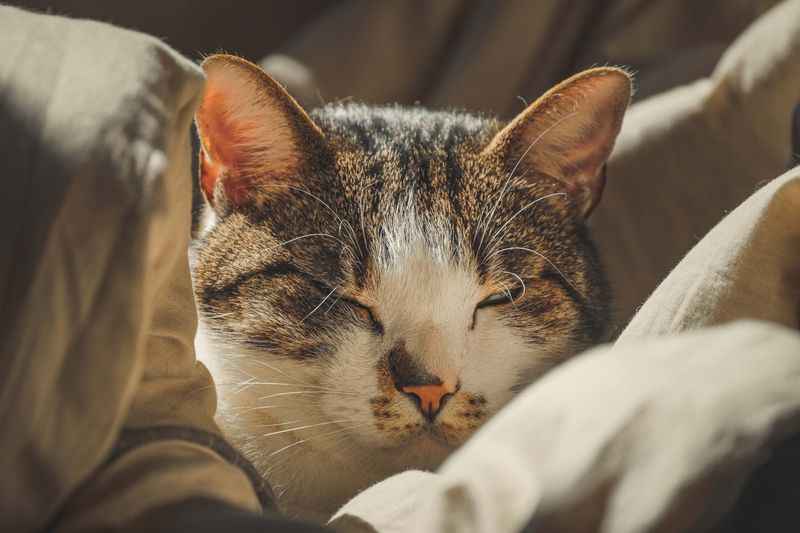
My cat Oliver came in from the yard one evening smelling like something had died and then been rained on. I made the rookie decision that every first-time cat owner makes: I decided to give him a bath. Twenty minutes later my forearms looked like I'd lost a fight with a bramble bush, Oliver was in the hallway dripping and furious, and I was standing in a kitchen that smelled like wet, unhappy cat for the next two days.
I went straight to the internet, of course, and found a wall of confident opinions telling me cats never need baths and also that bathing is totally fine. Somewhere in the middle is the honest answer, and I only found it after asking my vet and learning the hard way which situations call for water and which ones absolutely don't.
Why This Happens
Cats are their own grooming equipment. They spend a huge chunk of their day licking and combing themselves, and their skin and coat are built around that habit. A healthy cat who can reach everywhere is genuinely self-cleaning, which is why vets will usually say a routine bath isn't necessary and can actually cause problems. Coat oils that keep the fur water-resistant and the skin healthy get stripped by harsh shampoo, and a cat who can't groom himself back into shape can end up dry, flaky, and itchy.
The other half of the problem is that bathing a cat is stressful for everyone. Water, slippery surfaces, and restraint trigger a real fight-or-flight response in most cats, and a panicking cat is genuinely dangerous to handle, those claws are not a metaphor. A bath can also turn into a health risk if a cat inhales water or struggles hard enough to hurt himself. What looks like stubbornness is a terrified animal doing what terrified animals do.
That said, there are real exceptions. A cat who can't groom because of age, injury, or weight can need help staying clean. A cat who walked through something hazardous, oil, paint, chemicals, or a strong contaminant (may need more than licking. Kittens and long-haired cats sometimes need assistance. And any actual skin problem is a vet question, not a shampoo question, because the wrong product can make a medical issue worse.)
What I Tried First — and Why It Didn't Work
My first move was the full sink bath with a pet shampoo I'd grabbed at the store. Oliver tolerated the water for about four seconds, then exploded. I got scratched trying to keep him in, then soaked trying to rinse him, and then watched him bolt under the bed where he stayed, damp and paranoid, for most of a day. The smell was gone. So was our trust.
Next I tried a "dry" shampoo foam, because it sounded like the clever workaround. It was easier, but it left a residue I could still smell on his coat, and since cats immediately lick themselves head to toe, I was basically spreading the stuff he'd just been bathed in across his entire body. That felt like a worse deal than the bath.
Then I tried the damp-washcloth spot clean, which came close to right but not quite. A warm cloth handled the surface grime but never touched the deeper smell, and reaching for wipes I'd bought in a panic didn't help either (the first ones I grabbed had an added fragrance that made Oliver sneeze. The lesson was that most "cat cleaning" products are built for a quick wipe, not for a cat who rolled in something truly nasty.)
What Actually Worked
The thing that finally clicked was separating the two jobs I'd been confusing: cleaning the coat and controlling the mess. For the actual smell, the right answer was a limited, controlled bath with lukewarm water, a cat-safe shampoo, a non-slip mat on the bottom of the sink, and a second set of hands. Short, low water, rinse thoroughly, towel dry hard, done. With a plan and a second person, it was annoying but survivable, and Oliver forgave me by breakfast.
For everything else, the answer was brushing instead of bathing. Most of what makes a house feel like a cat lives in it, the loose fur in the air, the hair on the couch, the dandruff, is shedding, and a bath does nothing to fix shedding. A good brush does. I started brushing Oliver a few minutes every couple of days with the Aumuca Cat Brush for Shedding, working with the direction of his coat and letting the fine teeth pull out the loose undercoat before it ended up on everything I own. He decides it's a weird, pleasant ritual now rather than a fight, and the shedding noticeably dropped.
For the furniture and fabrics, where water definitely doesn't belong, I stopped fighting hair with my vacuum alone and got the ORDORA Reusable Pet Hair Remover Brush. It's a simple tool that drags embedded cat hair out of the couch, the car seat, and my favorite black jacket, and because it's reusable I'm not buying another roll of lint sheets every two weeks. Between the two, I'd replaced about eight frustrated attempts at bathing with two small habits that actually keep the hair under control.
The final piece was knowing when to stop and call the vet. A cat who suddenly stops grooming, develops bald patches, scratches constantly, or has oily, inflamed skin doesn't need me experimenting with shampoo, that's a medical signal, and the wrong bath product can turn a small skin issue into a big one. Once I had that rule fixed in my head, I stopped treating the bathtub as a first resort.
Best pick
Deshedding Brush for Cats
Fine teeth pull the loose undercoat out before it lands on everything you own, the real fix for the fur problem a bath can't touch.
Check it out on AmazonAlternative
Self-Cleaning Slicker Brush for Cats
Drags embedded cat and dog hair out of couches, car seats, and clothes without buying endless lint rolls.
Check it out on AmazonWhat I'd Tell Someone Starting Today
Stop thinking of bathing as a normal part of cat care. For most healthy cats, brushing handles the fur and a warm damp cloth handles the occasional smudge. Save the full bath for the real exceptions, something hazardous on the coat, a cat who genuinely can't groom himself, or explicit instructions from your vet (and when you do it, keep the water low and lukewarm, use a cat-safe shampoo, and recruit a second person.)
And if your cat has real skin problems, bleeding paws, or a sudden grooming change, spend your energy at the vet instead of the pet store. Oliver hasn't had a bath since that first disaster, and he doesn't need one. He gets brushed, he gets a clean litter box, and I get a house that doesn't smell like a wet, unhappy cat. Everybody wins.
This post may contain affiliate links. If you buy through one of them, we earn a small commission at no extra cost to you.