
What Can You Actually Put in an Open-Top Terrarium? Everything I Tried in Mine
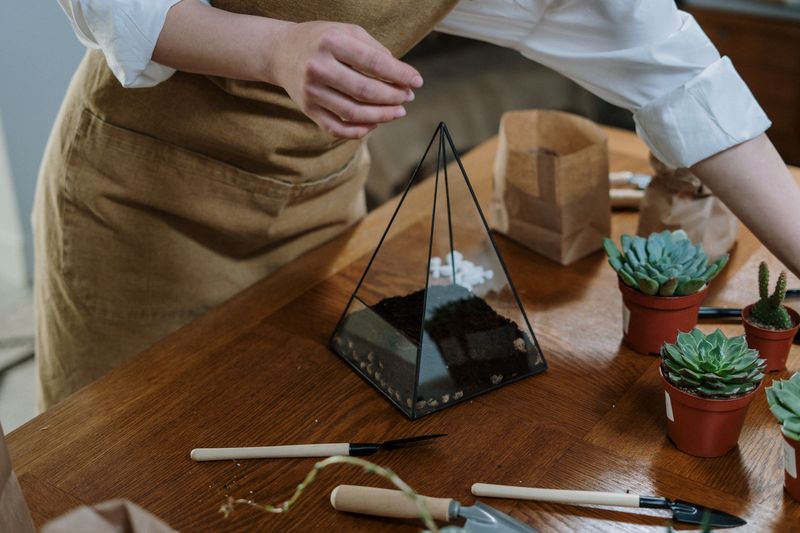
I found an open-top glass terrarium at a flea market for eleven dollars and brought it home without a single plan for what would live inside it. It was beautiful, a squat glass box with no lid, the kind that looks like a tiny greenhouse on a shelf. I assumed I could just fill it with whatever caught my eye. My first attempt turned into a swamp. My second attempt baked. Somewhere around the third try I finally understood that an open-top terrarium is a very specific little climate, and only certain things thrive in it.
The mistake every beginner makes, me included, is treating an open-top container like a lidless version of a normal terrarium. It isn't. A lid traps humidity and keeps a tropical plant glossy; no lid means the moisture escapes and you're basically running a dry, airy micro-desert on your windowsill. Once I planned around that instead of against it, the whole thing clicked.
Why This Happens
Humidity is everything in a terrarium, and an open top means you lose it constantly. In a closed or lidded setup, water cycles through the system and tropical plants like ferns and mosses stay lush. Open the top and that moisture just evaporates into the room, which makes the container hostile to the very plants you'd normally want in glass. The plants that actually thrive without a lid are the ones built for dry air: succulents, air plants, and a few tough, drought-tolerant mosses and small grasses.
Light and heat compound it. Glass magnifies sun, so an open terrarium on a bright sill can get surprisingly hot inside, which cooks delicate plants and dries out whatever moisture remains. Drainage matters too, without a proper layered base, water pools at the bottom, roots sit in it, and everything rots while the top looks deceptively dry. An open-top build is really a drainage problem and a humidity problem at the same time.
And then there's the question of putting a living animal in it. This is where a lot of newcomers get into trouble, myself included. An open-top glass box with no lid and no ventilation control is not a habitat for a small critter, it's an escape route or a slow bake, depending on the species. If you want to keep a reptile, amphibian, or insect, the container needs to match its needs for airflow, humidity, and secure closure, which an open-top display piece usually doesn't provide.
What I Tried First — and Why It Didn't Work
My first build was a jungle: ferns, moss, and a couple of leafy tropicals crammed into the glass because they looked right in photos. Without a lid to hold humidity, the moss dried to straw, the ferns crisped at the edges, and I was misting twice a day just to keep things from dying. It looked okay for about a week and then flatlined.
Attempt two swung the other way. All succulents, bone dry, direct sun. That's closer to right for an open top, but I overwatered them "to be safe," and with no drainage layer the water sat at the bottom and rotted their roots. The plants looked fine on top and were mush underneath, which is the cruelest way a plant fails.
Attempt three was the animal mistake. I found a small insect that seemed perfect for a "living terrarium" and put it in the open box. It climbed out within a day. Later I learned the same container would have been wrong for it even with a lid, because open-top glass with no ventilation control can't hold the steady humidity a lot of small creatures need. That was the day I stopped thinking of the terrarium as a place for pets and started treating it as what it really is: a display garden.
What Actually Worked
The winning formula was to lean all the way into "dry and airy." I rebuilt the container with a proper base layer: a thin bed of pebbles or a horticultural charcoal layer under the soil to let excess water drain away from the roots. That one structural fix solved most of my rotting problems, because a lidless terrarium lives or dies on whether water can escape from the bottom as well as the top.
Then I planted accordingly. Succulents, small air plants, and a couple of drought-tolerant specimens went in, arranged so nothing crowded anything else, with a little grit or sand on the surface to keep the base of the plants dry. For the aesthetic and the structure, the deep roots got room in a proper large glass terrarium. The Yangbaga Glass Terrarium gives you a wide, deep space for a layered succulent and moss arrangement that actually drinks light without turning into a sauna, and its weight keeps it stable on a shelf.
I stopped overwatering by switching to a "when in doubt, wait" rule: I water sparingly, only when the soil has genuinely dried, and I never let water stand in the base. I also moved it off the harshest direct sun so the glass couldn't cook the plants. When I wanted something with a little more control. Humidity I could actually manage, I stopped fighting the open-top piece and used it as a display instead, keeping a covered mini greenhouse for the moisture-loving plants that needed a lid. That division of labor is what finally made both work.
For anyone who really does want a living animal, the answer isn't an open-top display box (it's matching a proper enclosure to the species: secure lid, correct ventilation, the right humidity and heat gradient. I keep my terrariums for plants now, and it's a lot more satisfying to watch a succulent thrive in the right container than to watch a bad fit fail slowly.)
Best pick
Orthopedic Pet Bed
A deep, wide open-top glass container that gives a succulent-and-moss arrangement real room to root and layer, built for dry, airy setups.
Check it out on AmazonAlternative
Pet Ramp & Steps
A covered option when you want to hold humidity for moisture-loving plants instead of fighting the open top.
Check it out on AmazonWhat I'd Tell Someone Starting Today
Match the plants to the lid, not the other way around. No lid means no humidity trap, so plan for succulents, air plants, and other drought-tolerant species, and build a real drainage layer so water can't sit and rot the roots. Water sparingly, keep it out of harsh direct sun, and don't expect tropical moss to survive in an open dish.
And if you're tempted to turn your open-top terrarium into a home for a small animal, don't. Save that for a proper species-specific enclosure with a secure lid and controlled ventilation. My eleven-dollar flea market box is now a tidy, low-maintenance garden that asks almost nothing of me, and it's thriving precisely because I finally gave it the plants that actually belong in it.
This post may contain affiliate links. If you buy through one of them, we earn a small commission at no extra cost to you.