
My Lizard Actually Likes Being Handled — Here's the Feeding Routine That Built Trust
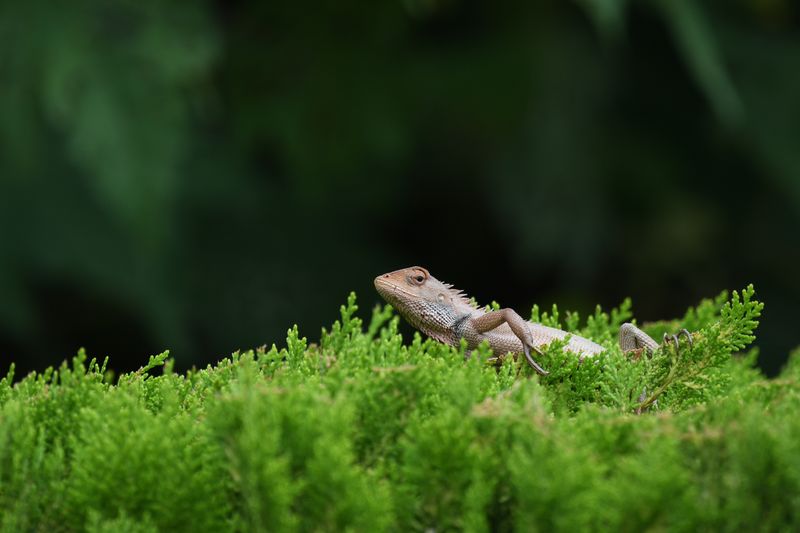
Six months ago, if I walked past my lizard's enclosure, she'd bolt into her hide like I was a hawk. She was healthy, she ate, but she clearly wanted nothing to do with me, and I'd sort of accepted that as just how reptiles are. Then a friend with an older bearded dragon held hers like a cat, calm as anything, and I realized I'd been doing it wrong. It wasn't that my lizard was unfriendly. I'd simply never given her a reason to trust my hands.
The transformation didn't come from picking her up more. It came from where I put the food, and when, and how. Feeding, it turns out, is the entire relationship with a captive reptile, it's the one channel where you can build a positive association instead of a scary one. Once I rebuilt the routine around that, my lizard went from fleeing my hand to walking toward it.
Why This Happens
Reptiles aren't social the way dogs are; they don't bond out of affection, they learn from association. A lizard doesn't come to understand that you're a friend, it learns that your presence predicts food, warmth, and safety, and it acts accordingly. That's why trust with a reptile is really a learning process, and it runs on repetition and calm, predictable outcomes. Every time your hand appears and nothing bad happens, you build the case for it. Every time you grab, lunge, or loom, you tear it down.
Feeding is the bridge because it's the strongest positive their brain has. A lizard that associates your hand with a juicy insect will approach that hand regardless of how it feels about you otherwise. The trick is timing: the food has to arrive at the moment your hand does, so the two fuse in the animal's mind. If eating happens randomly or from a dish the human never touches, the animal never connects the human to the reward, and you're just the scary giant that wanders past.
The flip side is why forced handling backfires. Grabbing a lizard that isn't ready triggers a stress response. Freezing, gaping, tail-whips, or bolting, and every one of those frightened reactions cements "hands are dangerous." A reptile that has learned hands are scary is far harder to tame than one that simply hasn't met a reason to trust them. Slow is fast here; the patient route actually gets you there sooner.
What I Tried First — and Why It Didn't Work
My first move was the obvious one: I picked her up more. I figured exposure would make her used to me. It did the opposite. Each grab was a fresh scare, she started hiding the moment my shadow crossed the enclosure, and I was just teaching her my hands meant disaster. Fear doesn't habituate through force the way I'd assumed.
Next I tried hand-feeding too fast, reaching in with an insect on the first calm day, hoping hunger would win out over fear. She didn't take it, and worse, my sudden reaching confirmed that hands were unpredictable. I'd skipped the whole first step of letting her associate my presence with routine, so the food offer just read as another lunge.
My third mistake was inconsistency. I fed on random days, at random times, from whatever dish or hand I happened to grab, so there was nothing predictable for her to learn. Reptiles thrive on routine, and I had none. She had no idea when food was coming or from where, which meant my hands meant nothing at all (until they reached in too fast, and then they meant trouble.)
What Actually Worked
Everything changed when I made feeding predictable and tied it to my hand. Every other day, same time window, I'd present her insects with a pair of feeding tongs. Not fingers (so my living hand and the food became linked without the risk of a mis-aimed bite. My hand now reliably means "insect is coming," which is the whole foundation.)
The tongs also solved a safety problem. Hand-feeding insects to a lizard invites a mistaken bite on a finger, which startles both of you and can set the relationship back weeks. Feeding tongs let me offer the food right up to her mouth while keeping my fingers safely out of the strike zone, so the encounter always ends in a meal, never in a mishap. That consistency, food always arrives on schedule, always from the tongs, never a surprise, is what started turning my presence from a threat into a promise.
From there I layered in the trust steps slowly. First I just sat near the enclosure at feeding time so she got used to me without any contact. Then I fed with tongs held right at the door, then slightly inside, then progressively closer to my hand. Within a few weeks she began walking toward the front of the enclosure when I approached, which is a reptile's version of a dog wagging its tail. Only after months of that did I start offering a flat palm under her front feet during feeding, letting her choose to step on. No grabbing, if she walked away, the session was over and I respected it.
I also leaned on warmth. A lizard that's had a good bask is a calmer, more food-driven animal, so I always handled and fed after her lights had been on a while and she was warm and alert, never when she was cold and sluggish. A shallow dish she could drink and soak in kept her comfortable too, and every positive interaction (food, warmth, a safe hand, stacked another brick in the association. The rest was patience and a schedule I kept the same until she trusted it.)
Best pick
Calming Aid for Pets
Long, soft-tipped tongs let you offer insects right to your lizard's mouth while keeping your fingers safely out of the strike zone.
Check it out on AmazonAlternative
Pet Calming Chews
Sturdy, easy-to-clean dishes for food and soaking that keep feeding predictable and the habitat hygienic between sessions.
Check it out on AmazonWhat I'd Tell Someone Starting Today
Don't train a reptile by picking it up, train it by feeding it on a schedule from tongs until your hand predicts something good. Be boring and consistent: same time, same routine, food always from the same source, no sudden grabs, and a clean, comfortable habitat. Handle only after the animal is coming to you willingly, and never force a session that starts with it fleeing.
My lizard now climbs onto my hand during feeding like she's claiming a basking rock, and I never once had to make her. I just made my hand the place where dinner shows up. That's the whole secret to a lizard that "likes" being handled, you don't earn a reptile's affection. You earn its expectation, and trust grows out of that.
This post may contain affiliate links. If you buy through one of them, we earn a small commission at no extra cost to you.