
The Look My Friend Gave Me for Not Letting Her Lizard Eat Paper. Here's My Feeding Routine
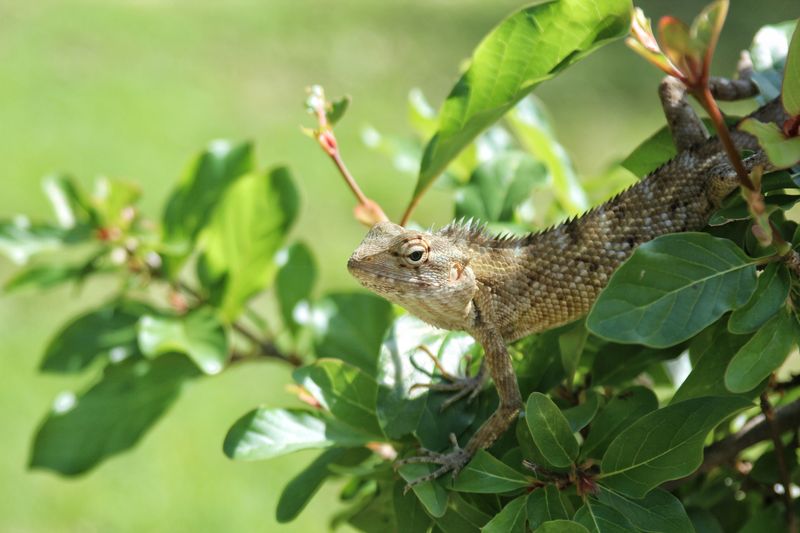
We were sitting on her floor, her bearded dragon wandering across a scatter of paper towels she'd laid down as a feeding mat, and it starts nibbling the paper itself. Not the salad on top of it, the actual paper towel, tearing off little pieces and swallowing them. I reached over and gently moved the food onto a solid dish, and she looked at me like I'd just insulted her housekeeping. "He eats it all the time," she said. "It's fine."
It is not fine. I learned that the hard way years earlier with a different reptile, and it's the single most common feeding mistake I see: treating the enclosure floor, paper, substrate, bedding, whatever's down there, as a place to put food. What goes down with the meal can go in with the meal, and a reptile's digestive tract isn't built for that. Here's the routine I run instead, and why the "look" was worth it.
Why This Happens
Reptiles don't chew the way mammals do. Most swallow food whole or in large pieces, and they don't neatly separate food from whatever it's sitting on. If you put salad or a live insect on loose paper or bedding, all of it goes in together. That swallowed substrate can compact inside the digestive tract, a condition keepers call impaction, and a bad impaction can be fatal and often needs a vet to resolve. It's not a minor indiscretion; it's a quiet emergency that builds over repeated meals.
Feeding on the floor also wrecks your control over live insects. Drop crickets onto paper or into loose substrate and half of them vanish the instant they land, hiding in the décor and around the tank where your reptile can't reach them. You lose track of what was eaten, the escapees stress the animal at night by crawling on it, and your carefully measured meal becomes a guess. The feeding routine is supposed to be something you can read and trust; feeding on the substrate throws that out.
And there's a spectrum people miss. A paper towel under a salad is on the "less bad" end, but loose sand or bark is genuinely dangerous because grains stick to food and get swallowed in quantity. The cleaner the feeding surface, the lower the risk. That's why the professional approach is simple: food goes in a dish or is offered by hand, and the substrate stays exactly where it belongs, under the animal, not in its mouth.
What I Tried First — and Why It Didn't Work
Early on, I did exactly what my friend did, laid food on the enclosure floor to make cleanup easy. It was convenient and looked natural, right up until I noticed my reptile passing shreds of the paper and, on a worse occasion, a piece of bedding in with a meal. Convenience on the floor is how impaction starts, and I was the one serving it.
Next I switched to a shallow ceramic dish, thinking any dish would do. It contained the food but not the live insects, crickets climbed straight out of the low walls and scattered into the terrarium within seconds. Cheap shallow dishes solve the paper problem and create an escape problem, which is no better for a feeding routine that needs to be controlled.
Then I tried scattered feeding, spreading the food around "so it felt like foraging." That was worse on both fronts: more of it landed on the substrate to be swallowed, more of it got ignored and wasted, and I had even less idea what my animal actually ate. Every attempt to make feeding casual made it riskier and messier at the same time.
What Actually Worked
The fix was to take feeding off the floor entirely and contain it in the right piece of gear. The Reptile Anti-Escape Feeding Bowl is the one that finally solved both problems at once, it holds food on a solid, clean surface so nothing gets swallowed with the substrate, and its anti-escape design is built to keep live insects from simply climbing out and disappearing. I set the salad or the feeders inside it, the lizard eats at the bowl, and the enclosure floor stays clean and substrate-free where the mouth meets the food.
For my climbers, the wall-mounted version of the same idea solved a different headache. A bowl that attaches to the side of the enclosure puts the food right at eye level for a reptile that spends its life off the ground, so it isn't reaching down into loose substrate to eat, and the wall mount keeps the feeding spot fixed and predictable. Combined with an anti-escape dish for the ground-dwellers, I finally had a feeding routine that was controlled for every animal I keep, food goes in, food gets eaten, and nothing lands on the bedding.
I paired the bowls with a real routine: feeding at a consistent time, offering the right amount instead of an endless supply, and removing anything uneaten after a set window so old food doesn't rot and so I can actually track appetite, which is the best early warning sign a reptile will ever give you. I offer insects with tongs rather than dropping them loose when I want to be precise, and I never feed directly on loose substrate, full stop, no matter how convenient a mat looks in the moment.
The last piece was supplies I keep stocked so the routine never slips. A reptile-safe cleaning wipe for the bowls between meals, a spare dish, and a simple schedule on the calendar. A feeding routine only works if it's repeatable, and repeatable means having the gear ready and a plan written down. Because "it's fine, he eats paper all the time" is exactly the shortcut that turns a minor habit into a vet visit.
Best pick
Slow-Feed Pet Bowl
Puts food at eye level for climbing reptiles and keeps live feeders from escaping, no food or substrate mixing at mealtime.
Check it out on AmazonAlternative
Elevated Pet Bowl
A solid, contained dish for ground-dwelling reptiles. Food stays clean, feeders stay in, and nothing gets swallowed with the substrate.
Check it out on AmazonWhat I'd Tell Someone Starting Today
Get the food off the floor. Put salad and live feeders in a dish built to contain them, use tongs when you want precision, and never let your reptile eat paper, bedding, or loose substrate along with a meal, the impaction risk is real and it's preventable. Feed on a schedule, remove what's uneaten, and keep the bowls and the routine clean.
My friend still feeds her dragon the way she always has, and I hope her luck holds. But I've seen what happens when it doesn't, and it isn't worth the convenience of a paper towel. The look she gave me was worth the ten-second adjustment. Because a clean feeding dish is the cheapest insurance a reptile keeper can buy.
This post may contain affiliate links. If you buy through one of them, we earn a small commission at no extra cost to you.