
My Dog Hates the Car. The Hard Crate Made It Worse. Then I Changed It
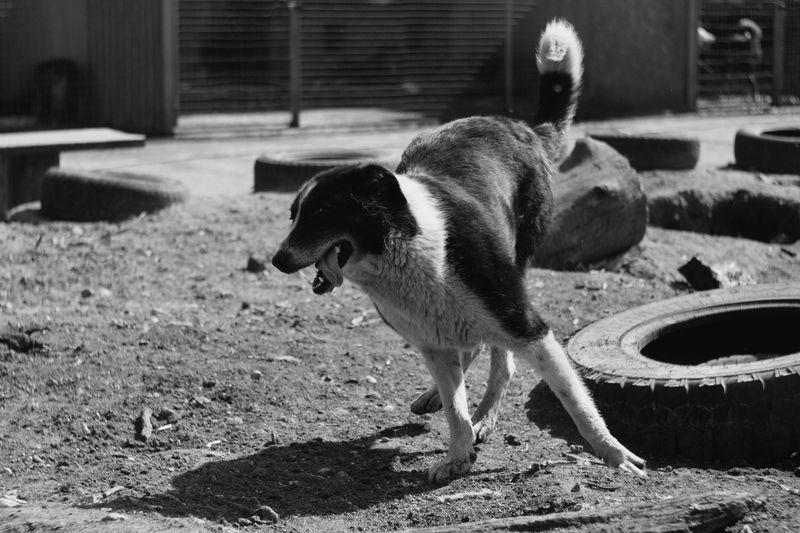
Otto starts trembling in the driveway. Not in the car, in the driveway, before I have even opened the back hatch. By the time I lift him in he is drooling in ropes, and by the end of the block he is screaming, which is a sound a sixty-pound pit mix should not be able to make. I was following the advice I had been given, which was to put him in a hard plastic crate in the cargo area because that is the safest place for a dog in a crash. So every trip began with me wrestling a terrified animal into a dark plastic box that rattled and shifted under him as we drove. It was, without question, the worst thing I could have done for a dog who was already scared of the car.
Here is the thing the safety-first advice skips: a crate can be the right long-term answer and still be the wrong starting point. Otto did not hate the car because he was unsafe. He hated it because he was trapped, in the dark, in a small echoing box, on a moving surface he could not see or predict. The crate was not the fix. It was the amplifier.
Why This Happens
Car anxiety is usually a bundle of specific fears, not one vague dread. There is the confinement, especially for a dog who already dislikes tight spaces. There is the isolation, being shut away from the people and the view. There is the motion, which upsets the inner ear and sends the stomach spinning. And there is the unpredictability, a dog cannot tell a trip to the vet from a trip to the park until he is already moving.
A hard crate lights up three of those four at once. It is confined, it is isolating, and if it is not secured well it slides and clacks, which keeps a nervous dog on edge the whole ride. For Otto it also cut off his view. A dog who can see out a window can brace and predict; a dog in a closed dark box can only guess, and guessing is what panic is made of.
None of that means crates are bad. A well-fitted, crash-tested crate is genuinely the safest place for a dog to ride, and I am not telling anyone to toss theirs. What I am telling you is that you cannot start a scared dog inside the scariest setup and expect the fear to fade. You have to build the calm first, and then, if the crate still matters to you, add it back in slowly. For me, the calm came from giving him an open, see-through space instead.
What I Tried First — and Why It Didn't Work
First I tried the hard crate, on good authority, and it made everything dramatically worse. He clawed at the door until his nose bled and he refused to load at all within a week. A dog who will not get in the car means no vet visits, no hikes, no trips. I had traded a manageable fear for an unmanageable one.
Then I tried feeding him in the parked car with the engine off, which is a textbook gradual-exposure move. He ate happily. The instant the engine turned over, though, he was done (dinner untouched, back to trembling. The parked car and the moving car were two completely different animals to him, and I had only trained the easy one.)
My third mistake was draping a towel over the crate to "calm him down." For a dog whose main problem was not being able to see, blocking his view was pouring gasoline on the fire. Some dogs feel safer in the dark. Otto is not one of them.
What Actually Worked
The answer was to give him an open, see-through space and let him own it before we ever moved. I set up an exercise pen in the driveway next to the parked car with the hatch open, and let him walk in and out on his own. No lifting, no pushing. The FXW Rollick dog playpen was perfect for this because the panels are light enough to reconfigure into whatever shape the yard or driveway needs, so I could build a little runway right up to the bumper. He wandered in, sniffed the car, wandered out. He learned that the car was a thing he chose, not a thing that happened to him.
Inside the house I used the PETIME foldable metal exercise pen to build a second calm zone around a soft, see-through carrier, so the crate itself became a place he napped with the door open at his discretion. A dog who naps inside the crate at home does not experience that same crate in the car as a trap, because the object has a good history.
For the actual car, I retired the hard crate entirely and switched to a crash-tested harness that let him sit up and watch out the window, with a blanket over the seat so the surface felt familiar. The progression was this: engine-off sits with treats, then a two-minute drive around the block that ended at home, then a five-minute drive to the coffee shop where the reward was a walk, and only after weeks of that did we attempt a real errand. Slow, boring, effective.
What I'd Tell Someone Starting Today
If your dog is already terrified, do not start with confinement. Start with an open, see-through space he can enter and leave on his own, and let the car stay parked and boring for a while. Build the good history before you ever turn the key.
Feed every drive toward something he loves (a walk, a sniff, a friend, so the car stops predicting the vet. Keep trips short and end them at home when you are just starting out. And if your dog is drooling, screaming, or vomiting every time, ask your vet about motion-sickness medication and calming support, because a bad enough first experience can set a pattern that takes months to unwind. Otto rides in the front-facing seat now, ears flapping, drool-free, staring out the window like he owns the road. It took a summer, but he gets in on his own, which for us was the whole win.)
This post may contain affiliate links. If you buy through one of them, we earn a small commission at no extra cost to you.