
My First Terrarium Died in Six Weeks — How I Rebuilt It as a Dry Ecosystem That's Still Alive
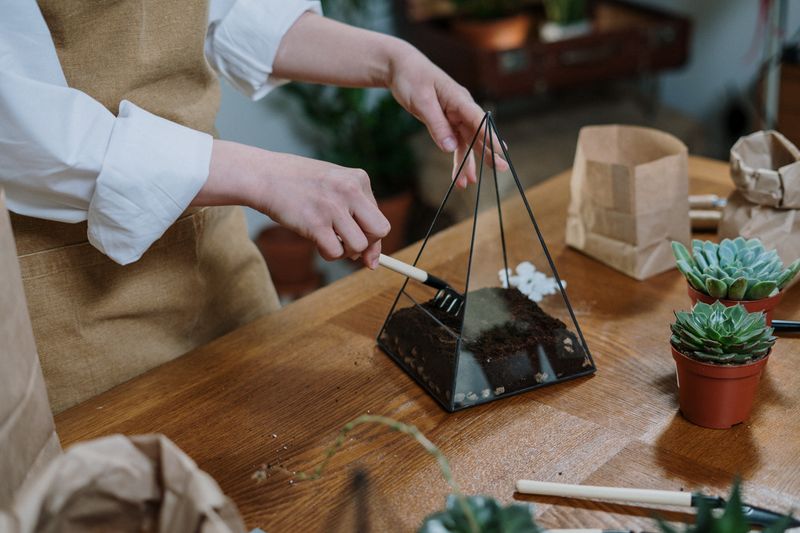
I built my first terrarium on a Saturday in spring: a big glass jar, a layer of potting soil, a handful of succulents I'd grabbed for eight dollars, and a cork lid I screwed on tight because everything I'd read said "a terrarium is a self-contained ecosystem." I misted it every morning like it was a pet. Six weeks later it was a fogged-up jar of brown soup, rotted roots, black mold climbing the glass, and that unmistakable sour smell of decay when I finally cracked it open. I had built a sealed swamp and killed everything in it.
The frustrating part was that I didn't understand what I'd done wrong, so I made it worse. I moved the jar to the sunniest window to "dry it out," which cooked the last surviving plants. Then I screwed the lid down even tighter, convinced I simply hadn't achieved the sealed balance yet. Within a week there was nothing alive in there at all. That's the terrarium every beginner builds exactly once: the dead one.
Why This Happens
The honest answer is that I built the wrong kind of terrarium for the plants I bought. There are two fundamentally different directions you can go, a humid, enclosed tropical setup and a dry, open, arid setup, and they demand opposite conditions. I had planted desert plants and then treated them like rainforest plants: sealed in, misted daily, no airflow. Succulents store water in their leaves, so soaking their roots and trapping humid air around them is the fastest possible way to rot them.
The core problem is airflow. In a sealed container, water has nowhere to go. It evaporates from the soil, condenses on the glass, runs back down, and re-soaks the substrate in an endless loop. The soil never dries, the roots never breathe, and mold and bacteria win the race. Indoor light makes it worse, because a warm closed jar under a window is essentially a greenhouse that never vents.
A dry ecosystem is the opposite on every axis: open or well-ventilated, gritty fast-draining substrate, and a real wet-dry cycle where the soil dries out completely between waterings. Once that clicked for me, the dead terrarium stopped looking like bad luck and started looking like a checklist of mistakes I could fix one at a time.
What I Tried First — and Why It Didn't Work
My first fix was more misting, because the plants looked shriveled and I assumed they were thirsty. They were actually drowning; shriveled leaves on a rotting succulent look almost identical to shriveled leaves on a dry one. Every spritz compacted the soil, trapped more moisture, and fed the mold. I was watering a problem that water had caused.
Next I tried sunlight. I moved the jar to the brightest window in the house, figuring light would dry the soil and strengthen the plants. Instead the sealed glass magnified the heat, the interior steamed, and the remaining rosettes turned to mush and cooked against the glass. Wrong tool for the job, the issue was never a lack of light, it was a lack of air.
My third attempt was the one that finally forced me to learn something. I sealed the lid tighter to "complete the cycle," because every article about bottled terrariums brags about how they water themselves. That's true for a balanced tropical terrarium stocked with moisture-loving plants. It is a death sentence for succulents. Everything inside was gone within the week, and I finally sat down and read about the difference between wet and dry setups.
What Actually Worked
The rebuild started with a decision I should have made on day one: this was going to be a dry ecosystem. Dry means open, ventilated, and fast-draining, and that dictated the enclosure before I thought about a single plant. For a small, focused build I moved into a Cycodo Mini Jumping Spider Enclosure, it's a warp-proof acrylic box with a magnetic lid and cross ventilation, so air moves through instead of stewing inside. I left the vents open and never sealed it. Since I keep a jumping spider in it, and spiders also need airflow and drier conditions, the enclosure and its resident finally agreed with each other instead of fighting.
For the larger display I repurposed a Reptile PC Terrarium Set, the 20" x 10" x 8" tank, because its open mesh-style top lets humidity escape instead of condensing. I use it for the pieces that need more room, a couple of succulents that had outgrown the small box plus a taller accent plant. Both enclosures share the same principle: if the air can't circulate, a dry ecosystem can't exist.
The substrate was the second half of the fix. I went gritty and mineral-heavy, a fast-draining cactus-and-succulent mix cut with extra perlite and coarse sand, with only a thin layer of gravel in the single corner I actually water. No sphagnum moss, which had been the hidden villain holding water against the roots in my first attempt. In the watered corner I planted a haworthia and a small aloe; on the bone-dry mound I tucked air plants and a scatter of dried moss purely for texture.
The third piece was discipline about water. I stopped keeping a schedule and started checking the soil instead, watering only when the top inch was fully dry, roughly every ten to fourteen days in summer and every three weeks in winter, and even then only into the corner, by volume, so the wet zone and the dry zone stayed separate. The plants tell you quickly if you've overdone it, and the mold that plagued attempt one never came back. A small LED grow light on a ten-to-twelve-hour timer finished the job, because dry setups still need decent light to look healthy rather than merely surviving.
The last change was sizing my expectations down. My first build had been a giant jar stuffed with five different plants because it looked impressive on day one. The rebuild is two modest enclosures with the right conditions, and every plant in them is either visibly growing or holding steady a year later. Simplicity, it turns out, was doing more work than any single ingredient.
What I'd Tell Someone Starting Today
Decide wet or dry before you buy a single plant, because those two builds are opposites and mixing them is what killed my first attempt. If you want dry, commit to dry: an enclosure that breathes, a gritty substrate that drains, and a genuine dry cycle between waterings. Airflow is not a nice-to-have in an arid setup, it's the entire mechanism. And water less than your instinct says. The shriveled look you're tempted to fix with a spray bottle is more often rot than thirst.
Start small, too. A single compact enclosure forces you to keep the conditions simple, and it's far easier to rescue a mini dry ecosystem than a big display that's been quietly drowning under its own condensation. A year on, this rebuild is still alive and still dry, which is a sentence I never expected to write after watching my first jar turn to soup in six weeks.
This post may contain affiliate links. If you buy through one of them, we earn a small commission at no extra cost to you.