
My Dog Stopped Going Up the Stairs — I Thought It Was Laziness
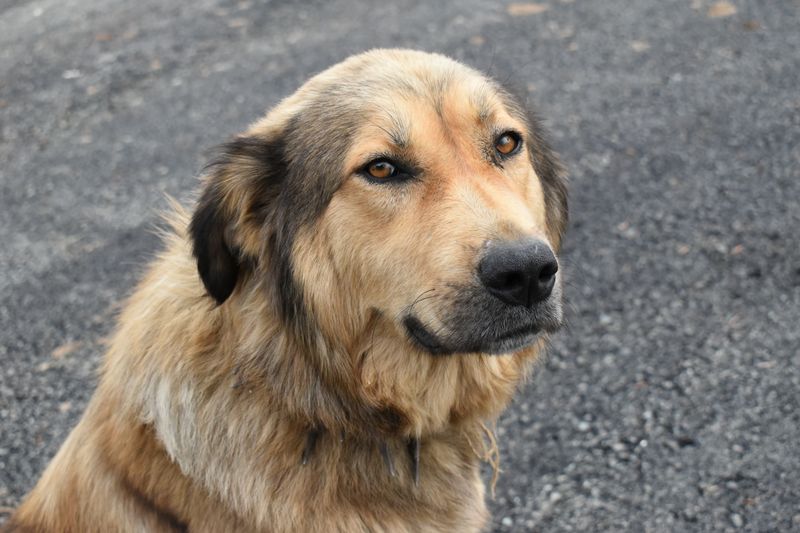
For eight years, Baxter beat me up the stairs every single night. He would wait at the bottom, do one excited circle, and then bound up like the top landing was a prize he had won. Then, over about a month, the bounding stopped. First he went up slowly, one paw at a time, and I teased him about getting old. Then one night he just stood at the bottom of the staircase, looked up, and did not come at all. He slept on the couch instead. I told myself he was being lazy, or that he had decided he liked the couch better. That was a comfortable story, and it was wrong.
What finally cracked it open was not the stairs themselves. It was the pattern around them. He was stiff when he first got up in the morning, he had started hesitating before jumping onto the couch, and he was waking up at night scratching at his sides and licking at his paws. The stairs were not the problem, they were the loudest symptom of a dog who was uncomfortable, and I had been reading a medical situation as a personality flaw.
Why This Happens
Dogs are masters of hiding discomfort, and reluctance to climb is one of the few honest signals they give us. Two things make stairs hard. The first is physical: moving up an incline loads the hips, knees, and spine, so stiffness, early arthritis, or a soft-tissue ache that a dog can mask on flat ground becomes obvious when climbing. The second is mechanical and gets ignored, slick stairs. A dog with long nails and no traction on wood or tile slips, learns to fear the slip, and starts refusing the whole staircase even if the joints are fine.
There is a layered piece people miss, too. A dog who is not sleeping well is a dog who is more reluctant to move. Baxter's nighttime scratching and licking were his own version of a bad night's sleep, and a bad night's sleep makes everything else. Including climbing stairs, feel like too much effort. That is not the main cause of his trouble, but fixing it made the rest of the plan work much better.
And the fear spiral is real. Once a dog refuses the stairs and gets carried instead, the stairs become more mysterious and scarier, and the habit hardens. You have about a window of weeks to catch it before "won't" becomes "can't."
What I Tried First — and Why It Didn't Work
My first move was to coax. I stood at the top with a piece of cheese and called him, cheerful and encouraging, like a dog who just needed motivation. He wanted the cheese badly and still would not climb, which should have told me something was physically wrong. Enticement does not fix a leg that hurts.
Then I tried carrying him up, telling myself it was a temporary kindness. It was the opposite. Every ride made the stairs more loaded with mystery, and he got heavier and I got lazier about the whole thing. I was building a permanent behavior out of a temporary problem.
My third attempt was buying a cheap foam ramp and parking it against the sofa, expecting him to use it. It wobbled, he did not trust it, and he would not set foot on it. A ramp that flexes under a nervous dog is worse than no ramp, because it teaches him ramps are unreliable.
What Actually Worked
The first thing I did was stop guessing and take him to the vet. I told the vet exactly what I had noticed, the hesitation, the morning stiffness, the stairs, and described the timeline without diagnosing him myself. That visit is not something you skip, because "won't climb" can be a joint problem, a disc issue, or something that needs real medical management, and no amount of home tweaking substitutes for ruling that out.
With the vet's guidance on joint support and weight, I attacked the mechanics at home. I put non-slip runners on every step, which cut the slipping and gave him back his footing, and I added a nightlight so the upper steps were not a dark unknown. I swapped the wobbly ramp for a sturdy low one to the couch. And I made sure his nails were trimmed flush, because long nails change how a dog stands and walk entirely.
The piece that surprised me was the nighttime complaining. Because Baxter was also itchy and restless, I added a daily probiotic aimed at gut and skin health. The Probiotics for Dogs chews for yeast, itchy skin, and digestion. Within a couple of weeks he was scratching less at night and sleeping through, and a better-rested dog is simply more willing to move. It was not the thing that fixed the stairs, but it removed a daily drag on his comfort that I had been writing off as normal aging. On top of joint care and real traction, it helped him climb the stairs with less hesitation.
What I'd Tell Someone Starting Today
Take the stairs seriously. A dog who suddenly stops climbing is almost always telling you something about comfort or footing, and the fix usually lives in two places: a vet visit to rule out or manage pain, and a home that is easy to move through. Trim the nails, add traction, light the path, and stop carrying a dog who might be able to climb with the right support.
Watch the rest of the picture, too. Sleepless nights, scratching, and stiffness all pull on the same rope, and a dog who feels better at 3 a.m. Will climb better at 9 p.m. Baxter still takes the stairs one at a time, and he still stops to look up first. But he climbs, on his own, every night. I will never call it laziness again.
This post may contain affiliate links. If you buy through one of them, we earn a small commission at no extra cost to you.