
Two Cats — One House, Zero Peace (I Stopped Fighting Their Fights and Did This)
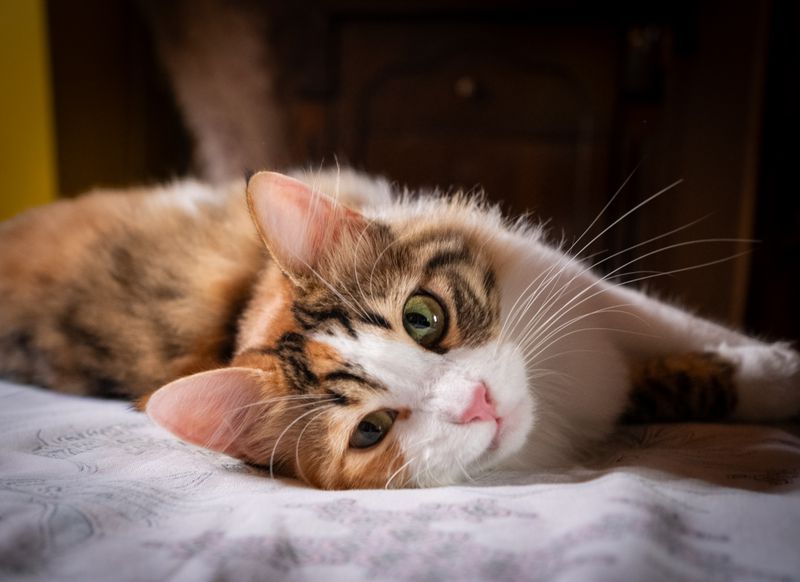
At 3 a.m. On a Wednesday, I woke to the sound of two cats running a full sprint down the hardwood hallway, one of them yowling like the other had insulted her entire lineage. I got up to find Miso, my senior tabby, backed into the corner of the dining room with her tail puffed to the size of a raccoon's, and Peach, the year-old kitten I'd adopted three months earlier, crouched eight feet away with her ears flat. Nobody was bleeding. But this was the fourth night in a row, and I finally understood that "they'll work it out" was not happening.
The worst part wasn't the fights. It was the low hum of stress underneath everything. Miso started avoiding the living room entirely. Peach started patrolling the hallways like a guard on a shift. One of them peed on the guest bed, twice. I'd plugged in a pheromone diffuser and called it handled, and I felt like a failure every time one of them flinched across the room from the other. They weren't attacking each other out of aggression. They were trapped in a staring contest neither of them could leave.
Why This Happens
Cats are not pack animals, and they don't resolve conflict the way dogs sometimes do. They're territorial, and they manage tension with distance, avoiding, blocking sightlines, claiming a vertical perch the other can't reach. When you put two cats indoors who haven't chosen each other, you remove almost all of the tools they'd normally use to keep the peace, and what's left is a permanent state of low-grade vigilance that boils over into chasing and swatting.
The first three months matter enormously, and I got them wrong. A resident cat and a new cat need a slow, staged introduction, and if you rush it, if the new cat is out and about on day two, the resident cat files the newcomer as an ongoing threat and never gets to revise the file. Once that negative association is set, every chance encounter afterward confirms it. That's why the chasing gets worse over time instead of better.
Resource competition is the sneaky second layer. Two cats sharing one food station, one water bowl, one litter area, and a single good window perch are, without realizing it, in constant quiet competition. A cat who feels she has to guard her food is a cat with a shorter fuse everywhere else. Fixing the fights meant fixing the resources first, and that's something I didn't understand for weeks.
What I Tried First — and Why It Didn't Work
My first real attempt was separation, and not the good kind. I shut Peach in the bedroom and gave Miso the rest of the house, and for a while it was peaceful. But it wasn't a solution, it was a pause button. The moment I let them share space again, the staring started within ten minutes, and Miso went back to peeing on the bed. I'd bought quiet, not calm.
Then I tried correcting them. Every time Peach crouched to stalk, I clapped or hissed to break it up. This is the mistake almost everyone makes, and it backfires for the same reason it does with dogs: the noise doesn't teach either cat anything about the other. It just adds a third stressful thing to the room. Miso started flinching when I stood up, because my presence had become part of the chaos.
After that I leaned on the pheromone diffuser alone and hoped ambient "calming" would do the work. It softened the edges slightly, but it never touched the core problem, which was that these two cats had no positive history together and no clear territory of their own. Plug-ins don't build a relationship. They just lower the volume on a fight that's still happening.
What Actually Worked
What actually worked was going back to the beginning and doing the introduction I should have done in the first place, slowly, and with a structure. I re-separated them into two base camps, each with its own litter box, food, water, and a high perch. Then I swapped them (Peach into the living room, Miso into the bedroom. For an hour a day so each could explore the other's scent without ever meeting face to face. That alone cut the door-side standoffs within days.)
Next came feeding on opposite sides of a barrier. I put their bowls on either side of a baby gate, starting far enough apart that both would eat without caring, and moved the bowls an inch closer every few days. This is where food did a lot of quiet work: I used VetriScience Calm & Confident Chews, the peanut butter kind, at every one of those sessions. The chews are the same reward every time, so the routine itself became the thing both cats associated with feeling relaxed near each other.
To take the sharper edges off the process, I also added the Oil for Dogs & Cats, the 60 ml multi-use calming oil, to their daily routine. I'm not claiming it fixed a behavioral problem on its own, no supplement does that, but it did take the top off the anxiety spikes, and a cat who isn't already vibrating with stress is a cat who can actually learn that the other one is safe. Lower baseline stress gave the training room to land.
I added vertical space, too, because the whole fight had been about who controlled the floor. A cat tree in the living room and a shelf-mounted perch in the hallway meant either cat could claim height and get out of the other's eyeline. I duplicated every resource. Two feeding stations, three litter boxes, two water bowls in different rooms. Within about six weeks they were napping in the same room on separate furniture, which I'd honestly stopped believing was possible.
What I'd Tell Someone Starting Today
Don't wait for them to sort it out, and don't try to fix it with punishment. Separate them into full base camps first, then reintroduce through scent swaps, barrier feeding, and shared good things, slowly, on their schedule, not yours. Duplicate every resource so nobody has to guard anything. If it's been months of real fighting with injuries, or if one cat is hiding and losing weight, that's a call to a veterinary behaviorist, and there's no shame in it.
Six months later, Miso still won't let Peach groom her, and they'll never be best friends. But there's no chasing, no yowling, no peeing on the bed, and last week they slept four feet apart in the same patch of sun. For two cats who didn't choose each other, that's not a compromise. That's a truce I'll take.
This post may contain affiliate links. If you buy through one of them, we earn a small commission at no extra cost to you.