
My Shoulder Had a Permanent Knot From Leash-Pull. The Walk Was Over Before It Started
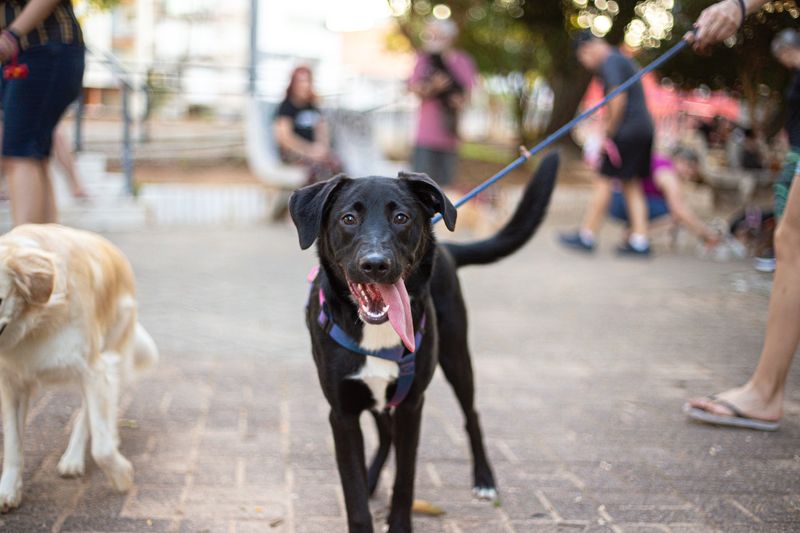
I noticed it in the shower, of all places, a hard, ropey knot in my right shoulder that didn't move no matter how I rolled it. Then I counted backward and realized it had appeared the same week I started walking Cooper twice a day. Cooper is a sixty-pound pit mix with the shoulders of a linebacker and the enthusiasm of a puppy, and every walk with him was a two-mile arm-wrestling match that I was quietly, consistently losing.
The humiliating part is that it wasn't a training failure at first. It was mechanical. A flat collar pulls against the front of a dog's throat, which every dog instinctively pushes back against, so the harder I held, the harder he leaned in. I was literally providing the resistance that made him pull harder, and calling it discipline.
Why This Happens
Dogs pull on leash for the simplest reason in the world: walking is rewarding, and pulling gets them where they want to go. Every step forward while the leash is tight is a paycheck. You're not fighting a stubborn dog; you're running a slot machine that pays out in forward motion, and the dog has figured out exactly which lever to pull.
There's also a reflex at play that most people never hear about. When you apply steady backward pressure to a dog's chest or throat, the natural response is to push into it, it's called the opposition reflex, and it's why tightening the leash during a pull tends to produce more pull, not less. A flat collar sits right on the trachea and makes this worse, which is why so many leash-pullers develop that awful honking cough.
And then there's the tool mismatch. A back-clip harness feels humane, but it puts the leash attachment right between the shoulder blades, essentially a sled-dog setup. You have built a sled dog. Of course he's pulling; you've harnessed him exactly the way a working dog gets harnessed to pull weight.
What I Tried First — and Why It Didn't Work
My first move was a choke chain, because that's what my uncle used on his shepherds in the nineties. It didn't reduce pulling; it made Cooper skittish and flinchy, and he started ducking away when I reached for the leash. I was punishing a dog for doing a thing dogs are wired to do, and I was eroding the relationship to do it.
Next I tried the "stop and stand still" method, the one where every pull means the walk pauses until the leash goes slack. In theory it's sound. In practice, with a strong, untrained dog, I stood still roughly four hundred times in a single mile and made almost no progress, because he never had a clear idea of what "right" looked like. I was telling him "no" without ever showing him the "yes."
Then I bought a nice padded back-clip harness, thinking I was being kind. It was comfortable and it fit beautifully and it made the pulling worse, because now he could lean his whole chest weight into it without any pressure on his throat to discourage him. I had given him better traction and called it progress.
What Actually Worked
The tool that changed everything was a front-clip, escape-proof harness with a handle. I switched Cooper to the Huntboo Escape Proof Dog Harness, the no-pull reflective one built with a lift handle on the back. Two features did the work. The front clip redirects his momentum sideways when he lurches, so he physically can't generate that straight-ahead pull, and the lift handle let me steer and support him through tight spots without yanking on his neck at all. The escape-proof fit mattered too, he'd slipped a harness before and nearly backed out into traffic, and this one doesn't budge no matter how he twists.
I later kept a second, comparable harness for our other dog, the rabbitgoo Escape Proof Dog Harness for large dogs. Same design philosophy. Front attachment to redirect, a lift handle for control, and a fit that stays put under pressure. Having two identical harnesses meant every walk used the same setup, so the dogs learned one consistent feeling instead of switching tools and resetting the lesson.
With the harness doing the mechanical work, the training finally had a chance. I taught Cooper that tension on the leash means stop, but slack means go, and I rewarded the moment the leash went loose with a treat held at my hip so he learned to walk beside me rather than ahead of me. Within two weeks the walks went from arm-wrestling to something I could hold in one relaxed hand. My shoulder knot loosened within a month, mostly because I stopped fighting him.
What I'd Tell Someone Starting Today
If your walks hurt you, stop trying to win with a collar. A flat collar on a strong puller is a tool designed to fail, and a back-clip harness on the same dog is a sled rig. Get a front-clip harness with a handle so the equipment redirects the pull for you, then use that mechanical advantage to teach, not to fight.
And start the training the moment the harness is on, not after. Reward the slack the instant it appears, hold the treat at your hip to draw him into position, and keep sessions short and boring. The dog was never the problem in my house. The rig was. Change the rig and the walk stops being a wrestling match.
This post may contain affiliate links. If you buy through one of them, we earn a small commission at no extra cost to you.