
My Cat Chews Up Everything I Give Her. I Stopped Buying Toys She's Already Destroyed
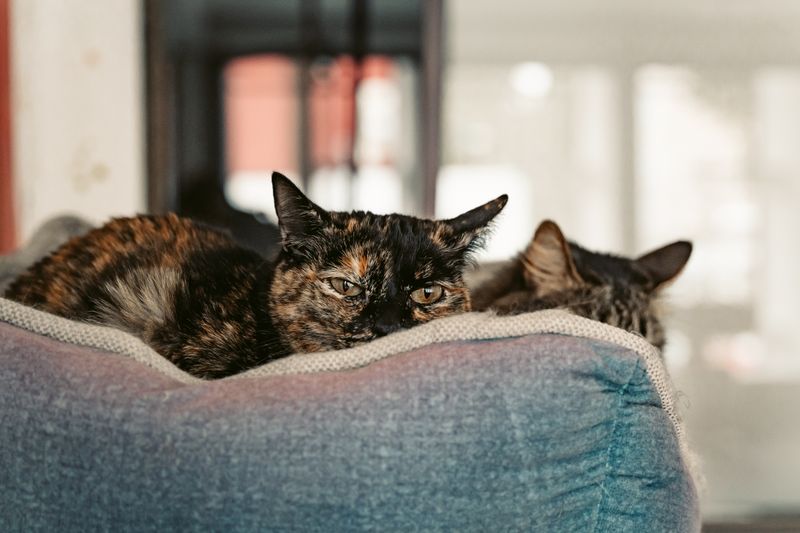
I did the math one Sunday while cleaning the living room, and the number was embarrassing. In the previous four months I had spent around ninety dollars on toys for my cat, Olive, and the survivor count was one. Everything else, the feathered wand, the crinkle balls, the plush mouse with the little bell, had been gutted, unstuffed, and scattered across my apartment in pieces, the way a raccoon leaves a crime scene.
At first I figured she was just a destroyer, one of those cats who murders every toy on principle. But the pattern was odder than that. She didn't play with her toys so much as disassemble them, methodically, over a couple of days, and then lose all interest the moment they were broken. She wasn't playing. She was working, and I kept handing her the wrong kind of job.
Why This Happens
Cats are predators, and their brains run on a fixed hunt sequence: stalk, chase, pounce, catch, kill, eat. A single toy only satisfies one or two beats of that sequence. A crinkle ball lets her bat and chase; a plush mouse lets her grab and kick. Neither one ever delivers the ending. The eat, so the circuit never closes. A cat whose hunting loop is always interrupted keeps looking for something to finish it.
That's what the destruction actually is. When a curious, high-drive cat has no outlet for the chase-and-catch part of her day, the drive doesn't vanish. It gets redirected onto whatever is available: the couch seam, the curtain cord, the corner of your paperback. Olive wasn't being naughty. She was doing chores with the only materials I'd left her.
Chewing is its own separate need, too. A lot of owners assume chewing is a dog thing, but cats gnaw for jaw stimulation, to ease teething in young cats, and simply to relieve stress. A cat who shreds fabric and cardboard is often a cat trying to work her mouth and her mind at the same time, and a soft plush toy gives her neither the resistance nor the payoff she's after.
What I Tried First — and Why It Didn't Work
My first instinct was volume. If one toy died, I'd buy two more, so there was always something new to grab. This just fed the cycle. New toys got destroyed faster and I kept spending, and Olive stayed exactly as bored once the novelty wore off, which took about a day.
Next I bought a laser pointer, because every listicle swears by it. It worked spectacularly for about ten minutes, and then it backfired in a way I didn't expect. There's nothing to catch at the end of a laser, so the hunt can never finish. Olive started staring at the walls, then at my ankles, then at the curtains, and my ankles got ambushed twice in one week. I had revved her up with no way to bring her down.
After that I tried stuffing her toys with catnip, thinking stimulation was stimulation. She got a lovely fifteen-minute buzz and went right back to dismantling the headboard. Catnip changes her mood; it doesn't give her a job.
What Actually Worked
The fix was to stop buying toys and start buying work. The single best thing I brought home was the BSISUERM Dog Puzzle Toy, the adjustable treat-dispensing ball. You fill it with kibble, set the difficulty with the internal sliders, and the cat has to bat and roll it around to make food drop out. That one object completes the entire hunt sequence, stalk, pounce, bat, catch, and finally eat. So her brain gets the ending it was always missing.
I added the PETSTA Dog Puzzle Toys, the treat-dispensing enrichment set built for IQ training, to give Olive a second job. These are the sliding and lever puzzles where she has to figure out a mechanism before the reward appears. The first time I set one down she stared at it, then pawed it over, then solved it in about ninety seconds. The second time she was faster. That mental effort is the part that actually tires a cat out, she was asleep within an hour of a puzzle session, which no plush mouse had ever accomplished.
The routine mattered as much as the products. I moved two of Olive's daily meals into the puzzle feeders instead of the bowl, so breakfast and dinner became work rather than a two-minute vacuum. And I kept the wand toy for the chase, but only in short, complete sessions that always ended in a treat so the sequence could finish properly.
Within three weeks the frantic chewing had mostly stopped. Not because I finally found an indestructible toy, but because Olive had something better to do with her mouth and her brain than dismantle my furniture. The money I used to spend on toys now goes into the puzzle, and that thing has outlived every plush mouse I ever bought her.
What I'd Tell Someone Starting Today
Stop buying the toy and start buying the task. If your cat destroys everything you give her, she's not naughty, she's under-employed. A food puzzle that makes her work for a meal taps into the prey drive at the exact point that soft toys miss, the reward at the end of the hunt, and it costs far less than what you're already spending replacing shredded plush.
Pair it with real, complete play sessions and be disciplined about the ending. Every wand session should finish with a catch and a treat, so the loop closes. A cat who gets to complete the sequence every day stops manufacturing her own entertainment out of your furniture.
This post may contain affiliate links. If you buy through one of them, we earn a small commission at no extra cost to you.