
She Was So Easy at 8 Weeks. By 12 Weeks — She Was Screaming at the Mailman
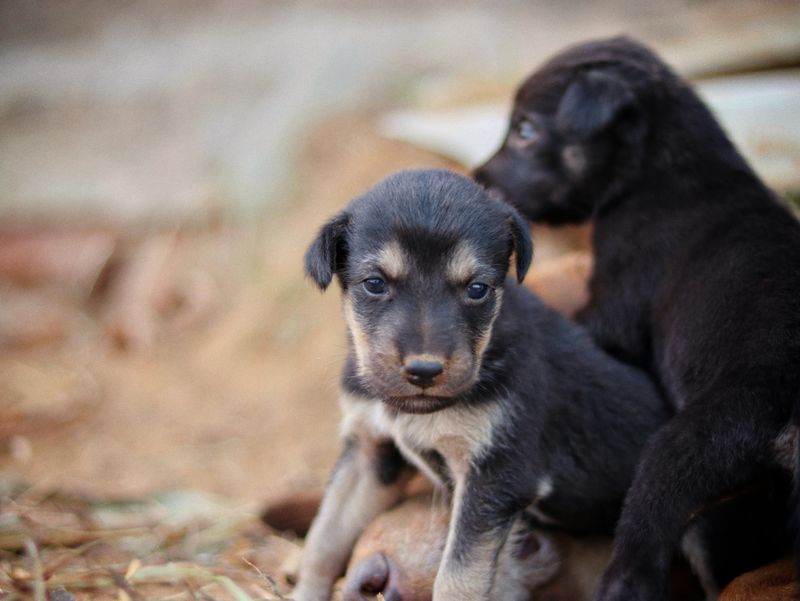
When I brought Juniper home at eight weeks, she was the easiest puppy I'd ever met. She slept through the night in her crate, met the neighbors with a wagging tail, and let the vet tech handle her without a peep. I told everyone she was bulletproof. Then, somewhere between eleven and twelve weeks, the mailman came up the walk and my sweet puppy turned into a different animal. Hackles up, teeth bared, screaming barking like the truck itself had threatened her life.
It wasn't just the mailman. Within a week she was barking at bicycles, at a flag flapping on a porch, at a stranger in a hoodie across the street. The dog who had loved everyone suddenly distrusted everything, and I couldn't figure out what I'd broken. I ran through the checklist. Good breeder, good food, plenty of sleep, and the answer was the one I'd left off entirely: the clock.
Why This Happens
Puppies have a critical socialization window that opens at about three weeks and slams shut somewhere around fourteen to sixteen weeks of age. Inside that window, new sights, sounds, people, and animals get filed under "normal" permanently. Outside it, the same experiences get filed under "unknown," and unknown things that approach are treated as threats. Juniper's window was closing right as her world got bigger, and I'd spent her most impressionable weeks at home being careful about parvo instead of carefully introducing her to the world.
Then there's the fear period. Young dogs hit developmental stages where a normal brain suddenly becomes primed for wariness, and around ten to twelve weeks is a classic one. It's not a flaw in the dog. It's biology building a caution system, and if the first big stimuli a puppy meets during that window are scary (or if she meets them alone and unrewarded, that wariness hardens into a habit.)
The reason the "screaming" looked so extreme is that fear in a puppy is genuinely overwhelming. She wasn't choosing to make a scene. Her nervous system was flooded, and barking and lunging is the only language a frightened dog has for "get this away from me."
What I Tried First — and Why It Didn't Work
My first move was to flood her with the thing she feared. I figured if she just met enough strangers, the mailman included, she'd learn they were harmless. So I had a friend play mailman and walk up to us again and again while Juniper lost her mind. Flooding a scared puppy doesn't build courage; it builds deeper dread. She got worse, and she started reacting to people she could see half a block away.
Next I scolded her. A stern "no" every time she barked at a passerby. This is the mistake nearly everyone makes with a reactive dog, and it fails for the same reason it does with adult dogs: you can silence the warning, but you don't remove the fear. She just got quieter and more nervous, which I would eventually learn is a far worse outcome than a noisy dog.
Then I overcorrected and stopped taking her anywhere. Avoiding all triggers felt kind, and the peace was nice, but it meant she never practiced being calm around anything new. Avoidance manages the problem; it never solves it. I was protecting her from the world instead of teaching her how to live in it.
What Actually Worked
What finally moved the needle was counter-conditioning, which sounds clinical but is really just pairing the scary thing with something wonderful. The formula is simple: trigger appears, great food appears, repeat a few hundred times, and the puppy's brain starts doing the math on its own. "Stranger equals treats" is a much easier lesson to install at twelve weeks than at twelve months.
The key words there are great food. Kibble doesn't cut it when a puppy is genuinely frightened. I used Buddy Biscuits Trainers, the soft and chewy training bites, because they're small enough to reward fast without filling her up and soft enough that even a stressed puppy can chew and swallow them quickly. Timing is everything, the treat has to land the instant she notices the trigger but before she tips into panic, so the association forms around "notice, get paid" instead of "notice, explode."
I also added a calming vest for the moments I knew would spike hard. The Dog Anxiety Vest, the skin-friendly calming shirt made for thunder, fireworks, and vet visits, applies gentle, even pressure across her body. It's not a sedative and it doesn't dull her down; it just gives a flooded nervous system something steady to hold onto. I put it on before our training walks, so her baseline was a notch calmer and she could actually take food and listen.
Then I controlled the distance. I kept Juniper far enough from triggers that she could still think, eat, and look at me. That distance, the point where she notices the mailman but can still take a treat, is where every bit of learning happens. Too close and you're just rehearsing the meltdown. I shortened sessions, kept them boring, and let the reps add up over weeks instead of trying to fix it in an afternoon.
What I'd Tell Someone Starting Today
Learn the timeline before you learn anything else. You have a hard deadline around fourteen to sixteen weeks, and everything your puppy meets inside that window is filed as safe for life. Carry her through unfamiliar places, reward every new sound and sight, and don't wait for the last round of vaccines to start showing her the world (ask your vet how to do it safely, then do it.)
If you're already past the window, it's not ruined; it's just slower. Go far away from the trigger, make the treats better than seems reasonable, keep sessions short, and reward calm relentlessly. Juniper still notices the mailman. But now she looks at me first, and that's the whole game.
This post may contain affiliate links. If you buy through one of them, we earn a small commission at no extra cost to you.