
She's a Tabby in Here — a Sofa in There. I Stopped Letting the Bowl Finish Itself
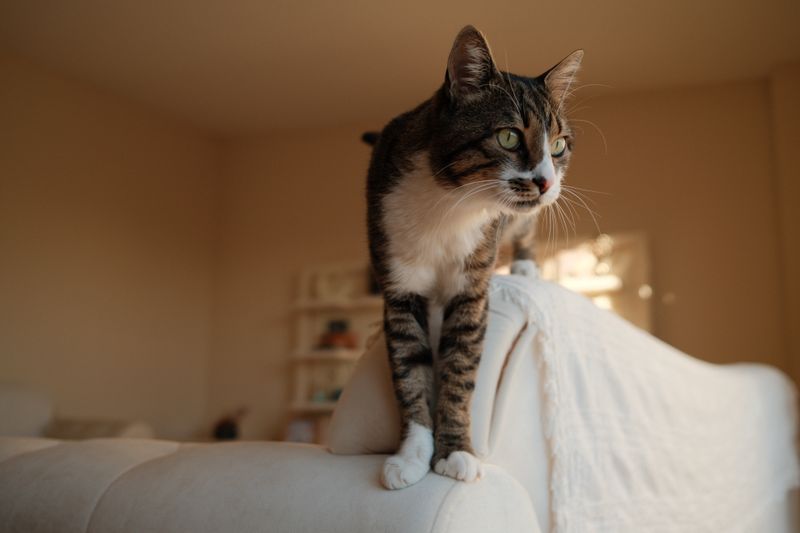
The joke started because she fit nowhere else. Poppy used to sleep in a shoebox, curled tight, perfectly proportioned to a cat who lived for laps and sunbeams. Then one winter I noticed she had stopped fitting in the shoebox, and by the next summer, when she flopped down on the couch, she did not so much settle into a spot as spread across four of them. My vet said the phrase that ended the denial: she is not a big cat, she is an overweight cat, and that is a medical condition, not a personality.
What I had built without realizing it was a free buffet. Two bowls on the floor, topped up whenever they looked low, because that felt like love. The problem is that a dish that never empties is not a portion, it is an open invitation. Poppy did not overeat because she was greedy. She overate because I had spent years removing every natural limit on how much food was available.
Why This Happens
Cats are designed to eat many small meals across the day, and indoors they get almost zero of the hunting and roaming that used to spend those calories. Free-feeding a bored indoor cat is the perfect storm: unlimited food, minimal movement, and a strong instinct to check the bowl anytime they pass it. The weight creeps on in fractions of a pound that nobody notices until suddenly the shoebox does not fit.
Weight is not cosmetic. Carrying extra pounds on a small frame loads the joints, strains the heart, and stacks the odds of diabetes and other problems later. A chunky cat is a cat at higher risk, and every month of staying that way makes the correction harder.
The behavioral piece matters just as much. Overweight cats often overeat for lack of stimulation as much as for food. A cat with nothing to do all day will circle the bowl out of boredom, and the fastest cure for that is not more food restriction but a cat who is actually occupied. That is where the whole plan has to have more than one leg. And a cat who is not moving much is a cat who is quietly trading muscle for fat, which only makes the whole spiral steeper with every passing month.
What I Tried First — and Why It Didn't Work
My first attempt was simply grabbing the bags of food and topping up less often, which I told myself was portion control and was actually just inconsistent feeding. Poppy read the irregular schedule, decided food was scarce and unpredictable, and started scarfing and begging harder. Guesswork disguised as a plan.
Then I tried a "diet" food and just kept the same free-for-all out of it. Switching the formula changed nothing, because the quantity and the all-day access stayed exactly the same. The bowl still finished itself; I had only changed what it was full of.
The third thing I tried was a few short play sessions with a wand toy, a couple of times in the first enthusiastic week, and then, honestly, I stopped. Play is a habit like brushing your teeth, and I let it slide the moment life got busy. Poppy was back to the bowl because I had given her nothing better to do.
What Actually Worked
Three changes made the difference, and they worked as a set. First, I measured. I bought an actual measuring cup, asked the vet for a target daily amount, and split it into several small meals through the day instead of leaving a full bowl down. Poppy stopped guarding and scarfing within about a week, and once she trusted that meals arrived on schedule, the constant begging at the bowl dropped off.
Second, I gave her work to do for part of her food, which is where the puzzle feeding came in. I put a portion of each meal into a snuffle mat and let her nose it out across the floor instead of eating it from a dish in three minutes. That one change turned dinner into ten or fifteen minutes of foraging, slowed her eating way down, and burned exactly the kind of energy a bored indoor cat is missing. Poppy is a different cat at feeding time now. Busy, engaged, and done quicker, not lying by an empty bowl.
Third, I kept her gut steady through the change. When you cut a cat's calories, digestion can grumble, and I did not want her uncomfortable on top of hungry. I added a daily probiotic for digestive support, the same gut-health approach I use across the house, and it kept things regular as she came down in weight. It was a supporting player, not the star, the star was the measured bowl and the slow feeder, but it kept the transition smooth.
What I'd Tell Someone Starting Today
Get a measuring cup and a vet-approved daily amount, then feed several small meals instead of leaving the bowl down. The end of the endless bowl is the whole turning point, and the day the food stops being free is the day the weight starts to come down.
Then give the food a job. A snuffle mat, a puzzle feeder, a treat ball, anything that makes a cat work a little for a meal. And do not go fast. Sudden steep calorie restriction is dangerous for cats, so set the target with your vet and change slowly. Poppy fits in the shoebox again this winter. She does not stay in it for long, because now she is too busy working for her dinner to nap on the couch all day.
This post may contain affiliate links. If you buy through one of them, we earn a small commission at no extra cost to you.