
He Used to Walk Six Blocks Without a Hiccup. Now It's Three and He's Hunched
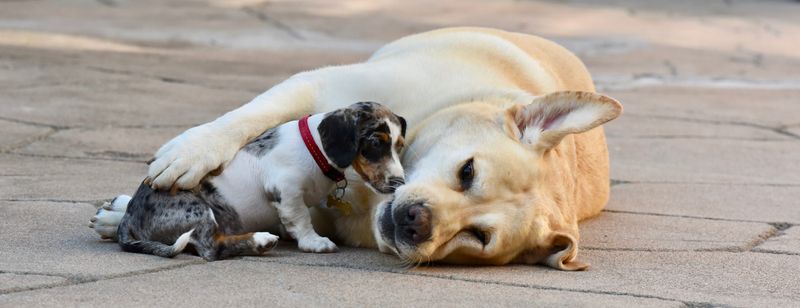
Every morning for six years, Rufus and I walked the same six blocks. He set the pace, pulled me the whole way, and by the time we got home he was loose and happy and ready for breakfast. Then the walk started shrinking. First it was five blocks, then four, and then one Tuesday he just stopped in the middle of the third block, stood still, and curved his back like a comma. His tail dropped and he looked back toward the house. I called him my little old man and shortened the route again, which turned out to be exactly the wrong thing to do.
What I kept dismissing as a slowing-down dog was actually a dog in discomfort. It took me far too long to notice that the hunching came and went, that it was worse some mornings than others, and that it was not really about his legs at all. I had a whole story about aging hips, and the story was hiding the actual problem.
Why This Happens
Here is the thing I wish I had known sooner: a hunched, roached back in a dog is not always a hip problem. It is often a posture of abdominal discomfort. When a dog's stomach or intestines are hurting, they arch the spine and tuck their belly to take pressure off the sore area, which looks exactly like the stiff, hunched posture people attribute to old joints. If your dog's walk has gotten shorter and he rounds his back on the bad days, the gut deserves a look alongside the hips.
Fitness is the other half. If a dog slowly gains weight and loses condition, which happens quietly on the same food and the same short walks, the muscles that hold a body up get weaker and the walks get harder. A dog who cannot comfortably carry himself is a dog whose route keeps getting shorter. And a dog whose evening walk is now three blocks instead of six is also a dog who moves less every day, which makes the whole thing spiral.
Then there is the equipment nobody thinks about. A collar that pulls on the throat changes how a dog holds his head and neck, and for a dog already uncomfortable, that pressure down the front and up the spine can make a short walk feel like a long one. A harness that distributes the pull across the chest instead of the throat is a small change with a real effect.
What I Tried First — and Why It Didn't Work
My first move was to blame his hips and start a joint supplement, which I kept up for months with barely a change. The hunching did not go away, because I was treating a joint the problem was not coming from.
Then I assumed he was just getting tired and cut the walks shorter and shorter, until we were barely going around the block. This was the worst of my mistakes. Less movement meant less muscle, less muscle meant less stamina, and the shorter I made the walks, the shorter the walks he could handle. I was training the problem into place.
My third attempt was keeping him on his usual collar, because it had always been fine. On the bad mornings, though, that collar on his throat seemed to make him hang his head lower than ever, and I finally switched to a harness on a hunch.
What Actually Worked
The turning point was a vet visit where I described the hunching honestly instead of calling it aging. The vet agreed his joints were not obviously the issue and asked the questions I had not thought to connect, about his appetite, his stools, and whether the hunching tracked with his digestion. It did. We focused on his gut, and it changed everything.
Once we treated this as a digestive issue, the fix was steady and unglamorous. We settled on one gentle food and stopped changing things up, and we added a daily probiotic to rebuild the good bacteria and calm the day-to-day upset. The Pet Honesty Dog Probiotics Chews for gut and digestive health were part of our routine, and within a couple of weeks the hunched mornings were fewer and further apart. When the belly stopped complaining, the posture relaxed, and suddenly the walks did not hurt.
With his gut settled, I rebuilt his fitness on purpose. I started at ten minutes, no matter how fine he felt, and added five minutes a week, always on the same route so I could compare. I put him on a harness instead of the collar and trimmed his nails so his grip was solid. Six weeks later he did four blocks. Eight weeks after that, all six, tail up, pulling me like he used to. The gut was the root, and the walks were the proof.
What I'd Tell Someone Starting Today
Do not assume a shorter walk and a hunched back are just age. A hunched posture can mean abdominal discomfort, so describe the pattern to your vet. When it happens, what it tracks with, what his appetite and stools are doing. It might be hips, but it might not be, and only a vet can tell you which.
Do not fix a stamina problem by walking less. Once the pain is managed, build the walk back up slowly and consistently, and get the equipment right: a harness, trimmed nails, one steady food instead of a rotating buffet. Rufus is back to his six blocks. He still takes the last one a little slower than the first, and that is fine. But he does not stop in the middle anymore, and he does not curl into a comma. That is the whole win.
This post may contain affiliate links. If you buy through one of them, we earn a small commission at no extra cost to you.