
The Balcony Door Was the Only Place My Cat Wanted to Be. So I Finally Built Her a Real Catio.
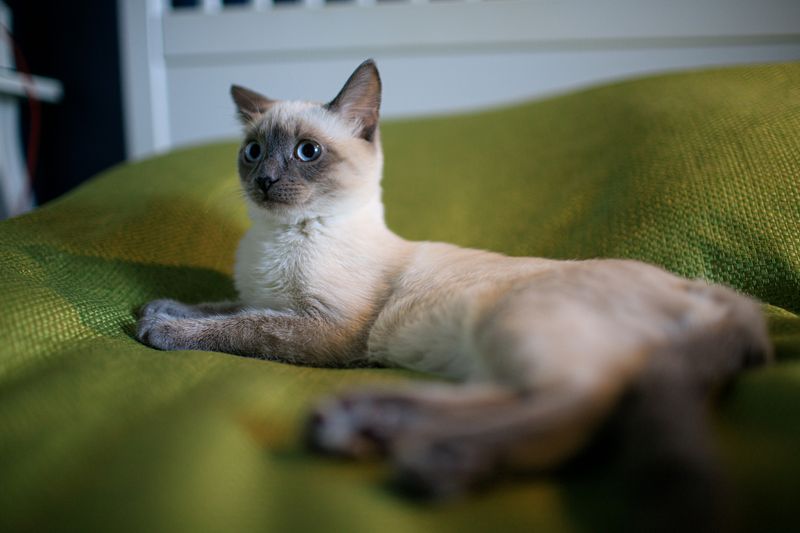
My cat Poppy is not a subtle animal, and she made her position clear within a week of us moving into an apartment with a small south-facing balcony: she wanted to be on the other side of that sliding door, full time. She would plant herself in front of the glass for hours with her tail flicking, and the instant I opened the door for two seconds to water the plants, she would slip out and refuse to come back in. I would end up crawling across the concrete after her with a treat bag like some kind of hostage negotiator.
The trouble was that the balcony was genuinely dangerous. We are on the second floor with a metal railing a determined cat can easily get over, and the drop to the parking lot below is unforgiving. I could not let her out unsupervised, and I could not keep her in without a daily fight. For two months my only choices were "cat screaming at the door" or "cat unsupervised on a railing," and neither of those was going to survive a full summer. I started looking at what people with this exact problem actually build, and that is where I learned the word catio.
Why This Happens
Cats want altitude, sightlines, and territory. To a cat, the best real estate in any home is the highest point with the widest view, and a balcony offers both in a way the inside of an apartment simply cannot. That is why she fixated on the door. It was not stubbornness and it was not a phase; it was an unmet need for vertical space, fresh smells, and a slab of the outside world she could claim as her own.
The reason a catio works where a plain open balcony does not is that it keeps the sightlines and the smells while removing the falling and the fleeing. A cat gets to be outside without the two things that actually kill cats outdoors: traffic and getting spooked into running. You are not fencing in a bored animal; you are handing her a safe version of exactly what she was already trying to reach.
There is a bonus for the human, too. Every time I let her onto the open balcony under supervision, I had to stand there the entire time, because the second I looked away she would test the railing. A proper enclosure means the balcony stops being a full-time job for me and becomes a safe room for her. That trade was worth almost any amount of setup.
What I Tried First — and Why It Didn't Work
My first approach was pure management: I kept the door closed and moved her window perch as close to the glass as I could. That flopped. She was not fooled by a perch two feet from the barrier she was not allowed to cross. If anything, seeing the balcony and smelling it through the door crack made her more obsessed, not less.
Then I tried letting her out for short, supervised visits. This mostly taught her that the balcony was reachable, which made her bolt for the door every time it opened, and it did nothing about the fact that I could not take my eyes off her. Chicken wire was my next idea, and I actually bought a roll before realizing I would be stapling flimsy netting to my landlord's railing and trusting thin wire to hold a cat who had just proven she would climb anything.
My third attempt was distraction — scheduled play sessions by the door, a bird video on the TV, a puzzle feeder. These passed the time, but they were all substitutes. She did not want a simulation of outside. She wanted outside.
What Actually Worked
The fix was to build her a real, enclosed outdoor space on the balcony, and the cheapest honest way to do it was with exercise pens. I started with an Amazon Basics Foldable Octagonal Metal Exercise Pen, the eight-panel kind that stands about thirty inches tall. Because the panels hinge, I could shape it into the exact footprint of my balcony corner, and because they are welded wire, she can see and smell through every side. I set it up with a litter box, a water bowl, and a shaded bed, and the first afternoon she sat in the middle of it for two hours, watching the parking lot like it was appointment television.
I liked it so much that I added a second pen for the other side of the balcony, and for that one I used the 47-inch XL covered small-pet playpen with a sturdy top. The top is the piece that let me relax. Poppy had already shown she would climb, so having mesh overhead meant even a determined cat could not scramble out the way she could from an open pen. This is the one I now use for longer stretches, because the cover gives me real peace of mind when she is out there while I am making dinner.
The key was treating the pens as walls, not as a cage, and then making the space inside genuinely nice. Two pens, arranged in an L, gave her a run rather than a box — room to trot from one end to the other, chase the sun patch as it moved, and post up at the corner with the best view of the street. I zip-tied the panels together at the joints so nobody could wedge a panel open, and I checked the whole rig every single time before she went out.
The change in her was not subtle. The door-scratching stopped. She stopped bolting past my legs when I opened the sliding door, because the balcony was no longer forbidden territory — it was just her room. She naps out there in the mornings now, trots back in on her own when she has had enough, and the daily standoff over that piece of glass is simply over.
What I'd Tell Someone Starting Today
Measure your space before you buy anything, and choose panels tall enough and a pen with a cover if your cat is a climber. Set it up so there is shade at all times, because a glass-and-concrete balcony gets dangerously hot by mid-afternoon. Never leave a cat out there unsupervised for long, no matter how secure it feels, and check the hardware — zip ties, panel joints, any gap — every single time before she goes out.
Start with one pen in one corner and watch how she uses it before you commit to a whole layout. The point is not to build a fortress. The point is to stop fighting your cat over a door and finally give her the three feet of outside she was never going to stop asking for.
This post may contain affiliate links. If you buy through one of them, we earn a small commission at no extra cost to you.