
My Lab Shed a Whole Second Dog Every Spring. This Brush Finally Ended the Fur Storm.
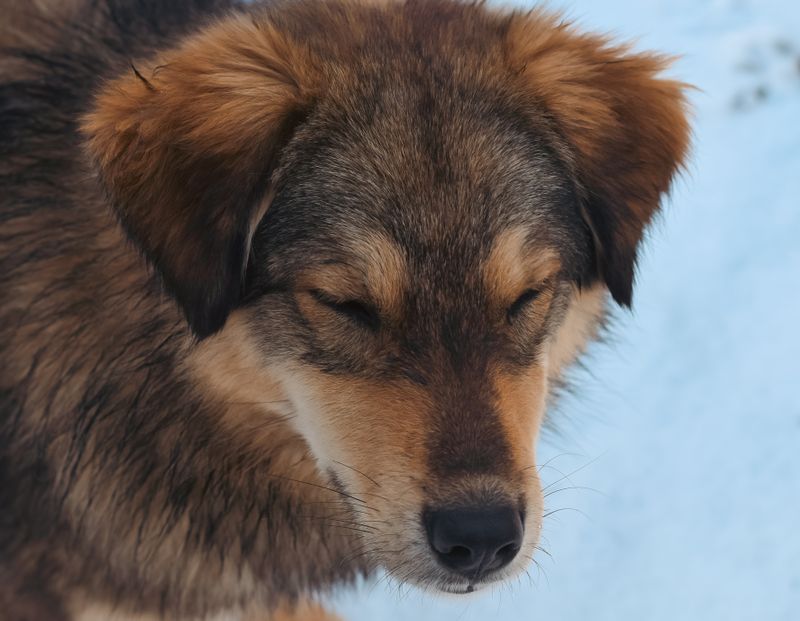
The first sign was the tumbleweed. It rolled across my kitchen floor on a Tuesday morning like something out of an old western, except it was made entirely of yellow Lab fur and it came from a dog who was, at that moment, asleep on the couch. Murphy is four, a healthy yellow Lab, and twice a year he does something a friend of mine calls molting — he sheds his undercoat in fistfuls, and for about three weeks my house looks like a snow globe someone shook.
It was not just the floor. It was the black leggings, the couch cushions, the inside of my car, the impossible dust bunnies under the bed. I vacuumed twice a day and it changed nothing. The hair kept coming, and underneath it all Murphy was itchy, hot, and panting through a coat that had gone oddly flat. I assumed I was failing him somehow. I was not. I was using the wrong tool, and I wasted a full spring figuring that out.
Why This Happens
Double coats are the whole story. Breeds like Labs, shepherds, huskies, retrievers, and most terriers carry two layers of fur: a soft, dense undercoat that insulates against both heat and cold, and a longer topcoat of stiffer guard hairs that repels water and dirt. That undercoat is what ends up on your floor. It does not fall out steadily; it releases in seasonal cycles, usually spring and fall, when the dog's body reacts to changing daylight and temperature. This is called blowing coat, and no shampoo, supplement, or vacuum is going to stop it, because it is not a problem — it is biology.
The trouble starts when that shed undercoat never gets pulled out of the coat. It gets trapped against the skin, matting down, holding warmth, and irritating the skin underneath. A dog with a coat full of dead undercoat itches more and sheds more, and the whole thing snowballs. So the goal is not to stop shedding; it is to physically remove the loose undercoat before it lands on your floor, your furniture, and your dog's skin.
That last part matters because of a myth I bought into for years: that shaving a double-coated dog would end the mess. It does the opposite. Shaving strips the insulating topcoat, and the undercoat often grows back faster and denser to compensate. It can also leave the dog sunburned and less able to regulate its own temperature. Vets and groomers are close to unanimous on this — you do not shave a double coat, you manage it. And managing it is a tool problem, not a willpower problem.
What I Tried First — and Why It Didn't Work
My first reflex was lint rollers, which is adorable in hindsight. A roller picks up a dozen hairs at a time. Murphy produces a dozen hairs per step. I burned through a whole pack in a weekend and gave up.
Then I tried brute force: vacuuming constantly. That kept the visible tumbleweeds down, sure, but it did nothing for the source, and worse, it did nothing about the hair already woven into the couch fabric. A vacuum passes over surface hair; it does not lift the stuff that has threaded itself into the weave.
I also reached for the tool in my bathroom drawer — a human hairbrush and, later, a fine-toothed flea comb. Both just skimmed the topcoat and slid right over the undercoat, because the tines were too short and too dense to reach the shedding layer. Then came the expensive detour: a de-shedding shampoo promising to stop the shedding entirely. I lathered Murphy up, dried him, and he shed exactly as much as before, only now he smelled like a candle shop. The shedding was not a symptom of dirty skin. Nothing about a bath removes a coat that is already loose and ready to drop.
What Actually Worked
The fix was embarrassingly simple once I understood what I was trying to remove: a brush that reaches the undercoat and then lets you empty it fast. The Depets Self Cleaning Slicker Brush has fine, bent wire bristles dense enough to grab the loose undercoat, and the whole head retracts with one push of a button so the collected fur drops into the trash in a single clump. That self-cleaning part sounds like a gimmick until you are brushing a shedding Lab. Without it you spend as long picking fur out of the brush as you do brushing the dog, and you quit.
The method matters as much as the brush. I section him — one hand parts the coat down to the skin, the other works the brush through a patch at a time, following the direction of the coat, then a light pass the other way. I do the hindquarters, the flanks, the chest, and the thick ruff around the neck, because that is where the undercoat collects hardest. I brush him outside, because the volume is real: five to ten minutes daily through the peak weeks, two or three times a week the rest of the year.
Here is the part that surprised me. Within about four days the floor tumbleweeds thinned out dramatically, and Murphy got noticeably less itchy. He had been overheating under a matted layer of dead fur. He started leaning into the brush and drifting off, which told me the trapped undercoat had been as uncomfortable for him as it looked from the outside.
The other half of the battle was everything the brush knocked loose that then landed on the couch. For that, the ORDORA Reusable Pet Hair Remover Brush does what a vacuum cannot: the rubberized edge drags embedded hair up out of upholstery, bedding, and car seats and gathers it into a roll you lift off with your fingers. There is nothing to replace and nothing to refill — you rinse it and use it again. Between a slicker for the dog and a rubber remover for the furniture, I stopped losing the war on two fronts at once.
What I'd Tell Someone Starting Today
Start with the right brush instead of more vacuuming. If your dog has a double coat, get a slicker with a self-cleaning head and brush for a few minutes daily during shedding seasons. That one habit pulls most of the fur out of your life before it ever reaches your floor. Be patient the first week — you are removing weeks of accumulated undercoat, and it looks alarming before it gets better.
Do not shave a double-coated dog, and do not expect a shampoo or a supplement to stop a seasonal shed, because that is water running off a duck. Keep a rubber furniture brush on the couch for what already got away. Murphy still sheds — that is what a Lab does — but the tumbleweeds are gone, his coat is glossy, and the brushing has become the part of the day he asks for.
This post may contain affiliate links. If you buy through one of them, we earn a small commission at no extra cost to you.