
My Puppy Wouldn't Use the Pee Pads. Here's What Made Potty Training Actually Click.
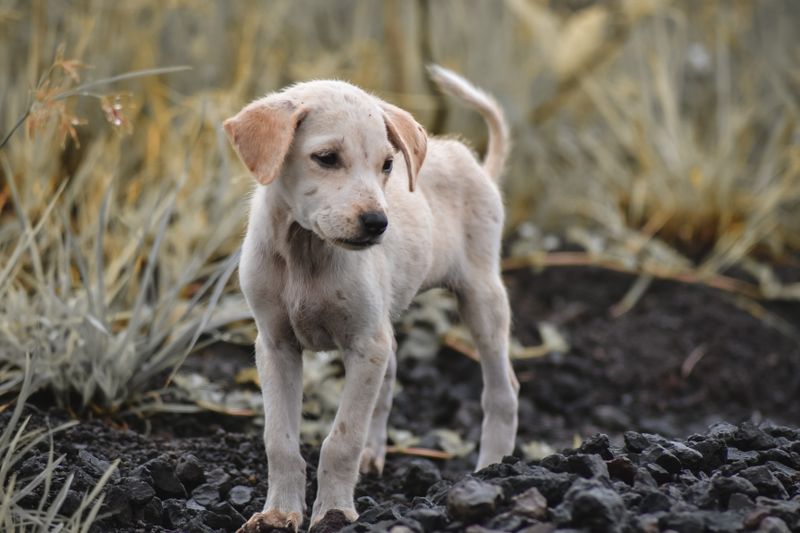
I live on the fourth floor of a walk-up in a cold city, and when I got Finn, a ten-week-old puppy, in the middle of January, I made a choice plenty of people would argue with: I used indoor pee pads as his main bathroom for the first few months. It was not laziness. It was math. Hauling a puppy down four flights and around the block every hour, in freezing weather, in the dark, is how accidents happen and how a puppy learns the rug is a fine place to go. The pads were the plan. The pads just were not working.
Finn would use a pad once and then avoid it. Or worse, he would pee so much that the thin pad underneath soaked straight through and puddled on the floor. My cheap pads leaked, slid across the tile, and left the bathroom smelling like a kennel no matter how I scrubbed. I was swapping pads after every use and still losing.
Why This Happens
Puppies need consistency of surface and location, and they need a surface that actually performs. A pad that leaks is telling your puppy that the floor is also a bathroom. The moment urine hits the tile, the scent stays, and that spot keeps calling him back. A failing pad is not a training failure — it is a scent-marking invitation that grows every time it happens.
Size and coverage matter too. Puppies miss, especially early, because they have no aim and they move while they go. If the pad is too small, or shifts under them, the miss becomes the new habit and the target area is never the right one. A pad that moves is worse than useless, because a puppy who slides off his target quickly learns that the whole floor is fair game.
And timing beats product by a mile. A young puppy can only hold it for roughly an hour per month of age, which means a two-month-old needs a bathroom break about every hour. If the schedule is loose, the pad becomes a suggestion rather than a routine, and the behavior never locks in.
What I Tried First — and Why It Didn't Work
My first box of pads was the cheapest bulk pack I could find. They were thin, they slid, and they leaked. Within a week the bathroom floor held a permanent smell no cleaner erased, and Finn had started going beside the pad instead of on it.
Next I taped the pad to the floor. That stopped the sliding but not the leaking, and peeling tape up every couple of hours was miserable when I was half asleep at 3 a.m.
I tried laying two pads side by side for a bigger target. He just used the seam and leaked off the edge anyway. Thickness and the leak-proof backing were the real problem, and no amount of arranging thin pads was going to fix that.
What Actually Worked
The fix started with better pads. I switched to the Amazon Basics Leak-Proof Pee Pads with the quick-dry five-layer top, and the difference was immediate. The leak-proof backing meant nothing reached the tile, so the floor stopped smelling and the spot stopped advertising itself. The quick-dry surface meant Finn was never standing in a puddle, which mattered because a puppy with wet feet steps off mid-stream. Suddenly he had a dry, stable target that caught his business and held it.
I sized up, too. I moved to the larger version of the same line so the pad covered a genuinely big footprint instead of a small square he could miss in the dark. When the pad is generous and stays put, an off-angle puppy still lands on it, and a clean hit is a rep that teaches the right lesson. I also learned to size the pad to the puppy rather than to the floor; as Finn grew, the target had to grow with him or the aim problem came right back. And I kept the pad away from his food and bed, because no puppy wants to eat or sleep beside his own bathroom, and that alone cut down the resistance.
Then I fixed the routine. Every hour, and immediately after every nap, meal, and play session, I carried Finn to the pad and waited. If he went, praise and a treat on the spot. If he did not, I watched him for the next fifteen minutes and tried again. I never scolded an accident; I just cleaned it with an enzymatic cleaner so the scent was gone. Within about two weeks he was taking himself to the pad without me.
The last piece was planning the exit. Pads are a bridge, not a destination. As the weather warmed, I put a pad near the door, then took him outside to the same spot on the same schedule until the outdoor version stuck. He goes outside full time now, but the pads carried us through winter without wrecking my floor or my sanity.
What I'd Tell Someone Starting Today
If you are using pads, use ones that actually hold liquid and stay put, size them generously, keep them in the same spot every time, and run a real schedule. Clean every miss with an enzymatic cleaner so the scent never takes hold. And treat pads as training wheels — move your puppy to the outdoors as soon as you reasonably can.
Finn is almost two now and has not had an accident indoors in over a year. The winter pads were never the problem. The thin, leaky, sliding ones were, and the moment I changed those, everything else got easier.
This post may contain affiliate links. If you buy through one of them, we earn a small commission at no extra cost to you.