
My Dog Kept Peeing on the Same Rug Spot. The Real Problem Was the Smell I Couldn't Smell.
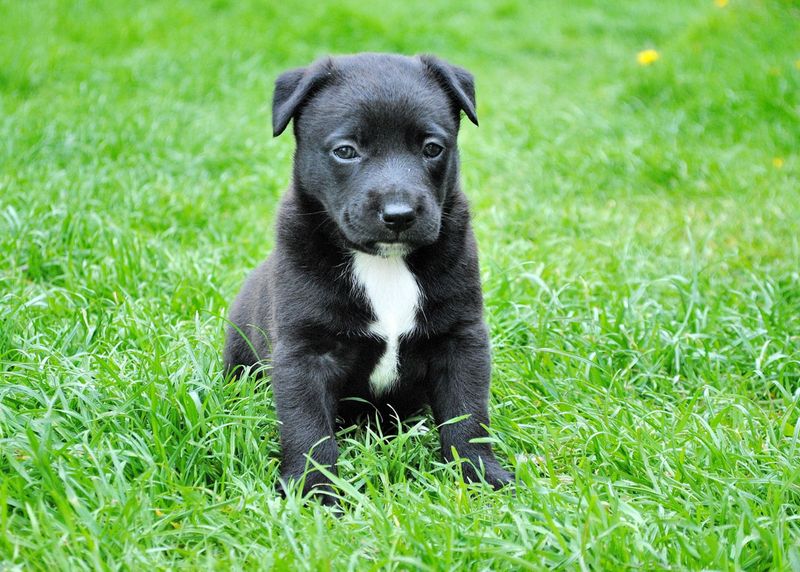
My dog Gus was house-trained. He had been reliable for two years, and then, out of nowhere, he started peeing in the exact same corner of the living room rug. Not randomly — always that one spot, over and over. I would catch him, redirect him outside, clean the spot with soap and water, and think we were done. Then two days later, same corner, same rug.
I assumed it was behavioral, maybe stress or some kind of protest. My vet ruled out a urinary infection, which was my second worry, and then said something that reframed the entire situation: if it is always the same spot, the odds are good the spot still smells like a bathroom to the dog, even if it smells clean to you.
Why This Happens
A dog's nose is thousands of times more sensitive than ours, and urine leaves behind uric acid crystals that bond to fibers and porous surfaces. Regular soap and water removes the liquid and the surface smell but leaves the crystals, and those crystals keep releasing scent for months. To Gus, that corner was a flashing sign that said "bathroom here," and he was doing what dogs do — re-marking a spot that already smelled like one.
This is also why cleaning with a strong household cleaner or anything ammonia-based can backfire. Ammonia is a component of urine, so cleaning with it literally adds to the signal you are trying to erase. The right product is an enzymatic one, because enzymes break down the uric acid instead of just covering it with perfume.
The behavioral layer stacks right on top of the scent layer. Once a dog has gone somewhere repeatedly, it becomes a habit loop: the smell invites the act, and the act reinforces the smell. Breaking it means removing the scent completely so the invitation disappears, then managing the habit for a couple of weeks while the dog builds a new routine. There is a reason vets ask about the pattern and not just the accidents: the same spot on the same surface every time points at scent, while scattered accidents in new places point more at a medical or anxiety issue, and the two need very different responses.
What I Tried First — and Why It Didn't Work
My first approach was soap and water, which I assumed was sufficient. It was not. The spot looked clean and smelled clean to me, and the crystals were untouched.
I tried a scented carpet cleaner, which made the room smell like a chemical flower for a day and then let the urine smell creep back in underneath.
I tried blocking the corner with a heavy piece of furniture, which worked for two weeks and then he chose a new corner, because I had moved the problem instead of eliminating it. I also tried simply watching him more closely, which caught a couple of accidents in the act and taught me nothing, because I already knew where he was going.
What Actually Worked
The fix was an enzymatic cleaner, and the change was immediate. I switched to Nature's Miracle Dog Stain & Odor Remover, formulated to break down the uric acid crystals ordinary cleaners leave behind. The key with any enzymatic product is patience: you saturate the spot, let it sit long enough for the enzymes to actually work, and let it air-dry rather than blotting everything up immediately. Once I did that, the corner stopped calling to him. The cycle broke because the sign was finally gone.
I also changed my whole cleanup routine around it, because half the battle was timing. I cleaned every accident within minutes, saturated rather than dabbed, and let it dry fully instead of rushing it. When the smell never gets a chance to set, the habit never re-forms, and it took about two weeks of this before Gus lost interest in that corner entirely.
The same logic applies to any small pets in the house. Cage odor works identically: you have to break down the source, not perfume it. I picked up the Rabbit Cage Odor Eliminator and Cleaner Spray for a friend's rabbit setup and for hard surfaces around my own house, and it does the enzyme-style work of neutralizing urine odor at the source instead of masking it. Having a pet-safe odor eliminator on hand for crates, mats, and cages turned out to be one of those quiet essentials.
A small detail that mattered: I used a blacklight to find exactly where he had gone. Urine glows under UV even after the surface looks clean, and it showed me traces I had missed on the rug pad and an inch up the baseboard. You cannot remove a smell you cannot find, and the blacklight turned a guessing game into a checklist.
The last piece was management: I took Gus out more often on a predictable schedule for a few weeks, praised and rewarded him every single time he went outside, and kept the corner clean and scent-free. Between removing the trigger and rewarding the right behavior, the spot simply stopped being interesting.
What I'd Tell Someone Starting Today
If your dog keeps going in the same spot, stop scrubbing harder and switch to an enzymatic cleaner, then be patient with how you use it — saturate, let it dwell, let it dry. Clean every accident fast, rule out a medical cause with your vet, and reward the right spot like it is the best thing your dog has ever done.
The spot I could not smell was the whole problem. Once it stopped smelling like a bathroom to the only nose that mattered, Gus stopped treating it like one.
This post may contain affiliate links. If you buy through one of them, we earn a small commission at no extra cost to you.