
My Dog Inhaled His Whole Bowl in a Minute and Threw It Back Up. Here's What Fixed It.
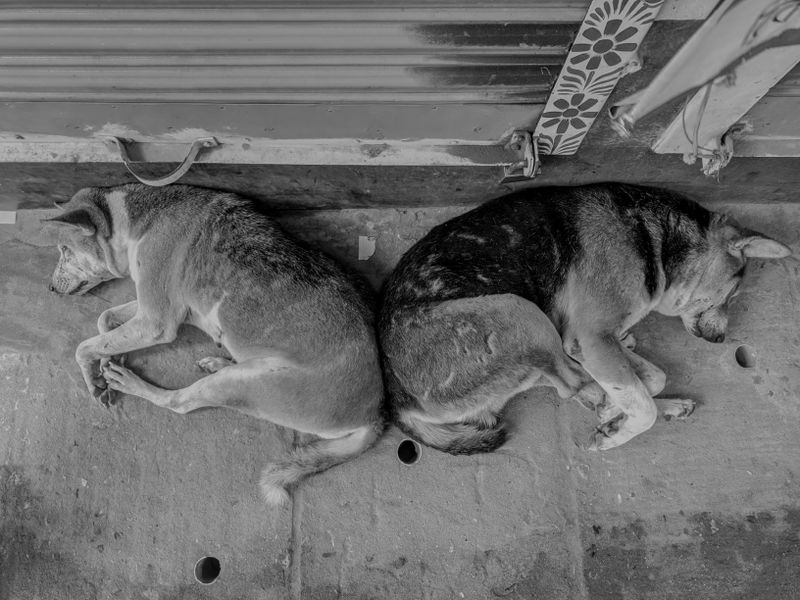
My dog Baxter eats like someone is about to steal his food. He is a rescue, and whatever his first months looked like, they taught him that meals are a competition. He would finish a full bowl in about sixty seconds, walk away, then come back and throw the whole thing up on the rug. Every meal, same cycle: inhale, wait, vomit.
I took him to the vet, half worried it was something serious. She checked him over and thankfully found no medical cause. What she told me was that this was a speed problem, and that speed problems are worth taking seriously. Eating that fast means gulping air, and in a deep-chested dog like Baxter that habit carries a real risk of bloat, which is an emergency. Her instruction was simple: slow the eating down.
Why This Happens
Fast eating in rescue dogs is usually a leftover survival instinct. A dog who had to compete for food, or who went hungry, learns to eat everything as fast as possible because the food might not be there next time. That instinct does not switch off just because the bowl is now full every day and nobody is competing with him. It also shows up in dogs fed on a schedule so tightly controlled that they learned to clear the bowl the moment it hit the floor.
The physical problem is that rapid eating traps air. The dog swallows gulps of air along with the food, the stomach fills with gas, and that gas is what causes the post-meal discomfort and the vomiting. In deep-chested breeds, bloat is far more than discomfort — it can become a life-threatening emergency where the stomach twists. Slower eating is not just about a cleaner floor; it is a genuine safety measure.
There is a training angle too. A dog who eats frantically is often a dog who never learned that calm behavior earns rewards. Building in small pauses and a waiting habit around food lowers the overall arousal at mealtime and makes the whole routine less frantic, which is good for both digestion and behavior.
What I Tried First — and Why It Didn't Work
My first fix was a bigger bowl, thinking the food would be harder to get at. He just ate around the edges faster. Then I tried the old trick of putting a large rock in the bowl to force him to work around it. It slowed him a little and also made me nervous about him swallowing or chipping a tooth on it, so I scrapped it fast.
I tried a maze-style slow-feeder bowl, which worked until he learned to flip it over and eat the whole thing off the floor in one go. Baxter is a problem solver.
I tried feeding him several tiny meals a day, which helped with the vomiting but turned my day into a nonstop feeding schedule and never actually taught him to eat calmly.
What Actually Worked
The change that worked was removing the bowl from the equation and making him work for the food. I switched to a snuffle mat — a fabric mat with strips you hide kibble inside — and it transformed mealtime. Instead of inhaling a bowl, Baxter now spends ten to fifteen minutes nosing through the fabric for each piece. He physically cannot gulp, the air-swallowing stopped, and the post-meal vomiting stopped with it. The foraging also clearly satisfies something in him, because he is calmer and less food-obsessed after a meal from the mat than he ever was after a bowl.
The other piece was teaching him to slow down mentally, not just physically, and that is where the treat pouch came in. I started carrying a Waterproof Dog Treat Pouch on walks and during training, and the point was to reward calm, waiting behavior all day long, not just at meals. A dog who learns that good things come to a dog who is patient starts to bring that same patience to his food. The pouch kept treats accessible so the timing of every reward was instant, which is the only way a dog connects the reward to the behavior. It even has a built-in bag dispenser, a small thing that matters on every walk.
The last change was splitting his meals into two smaller portions served in the mat, and making sure he was not eating right after hard exercise or immediately before it. I also stopped feeding him the second I walked in the door in a burst of excitement, and gave him five minutes to settle first instead, because a calm dog eats slower than an excited one and stripping the adrenaline out of the start of the meal made everything easier. Then I stayed consistent for weeks. The vomiting stopped within days of the switch, and the frantic, panicked energy at mealtime faded over about a month, because food finally stopped being a race.
What I'd Tell Someone Starting Today
If your dog gulps his food, take it seriously, especially if he is a deep-chested breed, and see your vet to rule out a medical cause first. Then make him work for his meals with a snuffle mat or a puzzle feeder, split the meals, and reward calm behavior every chance you get. Never use a rock or anything he could swallow to slow him down.
Baxter still loves food, and he always will. But he seeks it out now instead of inhaling it, and he has not thrown up a meal in months. Slowing him down fixed more than his digestion; it fixed his whole relationship with the bowl.
This post may contain affiliate links. If you buy through one of them, we earn a small commission at no extra cost to you.