
My Corgi Is Fine With Most Dogs — It's the "Certain Dogs" That Ruined Our Walks
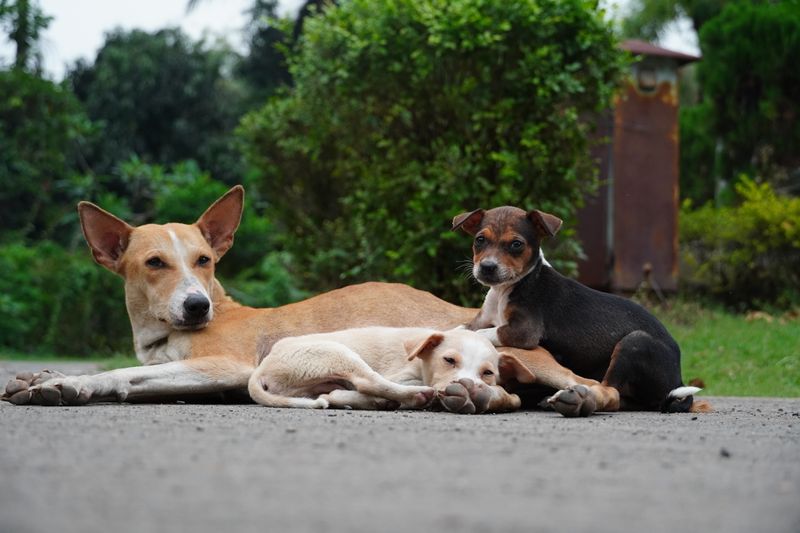
The first time Pip lost it, we were three houses from home on a route we'd walked a thousand times. The other dog was a big neutered husky, and the owner later told me his name was Mango, which I only remember because he shouted it while pulling his dog away from my screaming Corgi. Pip is genuinely the friendliest dog at the park, the one who flops over for belly rubs from strangers. But that afternoon he planted his front feet, bared his teeth, and made a sound I'd never heard him make before.
Here's what made it confusing: he didn't do it to every dog. Ninety percent of the dogs we passed, he ignored or greeted politely. But the other ten percent, intact males, big fluffy dogs, anything that stared directly at him. He treated like an existential threat. And because I walk Pip alongside our older terrier, Juno, one reaction turned into a tangled mess of two leashes and two dogs I couldn't physically keep apart. I started memorizing which houses had "problem dogs" and crossing the street blocks early, like a man doing reconnaissance in his own neighborhood.
Why This Happens
"Selective" is actually a hopeful word. It means there's a pattern, and a pattern is something you can work with. A dog who reacts to every single dog is usually running on broad, generalized fear. A dog who picks specific targets is telling you something specific is setting him off. A body type, a smell, eye contact, the way another dog carries himself. Pip's list was consistent enough that, within a couple of months, I could predict a reaction before it happened.
A lot of it is breed tendency. Corgis are herding dogs, bred for centuries to move cattle by getting in their faces and nipping at their heels. That instinct doesn't evaporate when you clip on a leash. When another dog crowds Pip or moves in a way he reads as out of line, his ancestral job description kicks in and he issues a correction. On a farm that's useful. On a sidewalk it looks like aggression.
Underneath the correction, though, is almost always fear and loss of control. On a leash a dog can't do either of the things that would actually resolve tension: step forward and sniff it out, or turn and create real distance. Take away both and a tense dog has nowhere to put the pressure, so it comes out as a lunge or a growl. Trainers call it leash reactivity, and it's one of the most fixable behavior problems there is, as long as you stop treating it as disobedience.
What I Tried First — and Why It Didn't Work
My first move was the classic one: more exposure. I took Pip to the dog park more often, reasoning that if he saw enough big dogs up close he'd get over it. That backfired spectacularly. Flooding a dog with the exact thing that frightens him doesn't build tolerance, it builds a bigger fear. Within two weeks he was reacting to dogs half a block away instead of ten feet away.
Then I got strict. A sharp "no" and a quick leash pop every time he growled at another dog. This worked for about ten days, in the sense that the growling stopped. But he didn't stop being afraid. He just stopped warning me. One evening he skipped the growl entirely and went straight for a lunge, and that scared me more than any growl ever had. I'd taught him that other dogs predicted something unpleasant and that his warnings got him corrected. That is how you create a dog who bites "out of nowhere."
My third mistake was avoidance. I drove him to an empty business park at odd hours, kept a mental map of every reactive dog in the neighborhood, and walked only when the streets were clear. It kept the peace, and it kept Pip from ever practicing being calm around another dog. Avoidance manages a problem. It never solves one.
What Actually Worked
The fix was counter-conditioning, which sounds clinical but is really just arithmetic for a dog's brain: trigger appears, high-value food appears, repeat a few hundred times, and the dog quietly rewrites the equation to "that dog predicts something great." The critical word is high-value. Kibble won't cut it when a strange dog is in view. You need something he only gets in this exact situation.
That's the whole reason I started using the 1Cup Silicone Dog Training Treat Pouch clipped to my belt or belt loop. Before that I was fumbling in a jacket pocket for treats while gripping two leashes, and by the time I got one out, Pip had already reacted, so I was rewarding the meltdown instead of the calm. With the pouch right at my hip, the treat was in my fingers and in his mouth the instant a trigger appeared. Timing is the entire game, and the pouch is what made my timing sub-second instead of hopeless. The silicone wipes clean, which matters when you're packing real meat or cheese.
Walking two dogs at once was its own problem, and it was making me tense, which Pip read instantly. Switching to a Hands Free Double Dog Leash for Two Dogs changed the geometry of the walk. It's a heavy-duty bungee built for 240 pounds of combined pull, so it clips around my waist and splits to both dogs, leaving my hands free. That let me keep one hand on treats and, more importantly, let me keep walking calmly instead of bracing. A dog reads your body. When I stopped clenching, he stopped loading up.
The distance work is what actually moved the needle. I started well below Pip's threshold, about thirty feet, in a quiet parking lot. And fed him the second he noticed a dog, before he had time to react. Short sessions, three times a week. Over several months I closed the gap ten feet at a time, moving closer only when he could still eat and still listen. The moment a dog stops taking food, you're too close. That's the whole rule.
What I'd Tell Someone Starting Today
Find your dog's pattern before you try to fix anything. Write down every reaction for two weeks: the other dog's size, sex, and behavior, plus the distance at which your dog went off. You'll end up with a list of triggers, and that list is your training plan. Then start farther away than feels necessary and make the treats better than feels reasonable.
And if your dog is lunging, snapping, or you're genuinely afraid of what he might do, that's not a blog-post problem, that's a call to a veterinary behaviorist or a certified positive-methods trainer. There's no shame in it. Four months in, Pip still has his list. The difference is that he now looks at me when a target dog appears, and we keep walking. That's the whole game, and I'll take it.
This post may contain affiliate links. If you buy through one of them, we earn a small commission at no extra cost to you.