
My Two Dogs Can't Be in the Same Room. Parallel Walking Is How We Ended the War
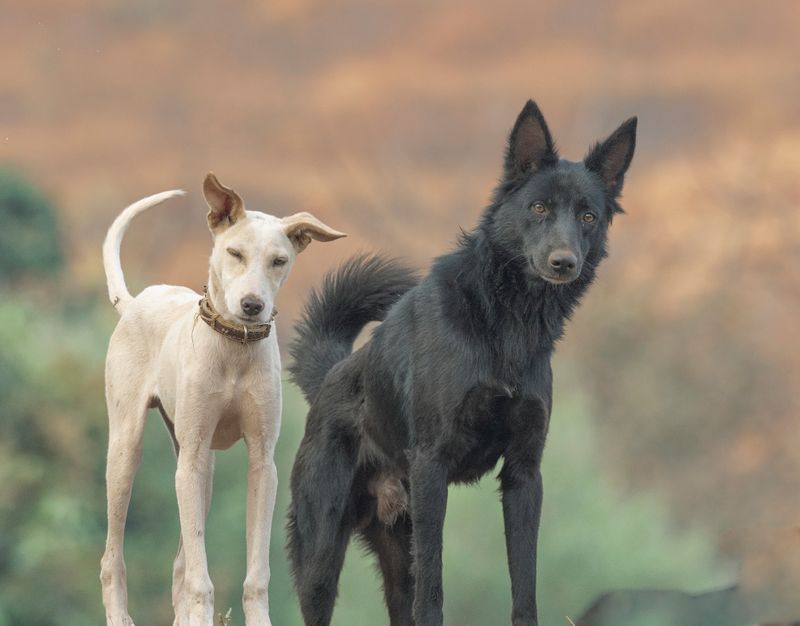
Nala and Pepper are littermates, which is the detail that made the whole thing so painful. We adopted them together at nine weeks and raised them as sisters. For two years they were inseparable (shared bed, shared toys, the kind of bond you brag about. Then one night a dropped piece of steak landed between them, and it was like a switch flipped. By the time I separated them, Pepper had a nick on her ear and Nala was standing over her, teeth bared. They've never been the same since.)
After that, we lived in shifts. One dog upstairs, one downstairs. Rotating sessions with the crate, rotating time in the yard, a baby gate at the foot of the stairs so they could never cross paths. It worked, and it was a miserable way to live. Two dogs who love me and can't be near each other. I was running a two-family household with one leash in each hand and no end in sight.
Why This Happens
The first thing to understand is that most aggression between dogs who share a home isn't hatred. It's usually a breakdown over resources, food, beds, toys, sometimes you. A single high-stakes incident, especially between two females in the same household, can create a lasting conflict where each dog now predicts a fight whenever the other appears. Female-female aggression is notoriously the most stubborn kind for exactly this reason: it tends to be serious, it tends to be a status conflict, and it tends to escalate rather than blow over.
Keeping them permanently separated manages the danger but feeds the problem. Every day apart is a day neither dog practices being calm in the other's presence, so the tension never erodes. It just sits there. And because dogs pick up on your stress, the whole household stays just as tense as the day of the fight.
What I learned, mostly from a trainer and a lot of reading, is that the fix is not forcing a reunion. You don't put two feuding dogs in a room and hope. You rebuild the relationship from the outside in, in controlled conditions, at a distance where neither dog can trigger the other. That's what parallel walking does.
What I Tried First — and Why It Didn't Work
My first instinct was the alpha roll, which I now cringe about. I pinned the "aggressor" (Nala, and held her down to show who was boss. In a conflict that was already about status and fear, physically dominating a dog accomplished nothing except making her more defensive. She came out of it trembling and more reactive to Pepper than before.)
Second, I tried reintroducing them through a baby gate, side by side, to "see if they'd calm down." They stood nose to nose at the gate and snarled for ten straight minutes. Forcing proximity at a distance where both dogs were over threshold didn't teach them anything except that the other one was still a threat. All I did was rehearse the fight without the bite.
Third, I consulted a trainer who suggested a shock collar to interrupt the tension. I paid for one session and left. Adding a painful correction to two already frantic dogs teaches them that the other dog predicts pain, and you end up with a dog who attacks preemptively. That's not a fix; it's a faster fuse.
What Actually Worked
Parallel walking was the breakthrough, and it's almost embarrassingly simple: two people, two leashes, one dog each, walking on opposite sides of a street or field, far enough apart that neither dog reacts. No greeting, no eye contact, just walking forward in the same direction while the presence of the other dog becomes boring. We started about forty feet apart, which felt absurd, and walked for twenty minutes, three times a week. Over eight weeks we closed the gap, thirty feet, then twenty, then across a single road. The goal was never a face-to-face meeting. The goal was for each dog to practice staying relaxed while the other existed.
The piece that made those walks actually work for Nala was calming her baseline enough to think. She's the more reactive of the two, and a dog who's already wound tight before the walk has no capacity left for self-control. I put her in a ThunderShirt Calming Anxiety Vest, the Large Platinum Sport model. The gentle, constant pressure is the same principle as swaddling a baby, and it gave Nala something to lean into exactly when she needed it most. On the days she wore it, she could hold a loose leash at twenty feet; without it, she'd load up and fixate. It didn't sedate her. It just took the edge off enough that the training could land.
For Pepper, who's smaller and more of a thrasher, the second vest in the rotation worked better, the Dog Anxiety Vest, a skin-friendly calming shirt aimed at the same triggers: thunder, fireworks, and in our case the sight of her sister. Its fit was snugger around her chest, so it didn't slide when she twisted, and the fabric didn't irritate her skin even after a full hour of wear. Having a second vest meant I wasn't washing one between every session. Between the two of them, I could keep both dogs in a calmer state for the length of a parallel walk.
We layered in management and time. Separate feeding stations, no shared high-value toys ever, and a ritual where each dog gets one-on-one time so neither feels they're competing for me. Progress wasn't a moment of them cuddling again. It was smaller and more honest: Nala stopped lunging on sight, Pepper stopped screaming from the top of the stairs, and one afternoon they lay down ten feet apart in the yard, ignoring each other completely. In this house, indifference was peace.
What I'd Tell Someone Starting Today
Get a second person before you try anything. Parallel walking is not a solo activity, and it's not a shortcut to a reunion, it's a slow rebuild of tolerance, measured in weeks. Start farther apart than you think you need to, end every session while both dogs are still calm, and never rush a nose-to-nose meeting because you're impatient.
And be honest about severity. If a fight has ever drawn blood or one dog can't be safe in the same house, this is a case for a veterinary behaviorist, and sometimes the kindest answer is permanent separation or rehoming, no shame in either. Nala and Pepper will probably never be the bonded sisters they were at one. But they can now be in the same yard, and that alone gave me my house back.
This post may contain affiliate links. If you buy through one of them, we earn a small commission at no extra cost to you.