
My Dog Pulled So Hard on Runs the Vet Noticed His Gait — Here's What We Changed
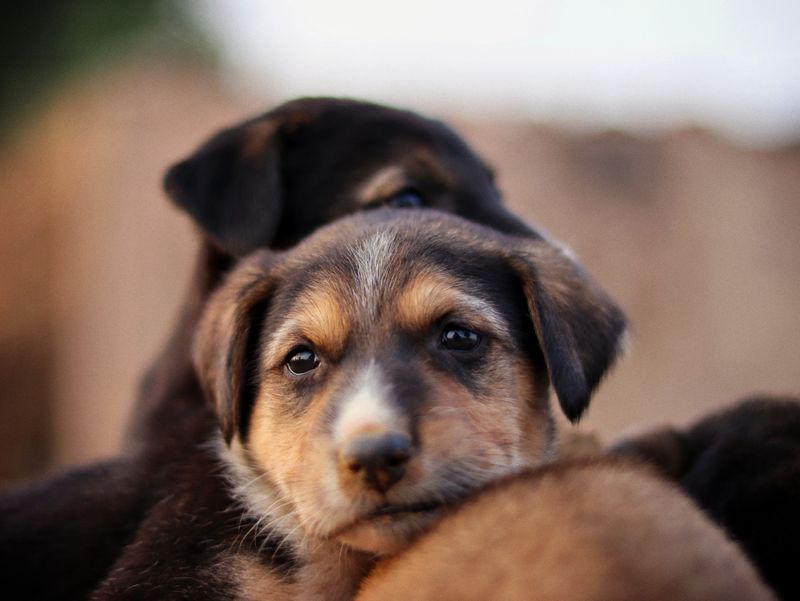
I started running with Rufus because he was climbing the walls without it. A two-year-old Labrador mix with energy to spare, and me a mediocre runner who needed motivation. For the first few months it was perfect: he'd pull at the start of every run like a sled dog, and I let him, because it felt like he was just enthusiastic. Then the little things started adding up. He'd lag in the last mile. He got up a little stiff the morning after a long run. One day my wife watched us come down the street and said he looked like he was "walking funny in the back end," and that was the sentence that got me to book a vet appointment.
The vet watched him trot across the room, ran her hands down his hips and spine, and asked how hard he pulled on the leash. When I said "constantly, the whole run," she nodded like I'd confirmed a suspicion. We were overdoing it, and the constant forward pressure on a young, growing, hard-running dog was more load than his body was built to carry.
Why This Happens
Leash pulling isn't just annoying to your shoulder; it's a physical problem for your dog. When a dog leans into a leash continuously, the pressure sits across the throat, chest, and shoulders, and to counteract it he shifts his weight forward and changes his natural gait. Run a dog like that mile after mile and you're asking his joints and soft tissue to work in a slightly wrong posture, thousands of times per run. Over months, that's wear.
Hard running itself is high-impact. Joint cartilage, tendons, and the muscles supporting the hips all take repeated loading, and a dog who pulls is loading unevenly, which is worse than loading heavily but symmetrically. Combine an enthusiastic puller with a young dog still filling out, and you get exactly the picture my vet painted: a body doing real work under real strain before it's fully built for it.
Then there's the digestion side, which nobody warned me about. Intense exercise redirects blood flow away from the gut, and a dog who's running hard and gulping air on the leash is a dog prone to loose stool and an unsettled stomach. Rufus had exactly that. The runs were bothering his guts as much as his hips. The whole system, joints and gut together, was under strain from a habit I'd mistaken for joy.
What I Tried First — and Why It Didn't Work
My first fix was a standard front-clip no-pull harness. It helped a little with the pulling and did absolutely nothing for the underlying wear, because Rufus still leaned into it the whole run. He just did it at a slightly different angle. A harness is a steering aid. It doesn't change the load on the joints.
Second, I tried to fix the problem by running him less. That backfired completely. Less exercise made him anxious and destructive at home and, honestly, he was still pulling on the runs we did keep. Reducing volume didn't change the posture problem, and it traded one issue for a worse one. I did eventually add proper slow sniff-walks on his off days, which was the right idea, but it wasn't the whole answer.
Third, I looked at supplements and grabbed the first joint chew I saw at the pet store without thinking about dose or ingredients. It was basically a treat with a whisper of glucosamine, and it did nothing. Cheap joint treats are often mostly filler. Lesson learned the slow way.
What Actually Worked
Real change came from attacking the pulling mechanically and supporting his body chemically, at the same time. On the mechanical side I switched to a hands-free running setup that clips at the hip with a bungee section. Attaching the leash at my center of mass instead of my hand changed everything, the bungee absorbed the jolts, the low attachment point let Rufus pull without the leash snapping taut, and because I wasn't bracing against him, the whole run got calmer. He still moves fast. He just doesn't lean his entire bodyweight into a leash anymore, and that removed the uneven, forward-weighted posture that had been grinding on his hips.
For the physical support, my vet and I settled on a two-part routine. The core piece was LIQUID-VET K9 Hip & Joint Formula, the bacon flavor, 16 ounces. I chose the liquid specifically because it goes straight into his food and Rufus, a dog who will spit out any pill, laps it up without a fight. It's an inositol-based joint support, and it's formulated to support the hip and joint structures that were clearly taking a beating. Over about six weeks of consistent use alongside the gentler running mechanics, the morning stiffness faded and his back-end movement smoothed out enough that my wife stopped making comments.
The second piece was his gut. All that hard effort was leaving his digestion a mess, and a dog with an upset stomach isn't recovering from exercise properly. I added Royal Canin Probiotics for Dogs, a digestive and immune-support powder that I stir into his evening meal. Restoring some balance to his gut didn't just clean up the stool, the recovery between runs got visibly better, because a dog whose digestion is calm is a dog whose whole system can actually rest. Joints and gut, turns out, were one problem wearing two hats.
What I'd Tell Someone Starting Today
If your dog pulls on runs, treat it as a body problem, not a manners problem, and fix the mechanics before you fix the mileage. A shock-absorbing attachment at your waist removes most of the forward load that's straining your dog's joints. Then feed the recovery: an actual joint supplement at a real dose, consistent for weeks, plus attention to the gut that all that hard exercise is stressing.
And if your dog ever shows a change in gait, stiffness, or reluctance you can't explain, get it looked at. Lameness advice from a blog is worth exactly what you paid for it, and it took a vet to point me in the right direction. Rufus is three now, running five miles twice a week, and the last time the vet watched him trot she just said, "much better." That's the report I run for.
This post may contain affiliate links. If you buy through one of them, we earn a small commission at no extra cost to you.