
My Dog Started Falling Apart on Our Favorite Trail — Here's What Brought Him Back
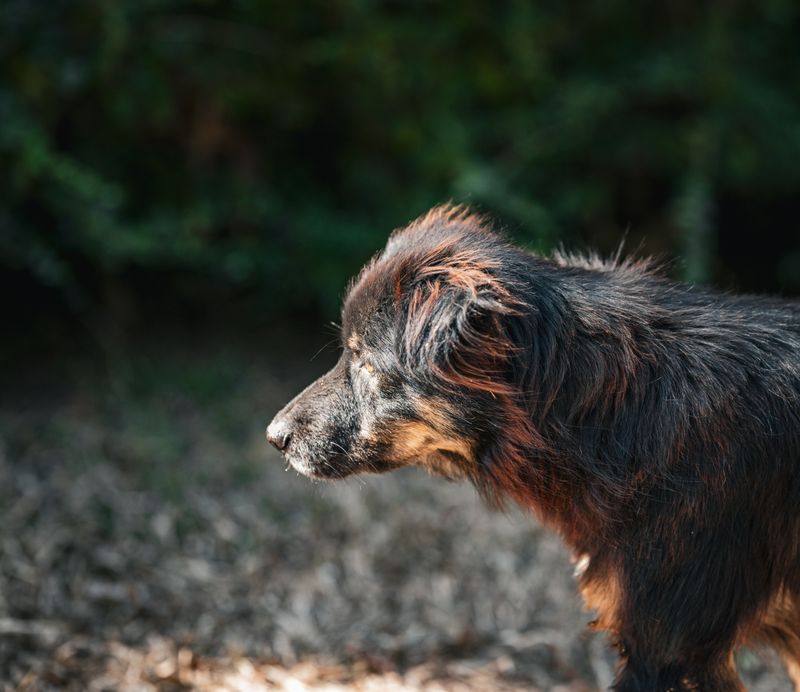
We'd walked the same trail for three years. A quiet loop through a wooded park, maybe two and a half miles, wide enough that we could step aside for anyone we met. Zeke knew every turn. Then, out of nowhere, he started shutting down on it. He'd plant his feet a quarter mile in and refuse to move. He'd look over his shoulder at trees behind us. He started growling at joggers he'd ignored for years, and one afternoon he flat-out lunged at a mountain biker who came around a blind corner too fast. This was a dog who used to fall asleep on a picnic blanket in a crowd of strangers.
The scary part wasn't the aggression. It was the look on his face. Zeke didn't look angry on those walks; he looked scared, and he looked at me like I was supposed to fix something he couldn't name. I felt like I'd lost the dog I knew, on the one route he used to own.
Why This Happens
Dogs don't "tank" for no reason. When a confident dog suddenly becomes reactive in a familiar place, it's usually one of a few things stacking up. The most common is a bad experience the owner never saw, a near-collision with a bike, an unusually loud noise, a rambunctious dog that got in his space. A single scary event can permanently change how a dog reads a place, and the change can look like a personality transplant because it happens overnight in your eyes.
Age matters too. A dog under two is still in a fear-learning window, and a dog who's getting older is often a dog whose senses, especially hearing and vision, are dulling, which makes the world more confusing and startles harder. In Zeke's case I also started wondering about his hips, because he'd gotten stiff after runs, and a body that hurts lowers a dog's tolerance for everything else. Pain and fear reinforce each other.
What I finally understood is that confidence, not obedience, was the missing ingredient. Zeke wasn't disobeying me on the trail. He'd lost his belief that the trail was safe, and I couldn't lecture that belief back. I had to rebuild it the way it had been built the first time: slowly, with good things attached to the scary place.
What I Tried First — and Why It Didn't Work
My first instinct was to push through it. Walk the trail anyway, twice a week, on the theory that he'd remember it was fine. Instead he got worse each time, and after a month he was reacting the moment we pulled into the parking lot. Forcing a nervous dog into the place he's anxious about doesn't rebuild confidence. It confirms the fear.
Second, I tried to fix it with correction, scolding him whenever he growled at a jogger. That bought quiet, not calm. He stopped warning me and started staring, loading up, and lunging without the growl. I'd removed my early-warning system and made him more dangerous.
Third, I leaned on gear. I bought an electronic deterrent to stop the lunging, hoping a gadget would be the shortcut. It interrupted the behavior for a few days and then backfired, because now a strange zap came out of nowhere whenever a scary thing appeared, and the trail became even more unpredictable to him. Gadgets don't teach confidence. They teach a dog that bad things happen without warning.
What Actually Worked
The turnaround had two parts: rebuilding Zeke's confidence with food, and dealing with two specific problems that were sabotaging him, his sore body and a nuisance-barking habit at home that was keeping him keyed up. Let me take them in order.
For the trail itself, I dropped every expectation and turned walks into a treat-delivery service. We started parking near the trail entrance and just hanging out for ten minutes, feeding him high-value treats for nothing at all. Then we'd walk a hundred yards and turn around. Then two hundred. Every jogger and biker we passed earned a scatter of treats on the ground and a cheerful "find it," which gave his nose a job and pulled his attention down and away from the trigger. Within three weeks he stopped bracing at the parking lot. Within two months he made it the full loop again, not perfectly calm, but walking forward. Confidence is built in tiny wins, not heroic ones.
His overall arousal was the second piece, and I found an unexpected tool for it. Zeke had also developed a habit of barking his head off at the front window all afternoon, which kept him in a constant state of alert that bled into everything else. I started using the YUYQA Dog Bark Deterrent Device, a compact, three-direction ultrasonic unit, set near the window. It emits a high-pitched tone when it detects barking, and, used as a boundary tool for that one specific spot rather than as punishment, it interrupted the pattern enough that he stopped treating every passing car as an event. Lowering that constant alert load at home made him measurably more able to think on the trail.
For the days when we were out and about and the window wasn't the issue, I kept a second option. The handier indoor/outdoor unit that's marketed as a safe, fast bark deterrent for home use. It's small enough to grab and carry to the back door, and having a portable version meant I could address the same alert-barking pattern wherever we were instead of only at the window. Between the two, I finally had a way to interrupt the barking without reaching for a correction that harmed our relationship.
What I'd Tell Someone Starting Today
If your dog suddenly fears a place he used to love, don't push him through it and don't correct him out of it, rebuild the association from the edge, with food, in small doses, starting at the parking lot if that's where the fear now lives. Figure out whether pain or a lost sense is in the mix, because a hurting dog can't be a confident one. And use any deterrent tool for one narrow, well-defined behavior, never as a cure-all, because a startled dog is a less confident dog, not a calmer one.
Zeke isn't the dog who slept through crowds again. He still watches the tree line and still flinches at a fast bike. But we finished the full loop together last weekend, and when the mountain biker came around the corner, he looked at me and took the treat instead of lunging. For a dog who spent a season afraid of his own favorite place, that's a big turn, and I'll take it.
This post may contain affiliate links. If you buy through one of them, we earn a small commission at no extra cost to you.