
My Cat Wouldn't Stop Stalking My Rabbit — Here's How I Made Their Space Safe
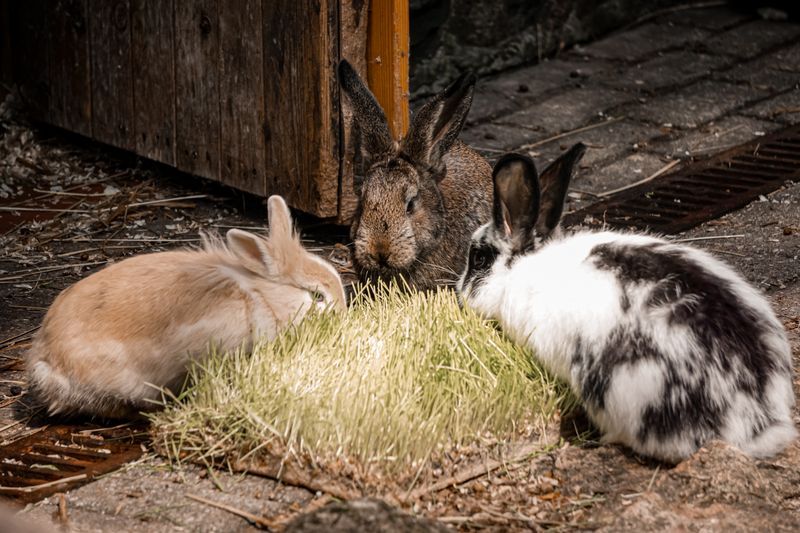
The first time I saw my cat Marlow in a hunting crouch ten feet from Biscuit's pen, I laughed. It looked like a cartoon. The rigid tail, the slow-motion creep, the flattened ears. Then I watched Biscuit, my Holland Lop, go completely rigid, frozen against the back of his enclosure with his eyes wide, and I stopped laughing. Marlow wasn't being playful. He was doing exactly what a cat is built to do, and my rabbit knew it in his bones.
For a few weeks I told myself they'd get used to each other. Cats and rabbits coexist online all the time, right? But the pattern never changed, Marlow always positioned himself where he could watch, and Biscuit never relaxed, even when the cat was across the room asleep. The tension was wearing both of them down, and I finally admitted that "they'll figure it out" was me hoping risk away.
Why This Happens
A rabbit is a prey animal and a cat is a predator, and no amount of gentle personalities erases millions of years of instinct. Even a cat that has never actually hunted still carries the wiring: the crouch, the stalk, the pounce reflex triggered by small, quick movement. A rabbit hopping around is a moving target, and a moving target can switch on that reflex whether the cat "means it" or not. Friendly cats stalk. It's not a personality flaw; it's the machinery underneath.
On the rabbit's side, the fear is just as hardwired and just as real. A rabbit that lives in a state of vigilance never fully relaxes, doesn't eat as well, and is chronically stressed, which in rabbits shows up as everything from poor appetite to a compromised gut. You cannot simply reassure a rabbit that the predator is safe. Its body doesn't take your word for it.
The other thing I had to accept is that supervision is not protection. I couldn't sit in the room every minute, and the one time Marlow got a paw into the pen, it happened in the two seconds I looked at my phone. Any solution that depended on me watching had already failed; I needed a physical setup that made the wrong interaction impossible, not unlikely.
What I Tried First — and Why It Didn't Work
My first move was to scold Marlow every time he stalked. This backfired badly. Cats don't learn "don't stalk the rabbit", they learn "don't get caught stalking by the human," which teaches them to be sneakier and to do it when I'm not in the room. It made the behavior invisible instead of stopping it.
Then I tried shutting Biscuit in a smaller cage so he'd be "safe." That protected him physically but it was cruel, because rabbits need room to run, and confining him all day to protect him from a cat traded one problem for a worse one. He got restless and started chewing the bars, which is a sign of a miserable rabbit.
I also bought one of those little cat-repelling sprays and misted the area around the pen. It smelled strongly of citrus for about an hour and then did nothing. Marlow simply walked through it once the scent faded, and I was left with a stinking room and the same problem.
What Actually Worked
The fix had two parts: a real barrier for the rabbit, and a real outlet for the cat. For the barrier, I set up the PETIME Foldable Metal Dog Exercise Pen and reconfigured it into a proper divider. Because the panels fold and hinge, I built a wall that let Biscuit have a generous, secure run while still letting the two animals see and smell each other safely through the mesh. That last part mattered, total separation would have kept the tension frozen forever, but a barrier they can observe each other through lets the rabbit learn the cat can't reach him. Within two weeks Biscuit was flopping over and stretching out near the boundary, which for a rabbit is the clearest "I feel safe" signal there is.
The second half was giving Marlow something to hunt that wasn't my rabbit. The problem wasn't that he had a predaory drive; it's that the drive had no legal target. So I set up the Yangbaga Large Glass Terrarium as a little cat-grass patch right in the window, where Marlow likes to sit. He now has his own patch of greenery to sniff, chew, and supervise, a plant he's allowed to interact with, in the prime lookout spot he already claimed. Redirecting a predator's attention works far better than punishing it, and once Marlow had a satisfying thing to focus on in his favorite window, his obsession with the rabbit's pen dropped noticeably.
The routine sealed it. I fed them on a schedule, gave Marlow dedicated play with a wand toy every evening to burn off the stalking energy, and kept the barrier configuration steady so neither animal's territory shifted. Neither animal is stressed now, and I don't have to hold my breath every time I leave the room.
Rabbit Hideout & Playpen
Hinged metal panels you can build into a real divider, gives your rabbit a secure run while both animals can see each other safely.
Check price on AmazonRabbit Cage with Hideaway
A glass cat-grass patch for the window, gives your cat a legal thing to sniff and chew in the lookout spot it already loves.
Check price on AmazonWhat I'd Tell Someone Starting Today
Stop waiting for your cat and rabbit to "become friends," and build a setup that works even if they never do. A physical barrier the rabbit can see through is worth more than any amount of supervision or stern talking-to. Make sure the rabbit has enough room inside that barrier to actually move, because a cramped rabbit is a stressed rabbit and stress is the thing you're trying to remove.
Then give the cat a real outlet, play, a plant it's allowed to chew, a window perch, anything that satisfies the drive instead of suppressing it. Punishment just teaches a cat to hide its behavior from you. And if your cat is actively pouncing or your rabbit is going off its food, that's your sign to separate them entirely and reassess, not to hope the relationship improves on its own.
This post may contain affiliate links. If you buy through one of them, we earn a small commission at no extra cost to you.