
My Long-Haired Rabbit Gets Mat After Mat — Here's the Grooming Routine That Finally Stopped It
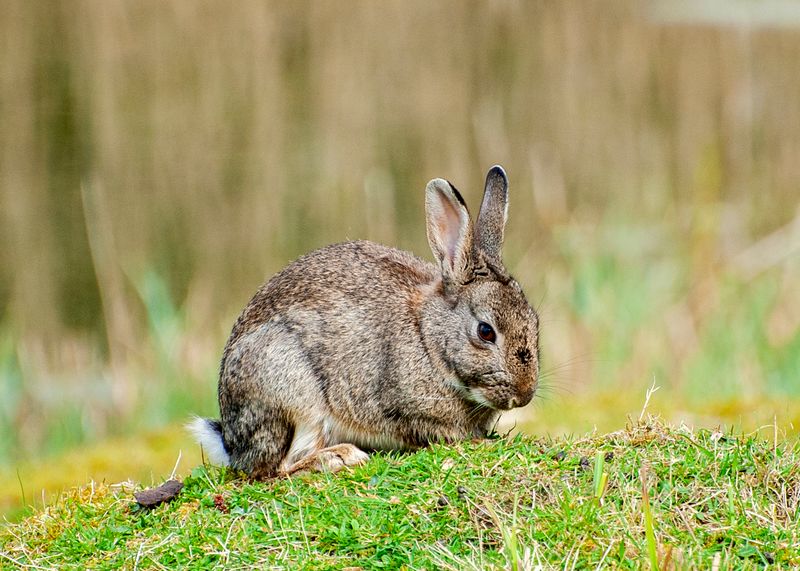
The first mat I found was behind Biscuit's ears, and it was already the size of my thumbnail. He's a Holland Lop with a coat that runs thicker than most, and one morning when I went to scratch his head I felt a hard little knot under the fur that hadn't been there the day before. Two days later there was a second one on his flank. This is the thing about a long-haired rabbit, you can brush him thoroughly in the evening and find a fresh mat in a brand-new spot the next morning, because the loose fur he sheds doesn't always fall out. It tangles into itself while he's sleeping.
What made it worse was that Biscuit hated being brushed. He'd tolerate about thirty seconds and then bolt, and every time he bolted I'd lose the mat and have to start over. I was chasing a moving target with tools that were too harsh, and I was doing it wrong in a way that was actively making him more skittish. It took a couple of real mistakes before I found a routine he'd actually sit through.
Why This Happens
Rabbits molt, sometimes dramatically, and a rabbit with a long or dense coat produces more loose fur than it can shed on its own. Rabbits also groom themselves constantly, but unlike a cat, a rabbit's tongue never develops the barbed tool that pulls out deep, loose undercoat. So the dead fur stays trapped against the skin, and as the rabbit moves and sleeps, that fur felts into mats. Mats form fastest in the places that rub, behind the ears, under the chin, along the flanks, and around the tail base.
The skin underneath a mat is a problem, not just a cosmetic one. A tight mat pulls on the skin constantly, which is painful, and it traps moisture and warmth against the surface, which is a setup for skin irritation and infection. A mat can also hide a wound or a parasite problem that you'd never see because the fur has knitted over it. So matting isn't just about a pretty coat (it's about whether your rabbit is comfortable and whether you can actually see his skin.)
Here's the important safety point I learned: you cannot cut mats out with scissors. Rabbit skin is paper-thin and folds up into the mat, so it's genuinely easy to slice into the animal without ever seeing skin in the gap. Every groomer says the same thing. Scissors are the wrong tool, and pulling a mat out dry is the second-worst option, because it hurts and it teaches your rabbit that grooming is something to escape.
What I Tried First — and Why It Didn't Work
My first tool was a slicker brush with fine metal pins, the kind that works well on a long-coated dog. On Biscuit it was a disaster. The pins scratched his skin, he shrieked and twisted away, and afterward he avoided my hands for a whole day. A tool designed for thick dog undercoat is simply too aggressive for rabbit skin.
Next I tried a metal-toothed comb for cutting through mats. It grabbed the mats, pulled them hard, and made him yelp, and yelping is not something a rabbit does casually. I was pulling live, attached fur along with the dead, which is both painful and pointless.
I also briefly considered bathing him to soften the mats, because that's what I'd do with a matted dog. That's a genuinely dangerous move for a rabbit. Rabbits can go into shock from the stress of a bath, and a wet long-haired rabbit mats worse once it dries unless you can fully blow-dry the coat, which most of us can't safely do. I abandoned that idea before I tried it, and I'm glad I did.
What Actually Worked
The breakthrough was switching to a tool with no metal points anywhere near his skin, and changing the goal from "remove every mat today" to "keep him tangle-free with small daily passes." For the delicate areas, the face, the cheeks, behind the ears, and the fine fur around the neck, I used the Jasper Dog Toothbrush 360° Finger Toothbrush. I know it's sold as a toothbrush, but the soft silicone nubs that wrap a full 360 degrees around the finger are perfect for gentle detail work: I wet my finger, and the soft bumps lift loose fur out of a forming mat without scratching or pulling. Because it's on my fingertip, I can feel the knot and work it out slowly instead of yanking with a brushing tool I can't feel through. It turned the worst, most sensitive spots into something I could actually maintain.
I keep a blue 2-pack so one is always clean and dry and ready, and I added the 4-pack for backup so a session never stalls because the tool went missing or got grubby. Having the extras sounds like a small thing, but with a rabbit who'll only cooperate for a short window, not being able to find a clean brush mid-session means the opportunity is gone. With the soft finger brushes I now do a thirty-second pass over the high-risk zones every single evening, and I follow with a wider soft brush over the body when he's relaxed and flopped.
The other half of the fix was dietary and routine: more hay means fewer loose-fur issues and a healthier coat to begin with, and I check his problem zones at the same time every night so a small knot never has a chance to become a hard mat. In four months he's had exactly one mat, and I caught it while it was still soft enough to tease apart with my fingers.
Gentle Grooming Brush for Rabbits
Soft silicone nubs that wrap the whole finger, gentle enough to lift loose fur out of sensitive face and neck areas without scratching.
Check price on AmazonRabbit Nail Clippers & Brush Kit
The same soft detail work in a four-pack, so there's always a clean, dry brush ready before your rabbit's short patience runs out.
Check price on AmazonWhat I'd Tell Someone Starting Today
Put down the scissors and the metal comb. Rabbit skin is thinner than you can see, and the two most common grooming injuries come from exactly those tools. Use something soft that lets you feel the tangle through your own fingertips, and work small sections often rather than trying to clear everything in one heroic session. A rabbit that learns grooming doesn't hurt is a rabbit that sits still, and a rabbit that sits still is a rabbit you can actually keep mat-free.
Go after the problem zones daily. Ears, cheeks, flanks, tail base. Even if it's only a quick pass, because mats form overnight and are trivial to tease out when fresh and painful to remove when set. And if you find a mat that's hard, tight, or pressed right against the skin, don't fight it yourself. In a rabbit, a skin-level mat is a vet or a skilled groomer job, not a home project.
This post may contain affiliate links. If you buy through one of them, we earn a small commission at no extra cost to you.